
The Sperm Whale’s Transformation in Human Imagination
The WhaleThis flow traces the sperm whale’s transformation from feared and hunted monster into a symbol of vulnerability and human uncertainty.
increasing Bearing strength in each event
 decreasing
Bearing strength in each eventdecreasingThe Legendary Beast
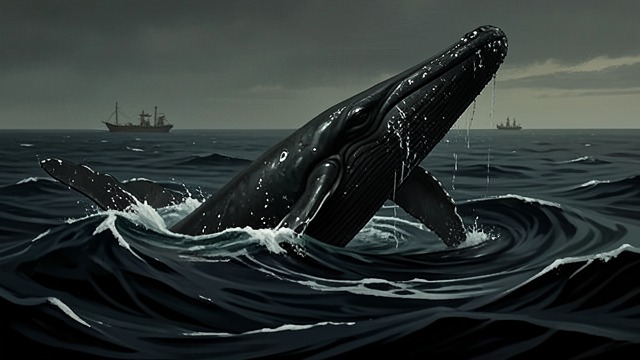
A Monster at Sea
Old stories
Cultures imagine whales as vast creatures capable of swallowing ships, carrying landscapes, or bringing disaster. These stories make the ocean an inhabited realm of supernatural threat.
A shape for fear
The sperm whale’s size, hidden life, and unfamiliar form make it especially suited to such legends. Its mystery becomes a measure of human vulnerability.
A Commercial Target
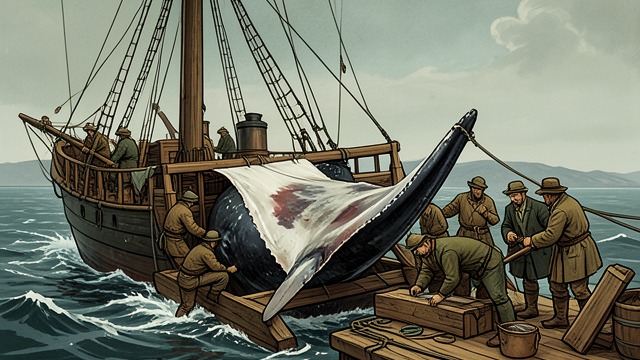
The Whale as Wealth
Products and profit
Sperm whales supply oil, spermaceti, and other valuable materials. Their anatomy is studied closely because it can be converted into goods and income.
Knowledge through killing
Whalers and scientists learn about the animal by pursuing and dissecting it. The expanding body of knowledge is inseparable from the violence that produces it.
Ahab’s Enemy
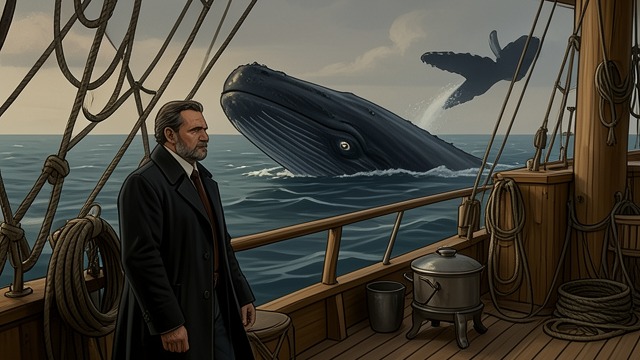
A Whale Becomes an Adversary
Personal vengeance
Ahab treats Moby Dick as the agent of the injury that changed his life. His pursuit makes one whale stand for the resistance of nature to human will.
Mythic enlargement
The animal becomes more than a biological creature within Ahab’s imagination. Its uncertain motives allow the novel to explore fate, evil, power, and obsession.
The Living Animal Revealed
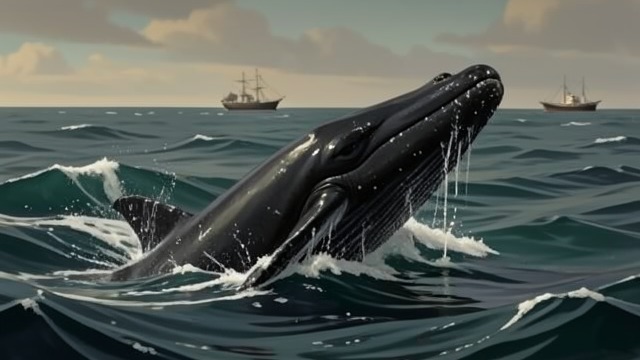
Seeing Whales Alive
A different encounter
Photography, film, and whale watching bring people images of whales moving freely in the ocean. The living animal challenges older representations based on dead bodies and hunting scenes.
Sympathy and projection
The new images invite concern for whales, though people continue to interpret them through human emotions. The whale becomes both a real animal and a mirror for human values.
A Vulnerable Giant
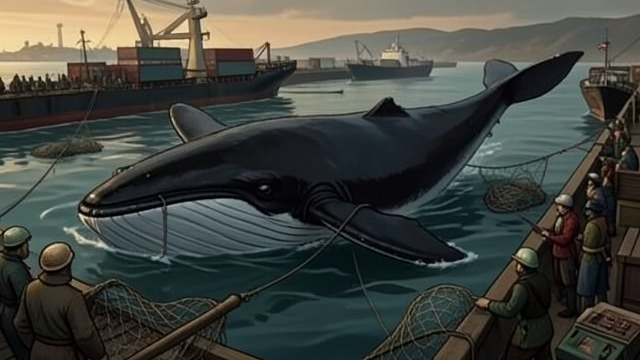
Power and Exposure
New threats
Ship strikes, fishing gear, pollution, and noise threaten whales even when they are no longer hunted at the former industrial scale. Their size does not protect them from human systems.
A changed responsibility
The once-feared monster is now treated as a vulnerable survivor. Its transformation in human thought exposes the consequences of the earlier belief that it existed for human use.
Before the rise of modern whaling
From the eighteenth century
In Moby-Dick, during the Pequod’s voyage
During the twentieth century’s turn toward whale watching
By the time of modern conservation debate
