
The Right Whale’s Precarious Future
The WhaleThis flow follows the North Atlantic right whale from an easy target in coastal waters to a modern animal endangered by human traffic and fishing gear.
increasing Bearing strength in each event
 decreasing
Bearing strength in each eventdecreasingA Profitable Body
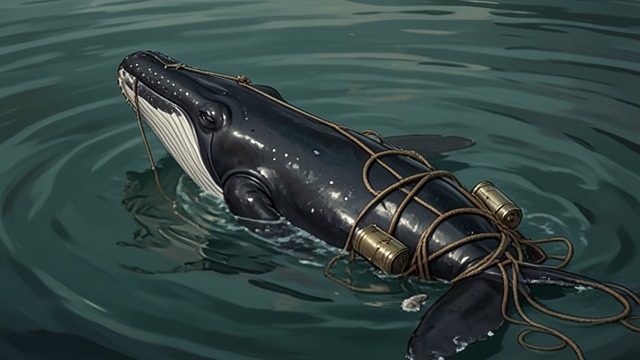
A Whale Made Convenient
A vulnerable design
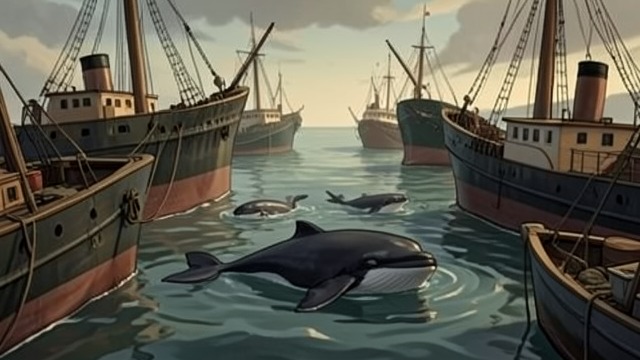
Right whales are slow, rich in blubber, and likely to float after death. Their baleen also has many uses, making them especially attractive to hunters.
A name shaped by commerce
The label right whale reflects its value to people rather than its identity as an animal. Its physical advantages to the whaling industry become a sentence of repeated pursuit.
A Protected Species
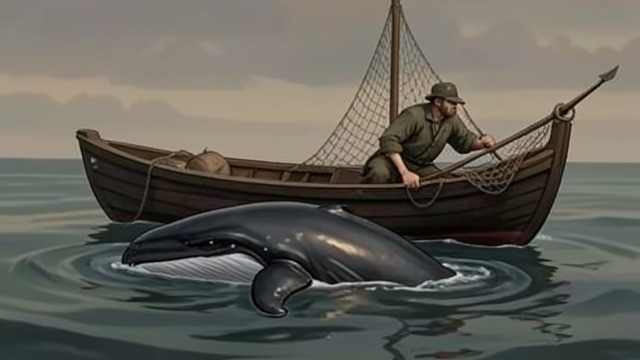
The First Protection
A formal change
Right whales receive protection from hunting, a shift from direct commercial targeting toward conservation. The rule cannot immediately restore the animals lost over earlier centuries.
Survival remains uncertain
Protection from harpoons is not protection from every human danger. The remaining population faces a future shaped by shipping and fishing activity.
A Familiar Feeding Ground
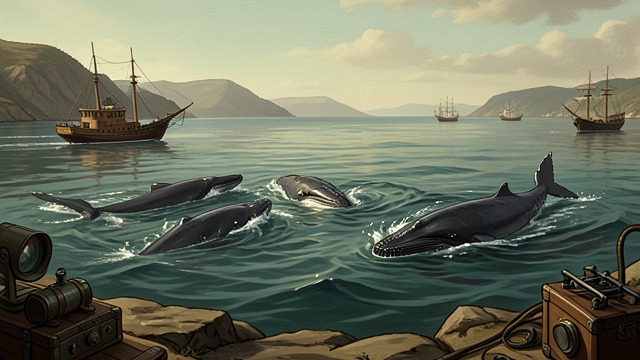
Returning to the Bay
A rare sight
Hoare joins researchers seeking right whales in waters once known for whaling. The sight of several animals feeding makes recovery seem possible.
A narrow margin
Their presence near busy shipping routes also makes their habitat dangerous. A day of observation can become a chance to alert vessels to nearby whales.
Entanglement and Rescue
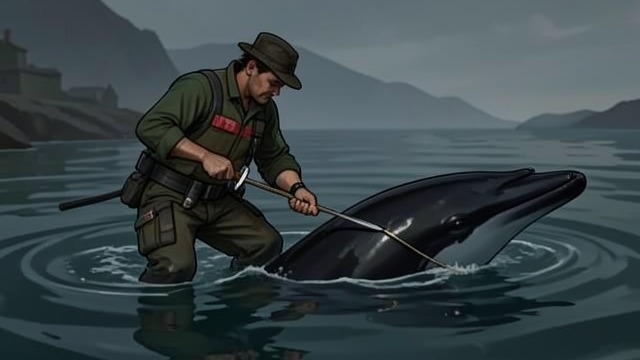
A Modern Emergency
The line that binds
Fishing gear can cut into a whale and threaten it with starvation, infection, or drowning. Rescuers approach a powerful animal with tools shaped by the history of whaling.
Risk in both directions
Charles Mayo risks his own life to cut a whale free. The rescue reverses the old encounter between human and whale without removing the danger created by human activity.
A Future in Doubt
Too Few to Recover Easily
A restricted population
A small breeding population and limited genetic diversity make the North Atlantic right whale exceptionally vulnerable. The loss of one fertile female may matter to the survival of the species.
Protection under pressure
Ship traffic and fishing gear continue to threaten the animals despite formal rules. Their future depends on whether human behaviour changes as well as whether hunting remains prohibited.
During the early history of commercial whaling
In 1935
During Hoare’s research in Cape Cod Bay
During Charles Mayo’s rescue work
At the time of Hoare’s research
