
Whales as Omens
The WhaleThis flow follows the way whale appearances and deaths become interpreted as warnings, from early port omens to modern ecological signs.
increasing Bearing strength in each event
 decreasing
Bearing strength in each eventdecreasingA Whale in the Thames
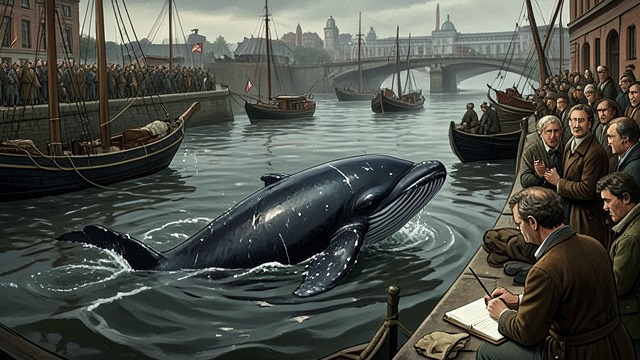
An Omen in the River
A strange arrival
A right whale enters the Thames and is killed after struggling near the shore. John Evelyn records the animal and the huge crowds drawn to its appearance.
Political interpretation
The whale is taken as an omen associated with Oliver Cromwell’s death the following day. Its arrival becomes meaningful through human attempts to read natural events as signs.
Dutch Disaster Imagery
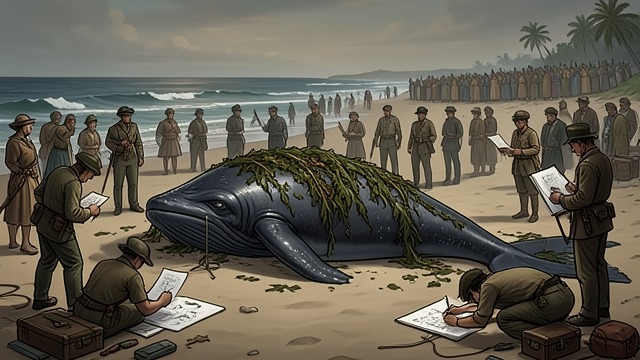
Strandings in Print
A public spectacle
Stranded whales attract crowds, artists, and officials. Images of the dead animals are composed as records of abundance and as warnings of political or natural upheaval.
Meaning beyond biology
A whale’s death becomes a surface onto which communities project fear, disorder, and judgment. Art preserves the event while transforming it into an allegory.
A Whale in the City
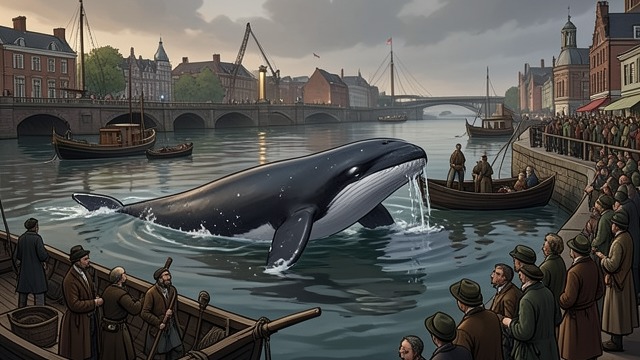
An Urban Visitor
A river turned trap
A northern bottlenose whale moves into the Thames, surrounded by vessels, crowds, and media attention. A route that appears to offer access to the sea becomes a dead end.
Compassion and spectacle
The public follows rescue efforts with intense concern, but attention adds pressure to an already distressed animal. The whale’s death becomes a national debate about human responsibility.
The Whale as Warning
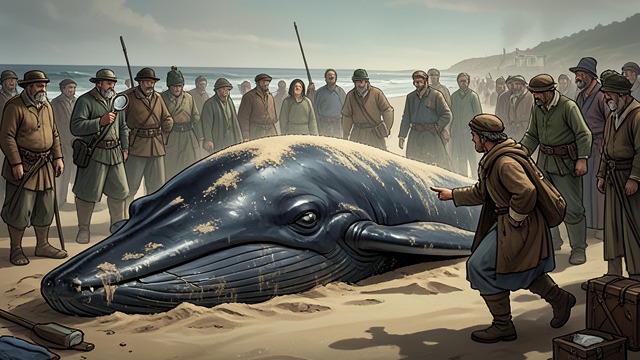
Reading the Failure
A symbolic message
Commentators interpret the whale’s arrival as a warning about pollution, climate, or human violence. Its death gives force to anxieties that are otherwise difficult to see.
Material causes remain
Necropsy evidence points to dehydration and stress rather than a supernatural purpose. The story insists on distinguishing the animal’s real suffering from the meanings people attach to it.
An Ecological Signal
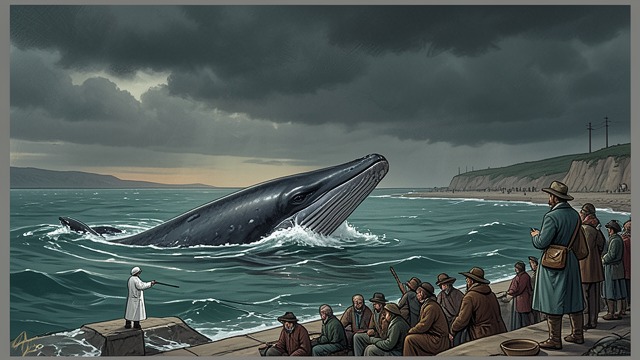
The Whale Beyond the Omen
Signs of a changing habitat
Whale movements, strandings, and changing food supplies register pressures in the marine environment. Researchers try to relate individual animals to wider ecological change.
A limit to prediction
These observations provide warning without certainty about what will happen next. The whale becomes a sign of crisis because human systems have altered the conditions on which its life depends.
In 1658
During the sixteenth and seventeenth centuries
During the 2006 Thames whale incident
In the aftermath of the Thames incident
During Hoare’s contemporary research
