
The Cold War’s Whale
The WhaleThis flow traces the transformation of the whale from industrial resource into a military, technological, and political symbol during the nuclear age.
increasing Bearing strength in each event
 decreasing
Bearing strength in each eventdecreasingWhale Oil in Modern Life
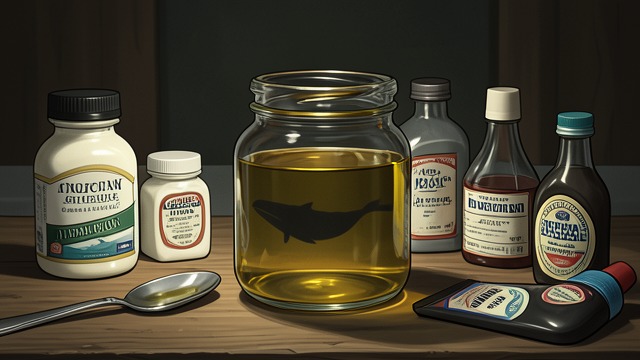
The Animal in the Household
Unnoticed consumption
Whale products enter margarine, cosmetics, lubricants, and household goods. People use them without necessarily connecting daily life to the animals being killed.
A concealed conflict
The whale is both a living creature and an industrial input. Its invisibility in finished products allows consumption to continue without sustained public attention.
A Nation at Sea
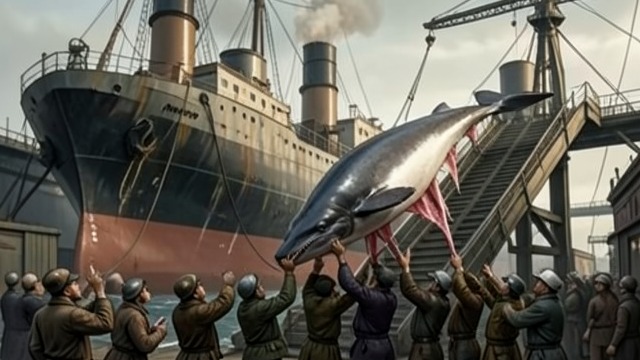
The Factory Fleet
Mass production
Factory ships process whales far from land, turning oceanic life into meat, oil, and industrial material. The scale of killing rises sharply after the Second World War.
A political economy
Whaling becomes entangled with food supply, national competition, and postwar recovery. The whale is treated as a resource that no state has a clear incentive to protect.
The Atomic Allegory
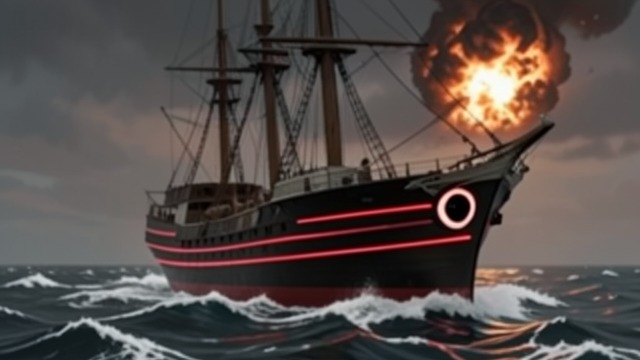
Moby-Dick and Nuclear Fear
A political reading
Writers and critics interpret Ahab’s pursuit as a warning about domination and catastrophic power. The Pequod becomes an image of a technological state driven toward destruction.
The whale’s enlarged meaning
Moby Dick is linked to nuclear explosions and global conflict. The literary whale becomes a way of thinking about forces that humans unleash but cannot control.
Whales in Military Service
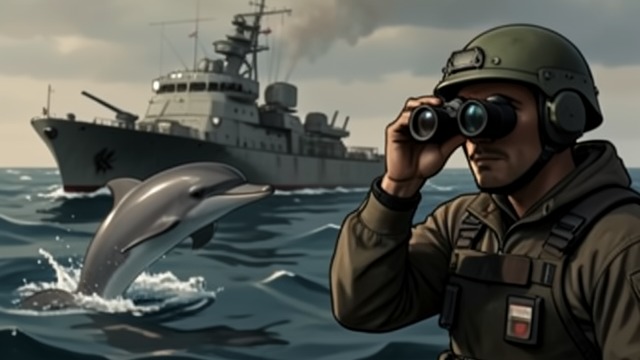
Cetaceans as Instruments
A military programme
The United States trains dolphins and belugas for tasks including mine detection and underwater surveillance. Animals adapted to the sea are recruited into human conflict.
An ethical reversal
The programme raises questions about ownership, consent, and the reach of military institutions. The animal’s intelligence and senses are valued while its independent life is subordinated.
A Moratorium and Its Limits
Protection in a Contested World
A global restriction
The International Whaling Commission adopts a moratorium on commercial whaling, reflecting changed public concern and severe population declines. The whale’s image becomes a focus for conservation politics.
Conflict continues
Some nations continue hunting under exceptions or in defiance of the agreement, while pollution and entanglement remain widespread. Legal protection changes the terms of conflict but does not end human pressure.
During Hoare’s childhood in the mid-twentieth century
During the postwar whaling peak
From the late 1940s through the Cold War
From the 1960s onward
From 1982 into the modern era
