
Hoare and the Whale’s Otherness
The WhaleThis flow traces Hoare’s changing response to whales as he moves between projection, physical disgust, intellectual curiosity, and respect for animal difference.
increasing Bearing strength in each event
 decreasing
Bearing strength in each eventdecreasingA Child’s Monster
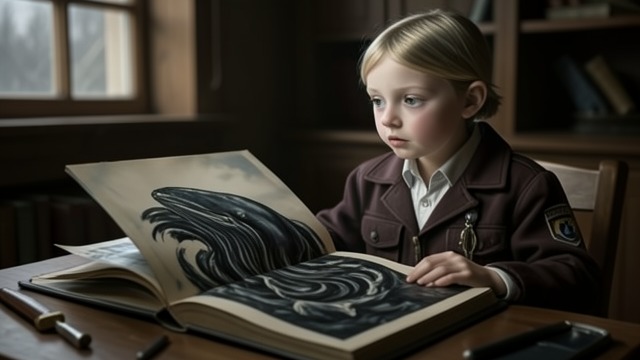
Fear and Fascination
Images from below
Hoare imagines creatures in the deep and recoils from illustrations he cannot bear to touch. The whale belongs to a world that is both frightening and compelling.
An early attachment
His fear does not remove his interest in animals. It creates an emotional tension that later draws him toward the sea rather than away from it.
The Beluga Behind Glass
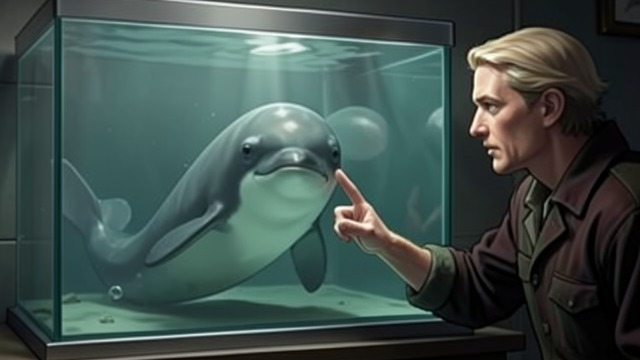
A Silent Meeting
A face in the tank
A beluga fixes Hoare with its gaze in a quiet aquarium. He reaches toward the glass as if a connection might cross the barrier.
Pity without access
The animal offers no response that Hoare can interpret. His compassion is genuine, but the whale’s silence reminds him how easily humans mistake their own hopes for another creature’s feelings.
Disgust at the Carcase
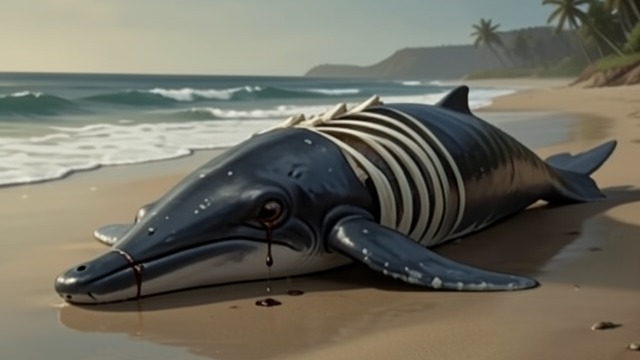
The Whale Out of Water
A body reduced
Hoare confronts a flayed, dead minke whose exposed body bears little resemblance to the elegant animal he had seen alive. Its smell and vulnerable anatomy unsettle him.
A challenge to sentiment
The scene resists idealization and forces Hoare to acknowledge that whales are material animals. His fascination includes revulsion as well as admiration.
Learning the Whale’s Senses
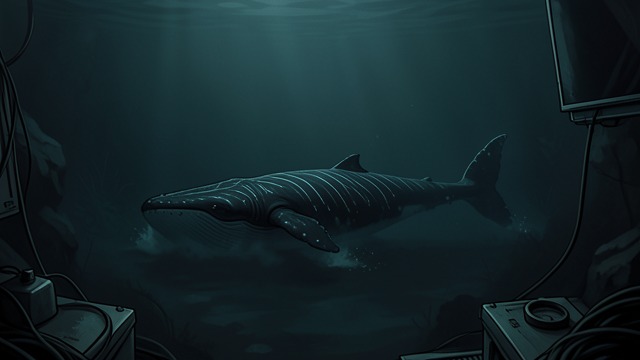
A Different Way of Knowing
The world of clicks
Hoare learns how sperm whales use sound to locate prey and communicate in deep water. Their sensory world cannot be judged by the standards of human sight.
Respect through difference
Scientific accounts make the whale more intelligible without turning it into a human. Hoare’s interest shifts from imagining likeness toward considering an independent form of life.
Acceptance of the Encounter
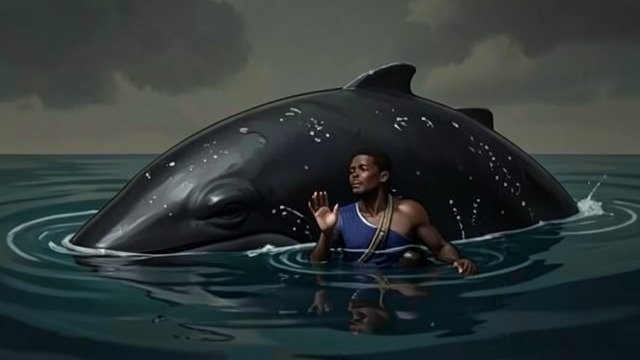
A Human in the Whale’s World
A close appraisal
A sperm whale approaches Hoare underwater, clicks through the water, and then passes him. He feels exposed, but not attacked, as the animal determines the encounter’s pace.
Connection without possession
Hoare experiences a moment of kinship while accepting that the whale remains other. The meeting matters precisely because it cannot be reduced to a human story of mastery.
During Hoare’s early childhood
During Hoare’s first New York winter
During Hoare’s visit to a stranded minke
During research on sperm whales
Near the end of Hoare’s Azorean journey
