
From Whale Killing to Whale Watching
The WhaleThis flow traces the shift from direct whaling to observation, while showing that changed attitudes do not end human pressure on whales.
increasing Bearing strength in each event
 decreasing
Bearing strength in each eventdecreasingThe Era of Close Pursuit
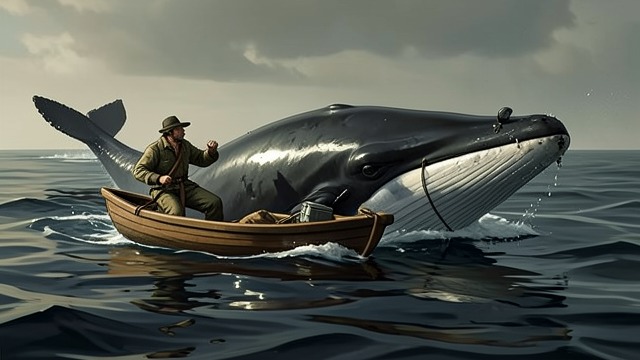
Whale and Hunter Face to Face
A dangerous encounter
Whalers pursue animals from small boats, bringing human bodies close to the whale’s weapons and power. The chase can be fatal to either side.
A commercial purpose
The risk is accepted because oil and other products can make the voyage profitable. Intimacy with the whale serves extraction rather than knowledge for its own sake.
Industrial Distance
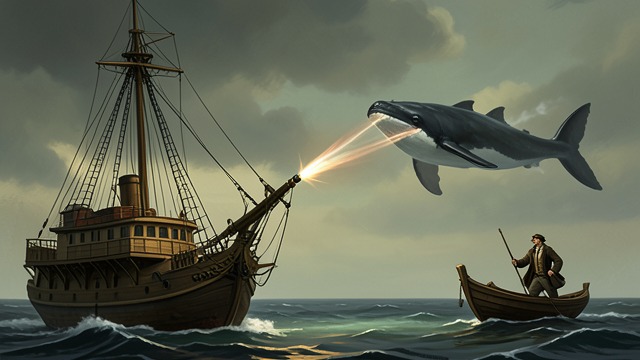
Killing at Scale
Greater reach
Steamships and harpoon guns allow fleets to pursue whales previously too fast to catch. Factory ships process their bodies far from public view.
A changed moral landscape
The distance between hunter and animal makes the killing easier to expand. The whale’s ability to resist declines as industrial equipment grows more powerful.
A Public Change of Feeling
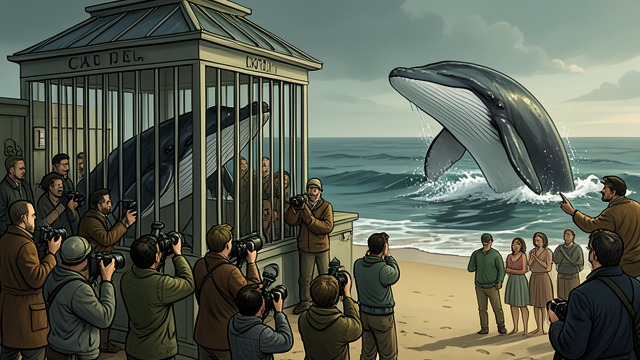
The Whale Becomes an Emblem
A different public image
Captive and free-swimming whales attract attention as individuals rather than anonymous catch. Campaigns and images make the consequences of whaling harder to ignore.
Sentiment and action
Public sympathy grows, though it coexists with continued commercial and political conflict. The shift in feeling prepares the ground for demands for protection.
The Moratorium
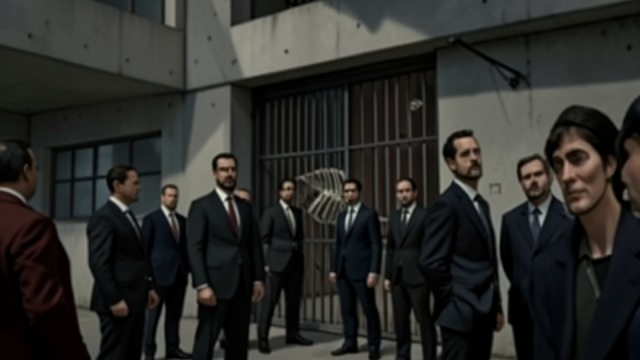
A Formal Pause
International action
The International Whaling Commission introduces a moratorium on commercial whaling. The policy reflects mounting evidence of population declines and growing public opposition.
An incomplete settlement
Some countries continue to hunt, while non-hunting threats remain. A legal turning point is not the same as a restoration of the lost whales.
The Whale Watch Boat
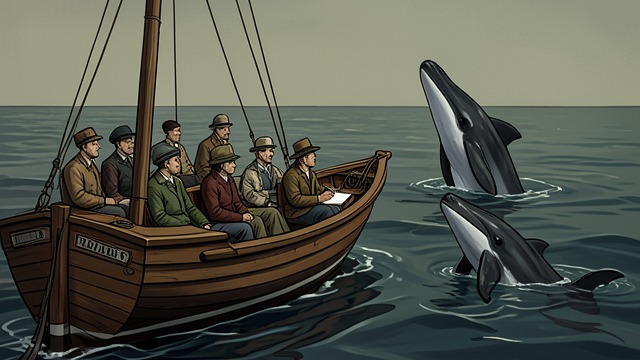
Looking Instead of Killing
A new encounter
Passengers travel into the Gulf of Maine to see whales alive. Naturalists record individual animals, and crews navigate under rules intended to limit disturbance.
A changed but active relation
Tourism makes living whales economically valuable, but people still enter their habitat by boat. Observation becomes a more restrained relationship, not a human absence.
During the age of open-boat whaling
During the twentieth-century factory-ship era
During the 1960s and 1970s
In 1982 and after
During Hoare’s return to Provincetown
