
The History of Whaling
The WhaleThis flow traces commercial whaling from local coastal hunts into a global industry and, finally, toward its decline.
increasing Bearing strength in each event
 decreasing
Bearing strength in each eventdecreasingNantucket’s Discovery
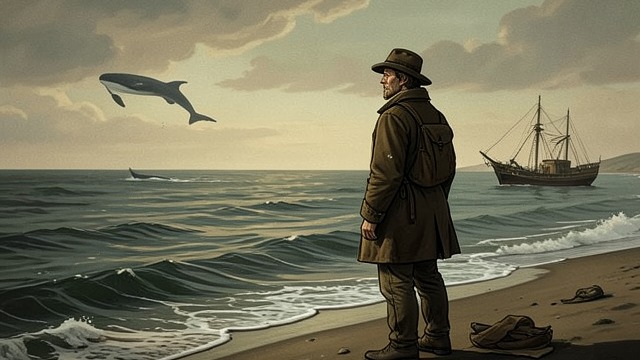
A New Quarry
The offshore encounter
According to the account Hoare recounts, Christopher Hussey encounters a sperm whale after being blown beyond familiar Nantucket fishing grounds. The sighting opens a new direction for the island’s whaling economy.
A trade transformed
The sperm whale becomes a prized target whose oil and other products support increasingly long voyages. Local experience expands into an enterprise reaching across oceans.
The Yankee Fleet
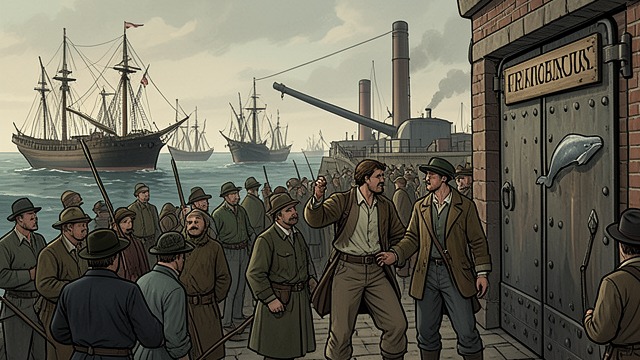
A Whaling Boom
New Bedford’s ascendancy
Hundreds of ships sail from New Bedford, carrying mixed crews into a dangerous and highly organized trade. Whale products finance a prosperous port and connect its fortunes to global markets.
Wealth and cost
The industry offers owners substantial returns while exposing sailors to harsh contracts, injury, desertion, and death. Its prosperity rests on the extraction of enormous animals and the labour of vulnerable crews.
The British Arctic Trade
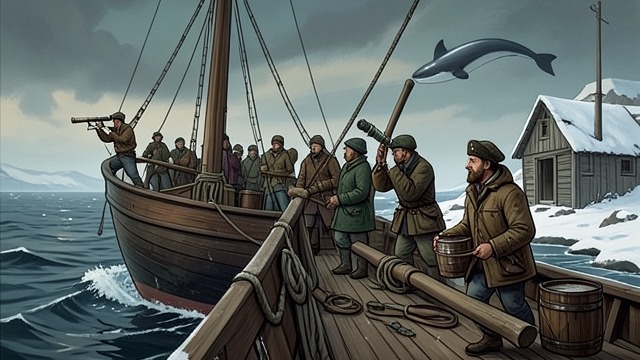
Northern Whaling
A different system
British ships from Hull and Whitby pursue whales in Arctic waters, bringing blubber and baleen home for processing. The trade supplies lighting, manufactured goods, and employment in northern ports.
Dangerous abundance
Captains and naturalists describe enormous catches, but many ships and sailors do not return. The apparent wealth of the Arctic fishery carries the warning of depleted grounds and human loss.
Technology Extends the Hunt
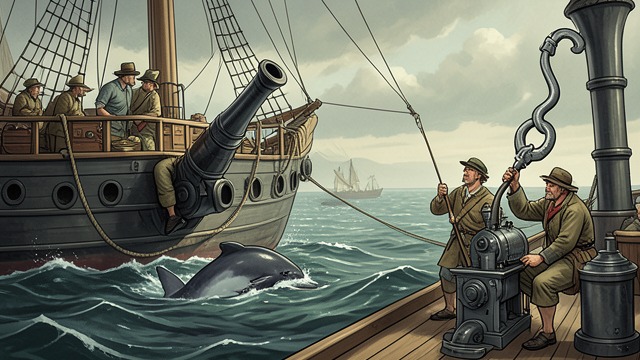
Industrial Killing
A new weapon
Sven Foyn’s harpoon cannon and explosive harpoon allow fleets to pursue fast rorquals that earlier hunters could not reliably catch. Steam power and factory ships make distant hunting more efficient.
A changed balance
The new methods remove much of the whale’s chance to escape or injure its hunters. Industrial capacity turns the hunt into mass slaughter on a scale unlike the earlier open-boat chase.
The Industry’s Retreat
A Shrinking Catch
Evidence of depletion
By the 1960s, the yearly kill has reached a historic peak, while major whale populations are collapsing. International quotas fail to prevent widespread evasion and concealed catches.
A disputed reprieve
The International Whaling Commission adopts a commercial moratorium in 1982, but hunting continues under exceptions and national objections. The change slows the hunt without erasing its damage.
In 1712
During the 1840s
From the eighteenth century into the early nineteenth century
From the late nineteenth century
From the 1960s through the international moratorium
