
Animal Intelligence Beyond the Human
The WhaleThis flow traces the growing recognition that whales possess complex senses, social lives, and cultural knowledge that human categories struggle to measure.
increasing Bearing strength in each event
 decreasing
Bearing strength in each eventdecreasingAn Unfamiliar Brain
Scale and Structure
A remarkable organ
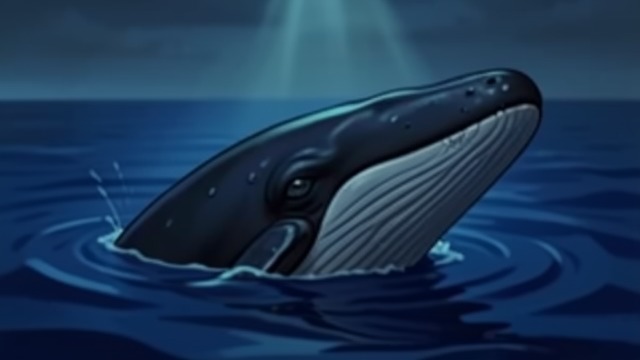
The sperm whale possesses an exceptionally large brain with structures associated with sensory processing and social intelligence. Its size invites comparison but does not explain its experience.
A caution about measurement
Human tests cannot simply be applied to an animal living in water and relying on sound. The whale’s abilities may be real even when their purposes remain obscure.
A World Built from Sound
Seeing Through Clicks
A sonar landscape
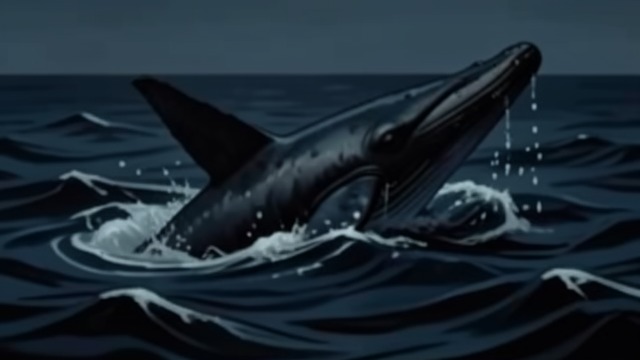
Sperm whales produce clicks and interpret returning sound to navigate and find prey in darkness. Their sensory reach extends through a medium people cannot inhabit for long.
A different reality
The whale’s world is not simply a darker version of the human one. Sound gives it information and possibilities that human sight cannot reproduce.
Social Care at Sea
Communities Beneath the Surface
Shared protection
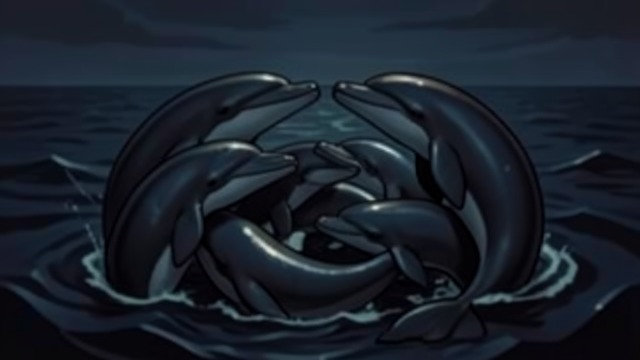
Female sperm whales and young travel in groups, and other whales can remain with a calf while its mother dives. When threatened, they may form protective arrangements around the young.
A challenge to human exceptionalism
Cooperation and care appear in a form that does not depend on human institutions. Observed behaviour invites comparison while resisting easy translation into human motives.
Clans and Learned Calls
A Cultural Map
Distinctive repertoires
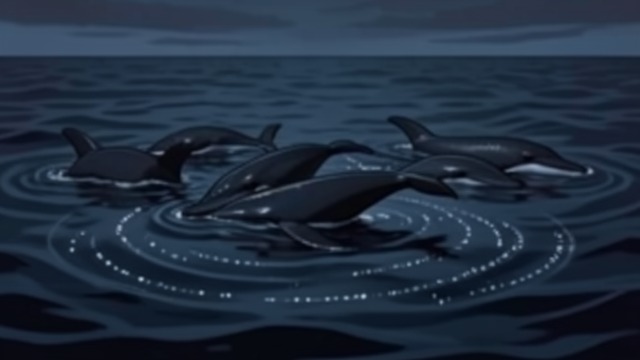
Different sperm whale groups use characteristic patterns of clicks and codas. Research suggests that group identity and learned behaviour may persist across generations.
Knowledge carried socially
A population’s survival may depend on experience acquired and transmitted by older animals. Hunting can therefore remove not only individuals but also knowledge about habitats and food.
A Question of Belief
The Limits of Human Certainty
A speculative possibility
Researchers consider whether sperm whales might possess abstract concepts or forms of spiritual life. The possibility remains difficult to test through human methods.
Humility rather than projection
Hoare treats the question as an invitation to reconsider human claims of uniqueness, not proof that whales share human religion. The animal remains both socially complex and partly unknowable.
During Hoare’s anatomical research
During the account of sperm whale echolocation
During Hoare’s research on sperm whale groups
During modern acoustic research
Near the close of Hoare’s discussion of intelligence
