1869
The Whale1869 is the year the last whaling ship left Nantucket, ending the island’s long role as a major center of the trade. That departure marked a local collapse, not the end of whaling: the industry was already shifting toward other ports and hunting grounds, while new weapons would soon make the pursuit of previously elusive whales more efficient and destructive.
Nantucket’s decline
Nantucket’s fortunes had begun to turn in the 1840s. Larger ships needed to reach distant sperm-whale grounds could not safely cross the island’s increasingly silted harbor bar, giving New Bedford an advantage in access. Some Nantucketers moved there, while New Bedford’s whalers pursued the Pacific as the island’s sailors persisted in depleted older grounds.
Disaster compounded the loss of commercial advantage. In 1846, a fire destroyed a third of Nantucket’s businesses, with barrels of whale oil in the warehouses intensifying the blaze. The California Gold Rush drew young men away; in 1849 the Aurora became the first Nantucket ship to sail for San Francisco, where crews deserted whaling vessels for the gold fields. Meanwhile, petroleum and gas began competing with whale oil. In 1859, Edwin L. Drake drilled for oil at Titusville, Pennsylvania, and the new source of fuel further undermined the sperm-whale fishery.
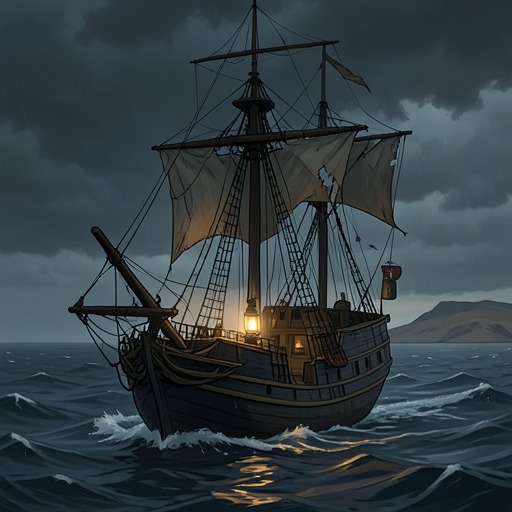
The Civil War brought another set of blows. Four hundred Nantucket men and boys left to fight for the Union, while Confederate attacks captured or burned whaling ships. Some owners kept their vessels at home, and the Union itself sacrificed forty whale-ships, filled with rubble and sunk to obstruct southern harbors. The trade continued for a few more years, but in 1869 the last whaling ship departed Nantucket. The once-busy quayside and the mansions built by whaling captains would stand as traces of an industry no longer based there.
The labor and wealth behind the trade
The year’s significance is clearer against the social world that whaling had made. In 1838, Frederick Douglass escaped slavery dressed as a sailor and arrived in New Bedford, where he spent four years doing hard manual work, including rolling casks, stowing ships, sawing wood, sweeping chimneys, and working at a blacksmith’s bellows. The whaling port offered work to Black men, including sailors who could rise to become captains or mates, though shipboard bunks remained segregated and conditions were harsh. By the late nineteenth century, men of color predominated in crew photographs in part because few others could be persuaded to sign on.
New Bedford’s crews and neighborhoods reflected the reach of the trade. By the second quarter of the nineteenth century, one in twenty residents was Black; Azorean and Cape Verdean communities also formed part of the port’s population. At sea, a ship could become a small, self-contained society, but not an equal one. Its cramped quarters accommodated both working crews and, at times, entire families; rank determined sleeping space and even access to light. These conditions help show that the industry’s decline involved not just ships and markets, but the end of a particular system of work and life.
The wealth created by whaling was visible ashore. Nantucket’s candle-makers processed sperm-whale headmatter through repeated pressings to produce spermaceti and, after further treatment, white wax. In New Bedford, the grand houses of County Street displayed another conversion of ocean life into property: the fortunes behind their architecture came from whales killed across the Atlantic, Pacific, and Indian oceans. The contrast between these residences and the crowded conditions aboard ship made the trade’s unequal distribution of wealth difficult to miss.
A local ending, not an industrial one
The departure of Nantucket’s final ship did not halt the technological transformation of whaling. On Christmas Eve 1868, Sven Foyn recorded his gratitude after patenting a grenade harpoon designed to explode in a whale’s head. His steamship Spes et Fides sailed with the weapon, which enabled Norwegian whalers to pursue large, fast rorquals that earlier crews had struggled to catch. The innovation arrived as sperm and right whales had already been depleted and the price of whale oil had fallen with the spread of petroleum and gas. Rather than ending the hunt, pressure on one set of species and grounds helped redirect it toward others.
By 1904, Norwegian and British steamships had opened Antarctic waters to industrial whaling, where whale products supplied a new market: the manufacture of nitroglycerine. During the two world wars, tens of thousands of whales were killed, and the South Atlantic humpback population was driven to extinction by 1918. The later factory-ship era extended the scale of this destruction. These developments belong to the aftermath of 1869, but they clarify why the year should be read as a turning point in the geography of whaling rather than as the trade’s conclusion.
Historical significance
Nantucket’s final departure condensed several forces into a date: a harbor less suited to larger vessels, migration to a better-positioned port, fire, the attraction of gold, competition from fossil fuels, and wartime losses. The island’s emptying wharves were one visible consequence of changes that were also reshaping the whale fishery elsewhere. What ended there in 1869 was a particular local economy; the broader industry adapted, moving toward new technologies and new populations of whales, with consequences that reached far beyond the island.