Ahab
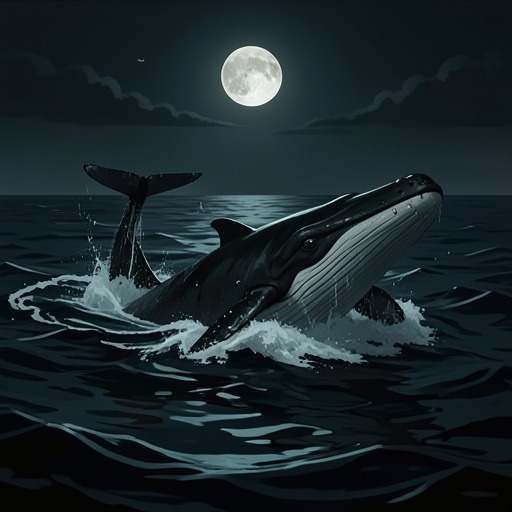
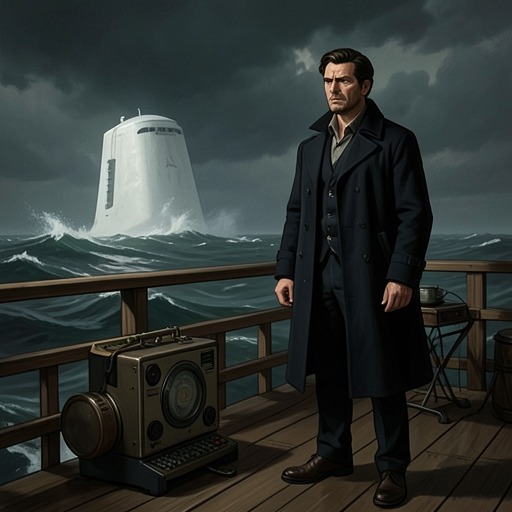
The WhaleAhab is the half-demented, peg-legged captain of the Pequod in Herman Melville’s Moby Dick, and the force that bends its voyage toward catastrophe. His pursuit of the White Whale begins in personal vengeance but acquires a larger meaning: the whale becomes an instrument of fate, a monstrous power against which human ambition and command prove helpless.
Identity and the Pursuit
Ahab’s defining objective is to hunt the sperm whale that dismasted him. The voyage is therefore not simply a commercial hunt: it becomes an extended act of revenge, directed at an animal that Ahab treats as a deliberate adversary. The distinction matters. The book’s account sets this toothed deep-ocean whale apart from the comparatively placid baleen whales of coastal waters, emphasizing that Ahab’s quarry belongs to a more threatening realm. He is not pursuing an ordinary source of profit so much as confronting the creature that has already altered his life.
That private grievance takes command of the Pequod’s voyage. Ahab’s pursuit gives the hunt its single, consuming direction, even as the whale exceeds the boundaries of an individual enemy. In the industrial century represented by the book, people still feared nature’s elements; the White Whale becomes a means through which that fear gathers into a figure. Ahab’s vengeance thus binds personal injury to a larger struggle between human will and a natural power that cannot be mastered by resolve alone.
Prophecy, Fate, and the White Whale
The warning delivered by Gabriel, the mad prophet aboard the passing ship Jeroboam, places Ahab’s pursuit in a religious and prophetic register. Gabriel identifies the White Whale with the Shaker God incarnate. The warning makes Ahab’s quarry more than a dangerous animal in the minds of the book’s characters: it becomes a presence through which divine or demonic power might act. Ahab continues toward it, and the prophecy sharpens the danger already built into his pursuit.
The book’s interpretation sets Ahab against Jonah, who was saved by the whale for God’s work, while Ahab is destroyed by the devil’s. This contrast makes the whale’s meaning depend on the human course it intersects: rescue in one biblical pattern, destruction in Ahab’s. The comparison does not make Ahab a simple opposite of Jonah. Instead, it places his chosen confrontation within a moral and religious frame in which the same immense creature can signify radically different ends.
Seen through Ahab’s eyes, the White Whale is far removed from the reassuring image of a smiling dolphin or performing orca. Its ominous shape and pallor evoke the apocalyptic Leviathan, while harpoons left by other hunters suggest that earlier attempts to subdue it have failed. The whale is imagined almost as a dragon, and Ahab as its would-be slayer. This vision gives his pursuit the structure of a heroic contest, but also exposes its danger: the monster Ahab means to kill may be the power that determines his fate.
The Captain’s Body and the Whaling World
Ahab’s peg leg makes his bodily history visible within the shipboard world. During the hunt, the harpooneer braces himself at the prow, fitting his thigh into a cleat cut into the boat’s gunwale. The account compares that precarious fit with Ahab’s peg leg seated in a socket made on the Pequod’s deck. The parallel joins captain and crew to the equipment that carries them toward the whale, while stressing the imbalance between human construction and the animal’s strength: wood against blubber, a frail vessel against a formidable body.
Ahab’s life at sea also carries consequences beyond the hunt. He tells Starbuck that in forty years he has spent fewer than three ashore, leaving his marriage marked by prolonged absence. The detail places his pursuit within a whaling culture that separates men from home for years at a time. In the account of Nantucket life, women manage businesses and endure the loneliness produced by men’s departures; Ahab’s history offers a stark measure of that separation from the captain’s side. His devotion to the sea is not merely an episode of revenge but a pattern that has occupied almost the whole of his adult life.
The book’s later interpreters also read the whale and Ahab’s bodily vulnerability through sexual symbolism. That critical perspective makes the encounter more complicated than a contest between hunter and prey: the whale is imagined as a power that threatens the masculine authority Ahab seeks to assert over it. The interpretation belongs to the book’s history of reading the novel, rather than establishing Ahab’s conscious motive. It nevertheless reinforces a recurring paradox: the men attempt to make the whale submit, yet their encounter leaves them vulnerable to being overwhelmed by it.
Destruction and Survival
Ahab’s pursuit ends in destruction. The whale that first dismasted him ultimately takes the rest of him as well, fulfilling the account’s grim description of a revenge voyage whose quarry cannot be reduced to a target. The outcome completes the reversal embedded in Ahab’s role as would-be slayer: he approaches the whale as though vengeance could restore mastery, but the hunt instead carries him toward the power he means to defeat.
Only Ishmael survives, left as another orphan and described as an emblem of martyrdom and rebirth. His survival gives Ahab’s ending its counterpoint. Ahab is destroyed by the pursuit; the survivor’s passage through loss becomes a figure for life preserved through the loss of life. The difference does not soften the captain’s fate. It shows how completely the voyage has divided its human outcome between Ahab’s doomed confrontation and Ishmael’s survival.
Narrative and Thematic Role
Ahab concentrates the book’s collision between whaling as a material enterprise and the whale as a metaphysical presence. In the age of whaling, the animal meant money, food, livelihood, and trade, but hunting it also exposed people to death and disaster. Ahab embodies the most absolute form of that exposure: he treats the whale as an enemy to be pursued beyond ordinary economic purpose, while the whale’s scale makes every human claim to dominion seem provisional.
The account later invokes Ahab again when describing Stormy Mayo, whose life jacket catches on a fishing line as a whale dives, threatening to drag him down. The comparison draws a line from the Pequod’s fatal pursuit to a modern rescue encounter: in both, a human being is tethered to an animal’s movement and faces the force of the sea. The circumstances differ—Mayo is trying to free an entangled whale, not kill one—but the echo shows how Ahab remains a measure of the danger involved when human lives meet the whale at close range.
Through Ahab, the whale becomes at once quarry, adversary, omen, and figure of nature’s resistance. The captain’s pursuit gives those meanings a human shape without resolving them into a single explanation. His destruction leaves the central imbalance intact: people may hunt the whale for wealth or pursue it as an enemy, but they cannot make its power answer to their purposes.