Ahab–Moby Dick antagonism
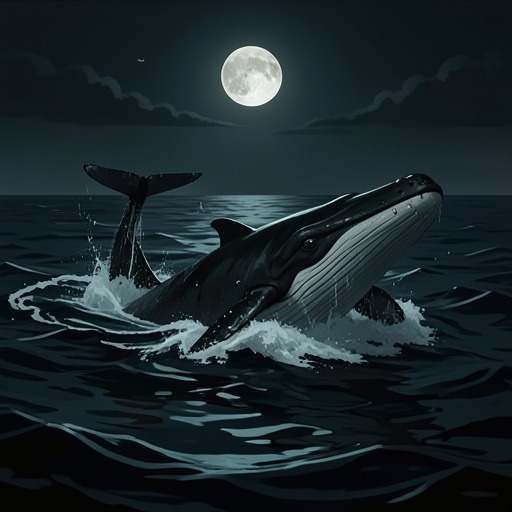
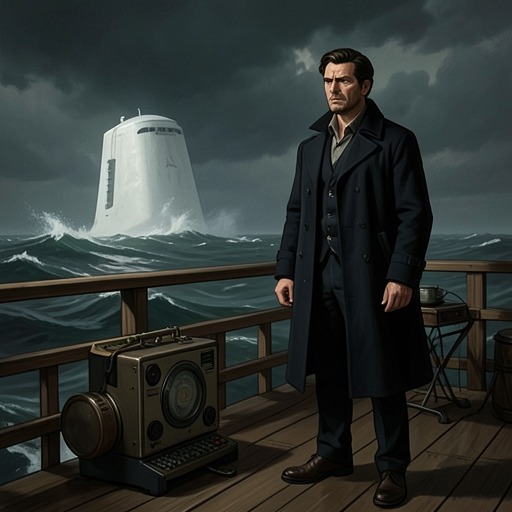
The WhaleAhab–Moby Dick antagonism is the governing conflict of the Pequod’s voyage: a maimed captain pursues the sperm whale that dismasted him, and the pursuit ends in Ahab’s destruction. In Herman Melville’s account, their opposition is at once bodily and symbolic. Ahab confronts an animal of the deep as if it were fate’s instrument, while the whale’s terrifying presence gives his private vengeance the scale of a struggle between humanity and an indifferent natural world.
Injury and the Vow of Vengeance
Ahab’s pursuit begins with a physical encounter: Moby Dick has dismasted him. The injury makes the whale not an abstract quarry but the force that has already altered Ahab’s body and life. Ahab’s voyage aboard the Pequod becomes an extended act of vengeance directed at the creature responsible. The account calls him half-demented, presenting the pursuit as an obsession that has taken command of the ship’s purpose.
The stakes are not confined to the original injury. The same whale that took Ahab’s leg will, in time, take the rest of him. The relation is therefore structured as an escalation: Ahab sets out to answer bodily loss with violence, but the pursuit brings him toward a more complete destruction. The whale is both the object of his retaliation and the force against which that retaliation fails.
The Whale as Monster and Projection
Moby Dick is described as a monstrous, toothed sperm whale of the deep ocean, set against the placid baleen whale associated with coastal waters. That contrast makes the animal’s setting part of its menace: it belongs to an oceanic world that remains dangerous and resistant to human command. Seen through Ahab’s eyes, its ominous shape and uncanny pallor turn it into an avenging angel, a Leviathan-like figure hung with harpoons left by other hunters’ futile attempts.
The account also marks the distance between the whale as an animal and the whale as Ahab imagines it. Moby Dick seems almost a dragon, with Ahab cast as the would-be slayer. This is not a reassuring image of animal-human kinship; it is a terrifying projection through which Ahab gives the whale the dimensions of a supernatural adversary. The conflict thus exposes how the hunter’s interpretation magnifies the quarry, without making the animal any less materially dangerous.
Fate, Destruction, and the Survivors
Ahab’s struggle is placed within a moral and religious pattern. The mad prophet Gabriel warns that the White Whale is the Shaker God incarnate. The account contrasts Jonah, saved by a whale for God’s work, with Ahab, destroyed through what it calls the devil’s work. The whale accordingly becomes more than the instrument of Ahab’s injury: it bears an ominous significance that turns the hunt into a contest over human limits, fate, and the possibility of mastering nature.
The ending reverses the hunter’s intended mastery. Ahab sets out to kill the whale, yet the pursuit takes him; only Ishmael survives, figured as another orphan and as an emblem of martyrdom and rebirth. The account does not make that survival a victory over the whale. Instead, the survivor’s place at the end sharpens the cost of Ahab’s vengeance: the captain’s attempt to answer injury with domination culminates in his own destruction, while the broader encounter between humanity and the sea remains unresolved.
The Conflict Beyond the Novel
The antagonism also condenses the danger of the historical whaling encounter. The whale could mean money, food, livelihood, and trade, yet men risked their lives to hunt it, meeting it in flimsy boats against its powerful flukes. Moby Dick’s confrontation with Ahab gives that larger danger a singular dramatic shape: an effort to possess and destroy the animal becomes a meeting in which the hunter may be destroyed instead.
The book’s interpretation keeps the whale from becoming merely a symbol of human guilt or a comforting mirror of human feeling. Ahab’s vision makes Moby Dick apocalyptic, but the account’s larger concern is also the animal’s real vulnerability: whales paid for human contact in near extinction. Their antagonism therefore carries a double consequence. It reveals the mortal risk imposed on hunters by the whale, and points beyond the novel to the devastating price paid by the animals themselves.