California Gold Rush
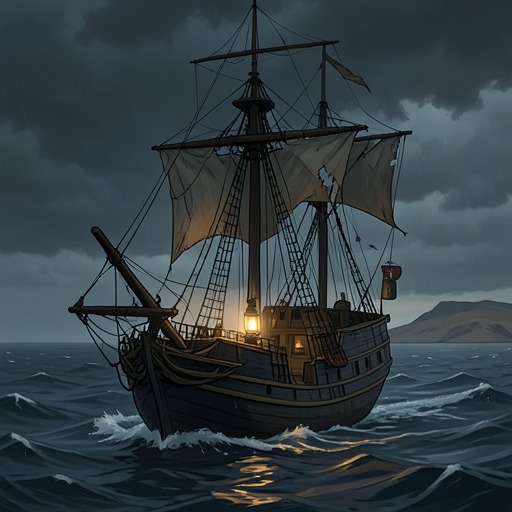
The WhaleThe California Gold Rush appears in the account of Nantucket’s decline as a powerful new lure for people and labor. In 1848, young islanders began seeking quicker fortunes in the West; the following year, the Aurora became the first Nantucket ship to sail for San Francisco. At the same time, whale-ship crews were abandoning vessels there for the gold fields, turning the promise of mineral wealth into a direct competitor for the people and ships of the old whaling economy.
An Island Already Under Pressure
The Gold Rush arrived amid a succession of setbacks. Nantucket’s larger whale-ships, needed to pursue sperm whales farther afield, could not safely cross the island harbor’s treacherous, increasingly silted sandbar. Business and residents were already shifting toward New Bedford, whose easier access and Pacific whaling grounds gave it an advantage. In 1846, a fire destroyed a third of Nantucket’s businesses; warehouses full of Whale oil helped feed the flames. The migration to California followed only two years later, adding a fresh reason for young Nantucketers to leave.
The Pull of the Gold Fields
The attraction was speed: the Gold Rush offered the possibility of a quicker fortune than the increasingly difficult work of whaling. In 1849, the Aurora set out from Nantucket for San Francisco, where whale-ships lay abandoned as their crews deserted for the gold fields. The account gives the migration a sharply material detail: some people left home with almost nothing, not even underwear, reasoning that they were going west to wash gold, not their own dirty linen. That irreverent logic captures the urgency of the departure and the way a distant opportunity could reorder ordinary priorities.
Whaling Meets a New Competitor
The Gold Rush did not alone end Nantucket’s whaling trade, but it belongs to the chain of pressures that turned the island’s fortune into failure. The ships and young people drawn west were part of a larger redirection of effort away from Nantucket, as its harbor constrained the new vessels and New Bedford prospered. Gold-seeking also exposed how readily maritime labor could be pulled toward another kind of extraction: whale-ships became empty when crews chose California over the voyage.
Place in Nantucket’s Decline
The westward movement was one stage in a longer transformation. Petroleum and gas had begun changing the market for whale oil; in 1859, Edwin L. Drake’s well at Titusville, Pennsylvania, signaled a further shift in energy and industry. War then damaged the Yankee whaling fleet, and the last whaling ship left Nantucket in 1869. Against that longer chronology, the Gold Rush marks an early, human-scale rupture: while Nantucket’s old trade was losing its advantages, the prospect of gold was already carrying its young people and whaling crews elsewhere.