Explosive harpoon
The WhaleThe Explosive harpoon was Sven Foyn’s patented grenade harpoon, a weapon that detonated inside a whale’s head and helped open the hunt to the largest rorquals. In the book’s account, it marks a technological turning point: whales previously beyond the practical reach of whalers became targets of an increasingly efficient industry, and a sighting could mean near-certain death.
Invention and first deployment
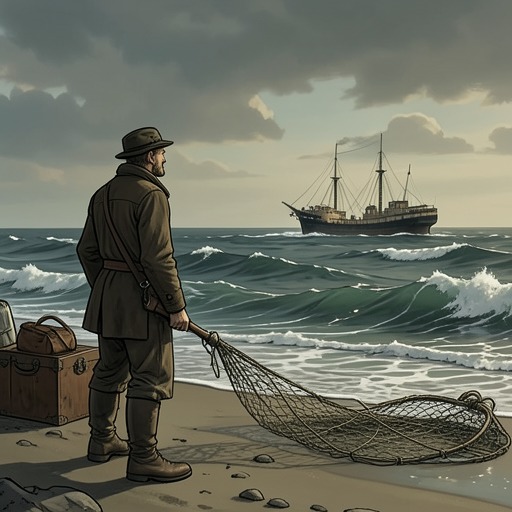
On Christmas Eve 1868, Foyn recorded his gratitude for the invention he had just patented. A former seal hunter, he was portrayed as devout and widely respected; the juxtaposition between that reputation and the weapon’s purpose gives the episode its sharpest tension. The harpoon was not introduced as an abstract technical advance but as the instrument of a new commercial pursuit.
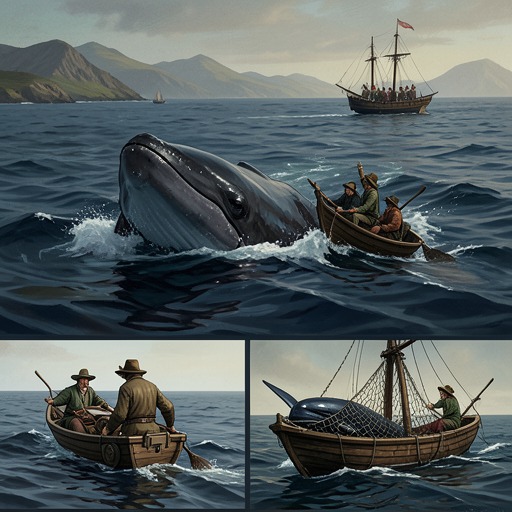
The maiden voyage of the Spes et Fides, whose name means Hope and Confidence, carried the new weapon. Foyn’s invention belonged to a longer history of harpoon guns, already used against whales since the early nineteenth century, but it extended their reach. The earlier methods associated with whalers such as Starbuck and William Scoresby had not made the largest rorquals readily catchable; the grenade harpoon changed that limit.
Expansion of the hunt
The new weapon enabled Norwegian whalers to pursue blue whales and fin whales, the largest animals on earth. Speed no longer offered the same protection: in the account, once a whale was sighted, its survival was treated as almost decided. The technology therefore changed not only the range of the hunt but its balance of power, reducing the whale’s chance to escape.
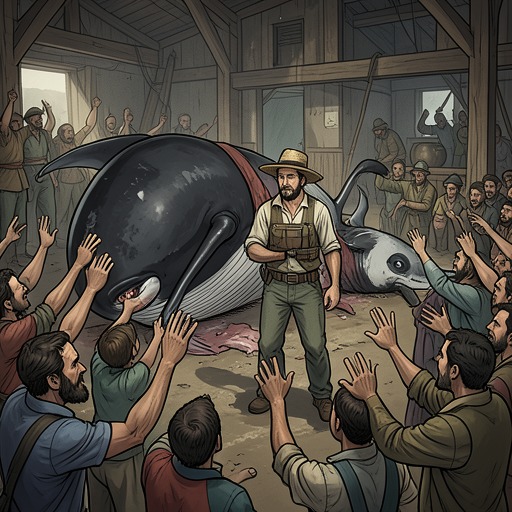
The consequences accumulated quickly. Scandinavian fleets soon killed a thousand fin whales a year, while humpbacks also suffered as steamships and harpoon-launchers extended the technological era of whaling. The harpoon’s significance lies in this connection between a single patented device and a widening capacity to take whales on an industrial scale.
A weapon within industrial whaling
The book later places exploding harpoons among a range of methods used against whales, alongside poisoning and attempted electrocution. This wider catalogue presents the harpoon not as an isolated innovation but as part of a growing arsenal directed at animals whose dwindling numbers had pushed the industry toward new targets and techniques.
The account’s central irony is that an invention associated with Foyn’s religious gratitude served a trade governed by commercial demand. As earlier whale populations were depleted and the fishery sought species still available for profit, the explosive harpoon made the pursuit of the largest whales practicable. Its efficiency thus carries a double meaning: technical success for the hunters, and a further loss of protection for the animals.