Liverpool of Melville's First Voyage
The WhaleLiverpool of Melville's First Voyage enters the account as both a maritime spectacle and a social revelation. During his first passage at sea, Herman Melville encountered the city's converted ships and preaching whalers alongside visible poverty tied to industrial labor. The visit did not bring him money or security, but it became the material for Redburn, his later fictionalized account of the voyage.
Arrival on the St Lawrence
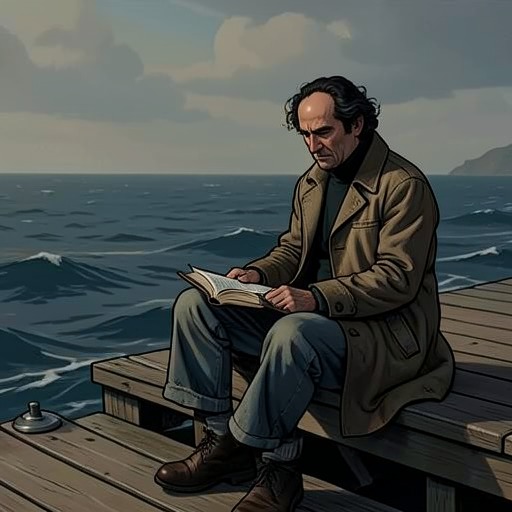
On 5 June 1839, the St Lawrence sailed from New York City carrying cotton bound for Lancashire, with the nineteen-year-old Herman Melville among its passengers. He felt out of place among the crew, who mocked his middle-class manners, clothes, and lack of shipboard experience. The passage had already made the ocean more than a route between ports: in a Newfoundland fog, Melville heard sounds that drew him to the ship's side, where he glimpsed several dark shapes just above the water. The encounter made him consider whether the story of Jonah might be true, joining an uncertain sea sight to the imaginative and religious questions that would accompany his later writing.
A maritime chapel and a former whaler
The sights of Liverpool astonished Melville. Among them was a Floating Chapel made from an old sloop-of-war: its mast had been replaced by a steeple, and its balcony was arranged like a pulpit. William Scoresby, formerly one of England's leading whalers and now a preacher, spoke there. The chapel brought two maritime lives into one place: the whaler's earlier work at sea and his later religious vocation. In Melville's account, the converted vessel made the harbor's religious presence inseparable from its working maritime past.
Industrial hardship in the port
The city also exposed Melville to poverty that stood sharply against the chapel's orderly public presence. He saw a young man using a placard to represent the danger and bodily cost of factory labor. More harrowing still was the sight of a destitute mother with two children and an infant at the bottom of cellar steps; the scene suggested that the infant had died. These encounters placed industrial suffering directly within the young sailor's experience of the port. Liverpool was not simply a destination to be admired: its crowded urban life revealed the human costs alongside the commerce that connected its mills to cargoes such as the cotton aboard the St Lawrence.
Return and literary afterlife
On 30 September 1839, Melville returned to New York City aboard the St Lawrence. He had earned no money, and resumed teaching to help support his widowed mother and four sisters. The voyage had changed his experience rather than his immediate circumstances: he had learned life at sea, and within a year would leave on a more ambitious whaling voyage. Later, he transformed the Liverpool passage into Redburn, a fictionalized account of his first sea journey. In that literary afterlife, the city remains a formative threshold, where the strangeness of maritime life and the inequalities of industrial society first came into view together.