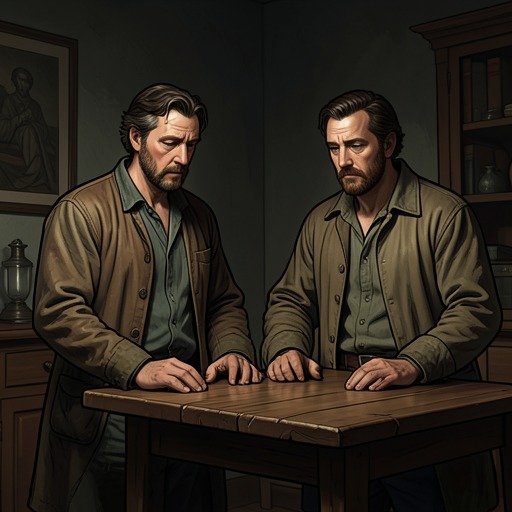
Melville and Hawthorne Meet at Monument Mountain
The WhaleThe meeting of Herman Melville and Nathaniel Hawthorne on Monument Mountain on 5 August 1850 joined two very different literary temperaments and altered the course of Melville’s life. The encounter began at a country picnic, turned into an impromptu performance among the mountain’s rocks and ravines, and continued over dinner with talk of a sea serpent. Its lasting significance lay in the attraction between Hawthorne, a writer steeped in guilt and historical darkness, and Melville, whose imagination made the ocean a realm of adventure and terror.
Setting and Circumstances
In the summer of 1850, Melville was staying with his aunt near Pittsfield. He had recently read Hawthorne’s Mosses from an Old Manse and was captivated by its evocation of old New England. Hawthorne, then living in Lenox, had moved to the Berkshires after the success of The Scarlet Letter, seeking distance from public attention while working on another novel. The meeting took place in a landscape whose sublime beauty drew the two writers out of their separate routines and into a shared social world.
On 5 August, Hawthorne was persuaded to attend a picnic organized by David Dudley Field, a well-connected New York lawyer. The party included Melville, Evert Duyckinck, Oliver Wendell Holmes, and several women. They set out for Monument Mountain, but a sudden shower sent them under a rocky ledge before they reached the summit. There, sheltered from the rain, they drank champagne from a silver mug. The weather interrupted the planned excursion, but the pause created the intimate, informal setting in which the encounter began to take shape.
A Mountain Becomes a Stage
When the sun returned, the group continued upward. Melville was in high spirits. He clambered along a projecting rock like a bowsprit, mimed hauling rigging, and pretended to harpoon a pond in the valley because its shape suggested a whale. The gesture brought the sea into the mountain landscape: even inland, Melville’s imagination translated the terrain into the language of ships, whales, and open water. His performance recalled the freedom of a peak-climbing episode in Typee, where escape from a ship’s authority opens onto a different kind of life.
The mood proved contagious. In the shadowed ravine known as Icy Glen, Hawthorne took his turn, calling out warnings of destruction to the party. The afternoon’s play moved between Melville’s maritime bravura and Hawthorne’s darker theatricality. At dinner at the Fields’ house, the group discussed a sea serpent reported off the Massachusetts coast, carrying the day’s imaginative meeting of land, sea, and the uncanny into the evening.
Recognition Between the Writers
Hawthorne already admired Melville’s Typee, and the mountain gathering strengthened his impression of the younger writer as an unusually magnetic and independent figure. Melville’s experiences drifting through the South Seas stood in sharp contrast to Hawthorne’s more inward life and haunted introspection. Their common ground was not a sameness of temperament but the force of that difference: Melville brought the authority of lived travel and maritime adventure; Hawthorne brought a literary vision alert to history, guilt, and the evil within human beings.
The encounter also brought together motifs that would matter in Melville’s developing work. Hawthorne’s fiction repeatedly examined the persistence of human evil, while Melville’s stories and romances turned the ocean and the whale into sources of danger and mystery. Their meeting has the quality of an exchange between fire and water: not a merger of their styles, but a recognition that each writer inhabited a powerful imaginative territory the other could approach.
Aftermath and Significance
A month after meeting Hawthorne, Melville moved to Arrowhead, a farm south of Pittsfield bought with help from his father-in-law. He worked the fields for two hours a day and sold cider by the roadside, but the farm also placed him less than an hour’s ride from Hawthorne’s home in Lenox. Hawthorne soon told a friend that he liked Melville so much he had invited him to stay for several days. The move made their new acquaintance part of Melville’s everyday geography rather than a single day on the mountain.
The gathering is significant both as the beginning of a consequential personal connection and as a scene in which the writers’ differences became visible. Melville’s lively performance on the exposed rock contrasts with the darkness associated with Hawthorne’s writing; the later image of Melville descending into that gloom gives the bright mountain day a retrospective turn. What began as a picnic became a meeting of literary imaginations, and a moment from which Melville’s course would change.