Monument Mountain
The WhaleMonument Mountain in the Berkshires is more than a scenic landmark in the book: it is the place where Herman Melville met Nathaniel Hawthorne in 1850, and where the landscape, their contrasting temperaments, and talk of whales and sea serpents briefly converged. The mountain gives this encounter a physical shape. Its summit opens onto a broad valley, while its wooded slopes and gloomy ravine provide changing settings for a day that moves from literary admiration to exuberant performance and an emerging friendship.
Setting and Landscape
The mountain stands off Route 7, its lower reaches now surrounded by dense woods. The account imagines the landscape a century and a half earlier, when the trees were less close-grown, and describes a climb made after two days of rain. Water still drips through the pines; huge boulders break up the hillside, and a stream runs through the valley beneath ferns. A shower sweeps over the final ascent, where garter snakes bask on the rocks and bright orange lizards dart into crevices. At the top, quartzite crags and stunted pines overlook the green-carpeted valley of the Housatonic River, with hawks hovering on the updraught. The description holds the scene in a moment of stillness before turning to the meeting that made the place consequential.
The mountain’s significance also belongs to the book’s larger attention to wilderness. The sea is presented elsewhere as an enduring, incompletely known expanse that civilization cannot simply tame; here, the mountain provides a land-bound setting whose weather, rock, stream, and sudden changes resist the idea of a passive backdrop. The rain interrupts the climb, the summit opens the view, and the shaded ravine alters the mood. These shifts give the encounter a setting that acts upon its visitors without making the mountain itself a character or assigning it motives.
The 1850 Meeting
In the summer of 1850, Melville was staying with his aunt in nearby Pittsfield. He had been captivated by Hawthorne’s Mosses from an Old Manse, especially its wistful evocation of old New England. Hawthorne, then living nearby in Lenox, had withdrawn from the commotion following the success of The Scarlet Letter and hoped to work on The House of the Seven Gables. Their meeting took place in a countryside that the book likens to England’s Lake District and describes as romantic in its beauty. The account marks the encounter as an epiphany: a meeting with consequences for Melville’s life and writing.
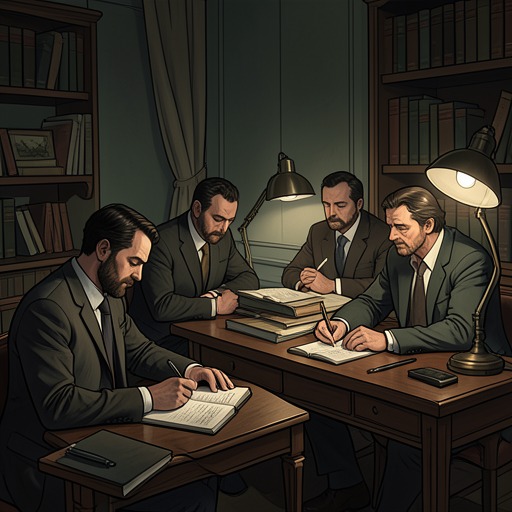
On 5 August, Hawthorne was persuaded to attend a picnic organized by David Dudley Field, a well-connected New York lawyer. The party included literary figures such as Evert Duyckinck and Oliver Wendell Holmes, as well as several women and Melville. A sudden shower stopped their progress toward the summit and sent them under a rocky ledge, where they drank champagne from a silver mug. The mountain meeting thus began not with a planned literary conversation but with a weather-driven pause among picnic companions.
Summit and Icy Glen
When the sun returned, the group continued upward. Melville, in high spirits, climbed over a long rock jutting out like a bowsprit, pretended to haul in imaginary rigging, and acted as if he were harpooning a whale-shaped pond in the valley. The performance brought his seafaring and whaling imagination into the inland landscape. It also echoed the mountain-climbing scenes in Typee, where the narrator and Toby escape the constraints of their ship and experience a new-found freedom. On Monument Mountain, the mock hunt was play rather than a real pursuit, but it made the whale and the sea present even in a country setting.
Later, in the shadowed Icy Glen, the performance shifted to Hawthorne. The place was said to keep ice in its mossy recesses throughout the year. There Hawthorne called out warnings of inevitable destruction to the party. The group then went to the Fields’ house for dinner, where they discussed a sea serpent reported off the Massachusetts coast. The day’s sequence moves from champagne under shelter, to Melville’s imaginary harpoon, to Hawthorne’s darkly theatrical warning, and finally to a conversation about a creature of the sea. Mountain, ravine, and dinner table each become a different setting for the meeting of landscape, literary imagination, and maritime wonder.
Literary Significance
The book presents Hawthorne as already an admirer of Typee and Melville as a magnetic presence: an independent traveler whose experiences across the South Seas contrasted with Hawthorne’s more inward, haunted life. Their common ground included family connections to the sea, but their paths had been different. The meeting on the mountain brought those differences into contact without erasing them. The account interprets the day as a mingling of Hawthorne’s preoccupation with human evil and Melville’s whaling romance, a combination that would matter to Melville’s developing work.
Monument Mountain also becomes a point from which to see a later change in Melville. On the summit, he appears energetic and playful, acting out a sailor’s work before a whale-shaped pond; in the book’s retrospective framing, that brightness will give way to the gloom associated with Hawthorne. The closing contrast between the sunlit summit and the damp, dripping glen turns the day’s actual movement across the mountain into an image of the direction Melville’s life would take. The place remains significant not merely because two writers met there, but because the scene joins a specific encounter to the book’s larger concerns with wilderness, literary influence, and the uneasy pull of darkness beneath exuberance.