Nantucket of Moby-Dick and New England Whaling
The WhaleNantucket of Moby-Dick and New England Whaling occupies a double place in the book: a small, exposed island set apart from the mainland, and a name that came to stand for American whaling ambition. Its history turns on the relation between geography and livelihood. Offshore waters made whaling possible, but a silting harbor, fire, migration, and new sources of energy eventually weakened the economy that had made the island famous. The result is not simply a portrait of a vanished port; it is an account of how a place can become both a practical center of industry and a powerful national image.
An island imagined as a distant world
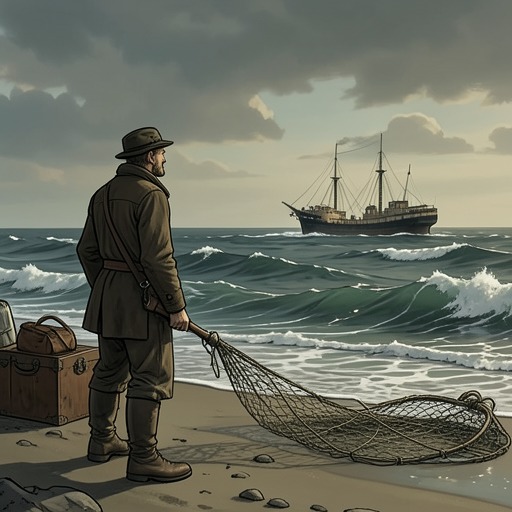
Nantucket’s shape and position make remoteness part of its identity. In the novel, the island is described as a small projection of land, without a mainland backdrop, standing offshore in a way that helps explain why its inhabitants turned to the sea for a living. Its Native American name, Nattick, means far away land. The distance was once tangible: the wharves could be smelled before the island came into view. In the present-day account, those same wharves hold expensive boats, while the town’s unevenly paved Main Street, old drugstores, clapboard houses, and sandy lanes evoke a community where maritime history remains visible amid newer forms of wealth.
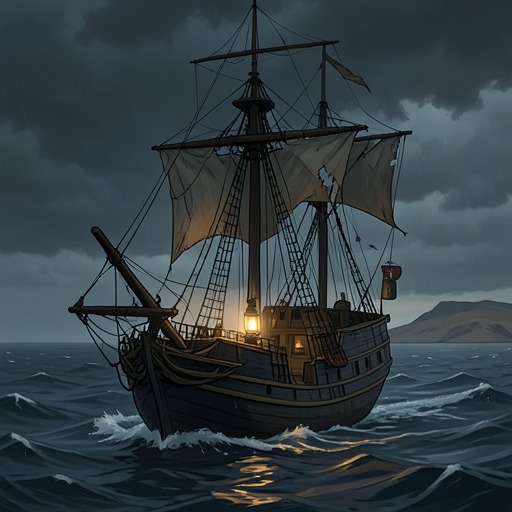
The island also acquired a life in the American imagination beyond what a visitor could see. When Ishmael and Queequeg reach it by schooner from New Bedford of Whaling's Decline and Whale-Oil Industry Debates, they lodge at an inn while seeking a whale-ship. Ishmael’s extended account of the island—its history as well as its clam chowder—gives Nantucket a scope that exceeds the immediate action. The author had never visited the island when writing that description, yet Nantucket was already famous enough to serve as shorthand for the pioneering spirit of the young republic. Early mapmakers even perceived the outline of a whale in its harbor, as though the island’s geography already carried the shape of its future trade. Like Cape Cod, it belongs to America while remaining set apart from it.
That isolation never meant social or political simplicity. The Nantucket Atheneum was the setting for Frederick Douglass’s address to a mixed-race audience at the island’s first anti-slavery convention in 1841. A second meeting the following year ended in a riot. The contrast between this record of public contest and the quieter image of the modern town registers a change in the island’s civic appearance, without erasing the conflict within its history.
From shore-based hunting to a whaling power
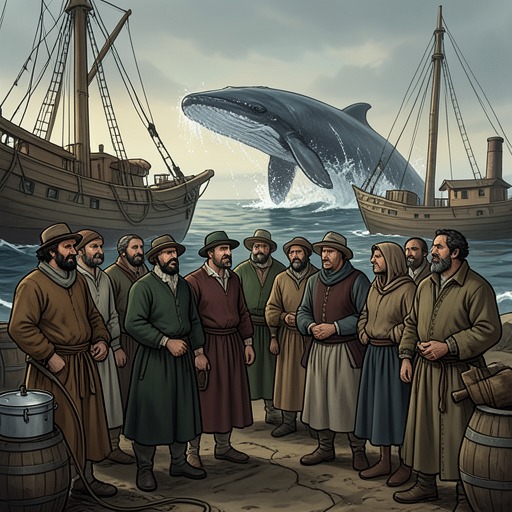
The island’s whaling economy developed from practices shaped by earlier inhabitants. For centuries, Nattick Indians foraged for whales in the surrounding waters, and the incoming settlers learned from their techniques. In 1659, nine new citizens acquired rights to the island, among them Quakers Thomas Macy, Tristram Coffin, and Christopher Hussey, who had suffered Puritan persecution in New England. Whaling would become central to the island’s livelihood, but its beginnings were modest: people watched from high ground, using land masts and crude ladders to spot migrating Right whale. The animals were harpooned and towed back to shore, where their thick blubber supplied oil and their Baleen provided a valuable material.
A story dated to 1690 gives the developing trade the quality of a forecast. People observing whales from a hill recognized the offshore waters as a future source of food and work for their descendants. In 1712, according to legend, Christopher Hussey was hunting when a sloop’s course took him beyond the usual Nantucket fisheries. There he encountered Sperm whale, a quarry that had previously been regarded as fabulous or unknown. The discovery transformed the prospects of the fishery: the more distant, deep-water pursuit of Sperm whale displaced Right whale as the island’s principal ambition. In the novel’s account, the hunt for the larger animal is cast as more prestigious, a telling measure of how commercial activity became entangled with ideas of status and heroism.
The industry grew rapidly. As Right whale became scarcer, Sperm whale hunting assumed greater economic importance; by 1730 the island had a fleet of twenty-five vessels, and by the end of the century Nantucket led the world in whaling. The scale of this rise made the island emblematic well beyond its shores. British observers acknowledged the reach of the fishery, while Owen Chase, first mate of the Essex and a member of an old Nantucket family, represented its whalers as engaged in a campaign against the great animals. In this language, commercial extraction became a form of national enterprise: the whalers were imagined as pioneers and crusaders, and the ocean as territory over which the young republic demonstrated its power.
The pressures that unmade the port
By the 1840s, several forces were turning Nantucket’s success into decline. The larger ships needed to reach distant Sperm whale grounds could not pass safely over the sandbar at the island’s harbor, which was silting up. The accessible harbor at New Bedford of Whaling's Decline and Whale-Oil Industry Debates became a more practical base, drawing both business and islanders. Nantucket’s sailors continued to work depleted traditional grounds, while New Bedford crews pursued more profitable Pacific Ocean fisheries. The competition was therefore not only between ports: changing vessel size and access to the sea favored one harbor over another.
A fire in 1846 destroyed a third of the town’s businesses. Warehouses filled with barrels of Whale oil fed the blaze, turning the product at the heart of the island’s prosperity into part of the destruction. Two years later, the California Gold Rush offered young islanders the prospect of faster returns elsewhere. In 1849, the Aurora became the first Nantucket ship to sail for San Francisco. Whaling crews also deserted their vessels for the gold fields, and some Nantucketers left home with almost nothing, intent on seeking wealth in the West. Migration thus carried away people and labor at the same time that other conditions were undermining the fishery.
New energy sources brought a further reversal. Kerosene and coal gas began lighting homes and streets from the 1840s. At first, their availability encouraged a wider appetite for bright light and did not immediately eliminate demand for Whale oil. But in 1859, Edwin L. Drake drilled for oil at Titusville, Pennsylvania. The petroleum discovery marked the end of the Sperm whale fishery’s central role in lighting and opened a new phase of extraction from the earth. The island’s decline was consequently not caused by a single disaster: harbor limitations, fire, out-migration, changing technology, and the emergence of petroleum accumulated into a lasting economic shift.
A changing maritime legacy
The decline of whaling did not occur everywhere at the same pace, and Nantucket’s fortunes were part of a wider industrial change. In America, a fitful revival in the western Arctic targeted Bowhead whale for Baleen, which was used in corsets and hoops. By the early twentieth century, steel and plastic were replacing Baleen, while changing clothing practices further reduced its market. New Bedford’s last whaler sailed in 1924. As the American industry contracted, the city shifted toward textile production, and Nantucket and Martha’s Vineyard increasingly drew tourists. Meanwhile, the old wharves retained the smell and remains of a trade whose economic center had moved on.
Nantucket’s name nevertheless persisted as a measure of whaling’s scale. In 1948, a Japanese expedition sailed six thousand miles to the Antarctic with a crew of thirteen hundred. Its fleet included six catcher vessels, a ten-thousand-ton factory ship, two processing ships, an oil tanker, and two cold-storage ships. The comparison with Nantucket’s earlier fleet makes the industrial transformation legible: a trade once organized around a small island’s ships had become a vast, mechanized operation at the far end of the world. The expedition’s target was a Blue whale, and the animals taken were processed as meat and oil. The scene places Nantucket’s local history inside a global history of whaling, showing how the pursuit that had made the island famous outlasted the island’s dominance.
The island also appears in the history of Ambergris, a substance whose rarity and uncertain origins once lent it an almost legendary status. In 1724, Dr. Boylston of Boston reported to the Royal Society that Nantucket whalers had found a substantial quantity while cutting up a male Sperm whale. Their discovery prompted further searches, and smaller amounts were found in other males. The report connected Nantucket’s practical knowledge of the whale to wider scientific inquiry and to the commercial value of material obtained from it. In this account, the island’s significance is not confined to the rise and fall of its fleet: it also served as a point from which encounters at sea became knowledge, commodities, and stories. Its enduring force lies in that conjunction of geography, enterprise, and imagination.