North Atlantic right whale vessel-protection rules
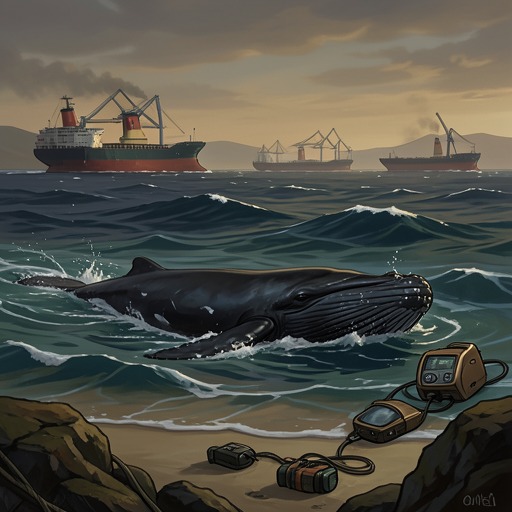
The WhaleNorth Atlantic right whale vessel-protection rules are described as an attempt to reduce ship strikes by moving a shipping lane farther north and instructing vessels to stay 500 yards from any whale. Their significance lies in the limits of that protection: the North Atlantic right whale remained at grave risk even after hunting restrictions, with busy shipping routes crossing waters the animals frequent.
Background and Purpose
The rules address a danger shaped by the whale’s own habits and by human traffic. North Atlantic right whales spend much of their time near the surface and may remain silent and still there. Those traits can make them difficult for ships to detect, especially along crowded routes close to populous shores. A behavior that once made them vulnerable to hunters therefore also exposes them to collisions with vessels. The account places the vessel measures alongside an earlier legal milestone: the right whale became the first cetacean protected from hunting in 1935. That hunting protection and the later shipping precautions are distinct responses to different pressures; protection from deliberate capture did not remove the risks posed by routine maritime traffic.
Measures and Limits
The reported precautions combined two measures: a shipping lane was moved farther north, and vessels received strict instructions to remain 500 yards from any whale. The distance rule sets a clear buffer, while the lane change seeks to reduce encounters by shifting traffic away from the whales’ range. The account does not describe enforcement procedures or claim that the measures eliminated collisions. Indeed, North Atlantic right whale numbers remained static despite the legislation and instructions. Ship strikes were killing more whales than had previously been suspected, including females of calf-bearing age. The rules thus appear in an uneasy gap between formal protection and biological effect: a prescribed distance and altered route could reduce exposure, but they had not secured population recovery.
Conservation Stakes
The inadequacy of vessel precautions is sharpened by the species’ precarious numbers. Fewer than 400 North Atlantic right whales remained in the account’s estimate, and only eight matrilineal lines persisted. With so few breeding whales, the loss of a fertile female could affect the difference between extinction and survival. Vessel strikes therefore threaten more than individual animals: they imperil the reproductive capacity of an already restricted population. The account also identifies fishing-line entanglement as a major danger, affecting more than 60 percent of right whales. That threat is separate from ship collisions, but it underscores why a vessel buffer cannot by itself resolve the species’ predicament. The rules represent a shift from treating whales as quarry to recognizing them as animals needing protection amid human activity; their limited results expose the distance between declaring protection and making a species safe.