Pequod
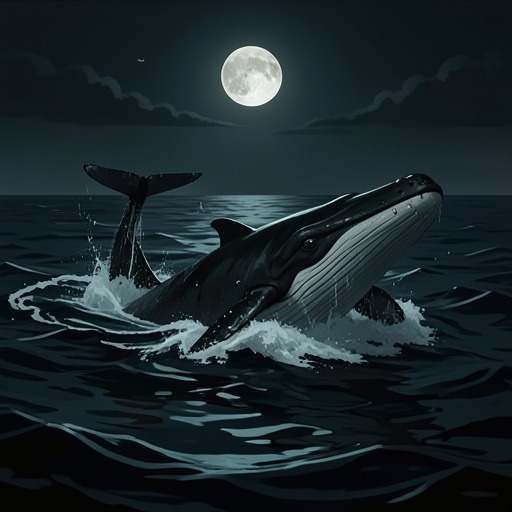
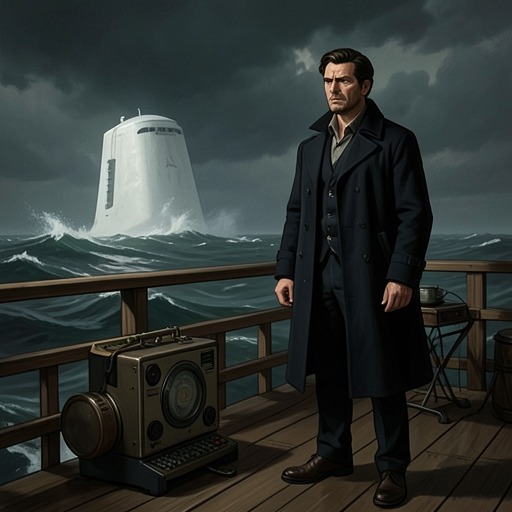
The WhaleThe Pequod is Ahab’s whaling ship in Moby-Dick, a vessel that carries a working crew into the Pacific and becomes the material instrument of its captain’s pursuit of Moby Dick. Its imposing, whale-bone ornamentation gives it the appearance of a craft adorned with the remains of its prey; its final destruction turns that image back upon the hunters. The ship is at once a workplace, a technological achievement, and the doomed stage on which Ahab’s private vengeance becomes a collective catastrophe.
Appearance and Material Identity
The Pequod is described as bearing bulwarks studded with whale teeth and a tiller fashioned from a whale’s jaw. These fittings distinguish it from the Acushnet, the ship on which Herman Melville sailed: the Acushnet lacked such embellishments, while the Pequod appeared dressed in the bones of its enemies. The contrast makes the fictional vessel’s appearance more than decoration. Its whale-derived materials display the products and trophies of whaling, while also making the ship seem to carry the evidence of its own violence.
The Acushnet offers a concrete measure of the industrial world from which the Pequod is imagined, but its specifications should not be mistaken for the Pequod’s. Newly built at the height of the whaling boom, the Acushnet was 104 feet long, 27 feet wide, and 13 feet deep. Its false gunports were painted to discourage attack. These details show how a working whaler could be at once a product of industrial expansion and a vessel equipped to survive dangers at sea; the Pequod intensifies that material world into a more heavily symbolic ship.
Ahab’s Vessel and the Pursuit
Under Ahab’s command, the Pequod’s voyage becomes an extended act of vengeance against the sperm whale that dismasted him. The ship is therefore not merely a means of pursuing ordinary commercial whaling. Ahab directs its crew toward a personal reckoning with the animal, transforming a working expedition into a hunt whose stakes exceed the capture of whales. The voyage’s purpose is set by the captain’s fixation, while the rest of the crew is drawn into the consequences of that purpose.
The Pequod’s technological character sharpens the danger. In a later political reading of the novel, C. L. R. James emphasizes that Ahab commands a highly developed whaling vessel and possesses accumulated knowledge of navigation. The ship’s power is not simply physical: it embodies organized human skill and technical capacity. Yet that capacity serves a pursuit that grows increasingly destructive. The more formidable the vessel appears, the more consequential Ahab’s direction of it becomes.
The Ship as the Novel’s Stage
The Pequod gives the novel a shared space in which labor, hierarchy, and the pursuit of the whale meet. Moby-Dick’s account of whaling does not remain a straightforward voyage narrative: Ishmael repeatedly interrupts the story with taxonomies, anatomical discussions, sermons, and digressions. The ship’s voyage supplies a continuing frame, but the narration keeps widening beyond it, as if neither the vessel nor its crew can contain the subject they have set out to master.
That formal tension echoes the Pequod’s physical character. It is a working ship furnished with parts of whales, carrying men in pursuit of whales, yet the whale remains larger than the categories and ambitions brought to bear on it. The vessel can transport its crew across the ocean and organize their work; it cannot make the creature fully knowable or bring Ahab’s obsession under control. The ship thus joins the practical world of whaling to the novel’s unsettled question of what a whale means and whether human beings can ever possess that meaning.
Political and Historical Afterlives
The Pequod’s voyage has also become a vehicle for readings of American power. D. H. Lawrence saw the ship as representing the white American soul, while James interpreted Ahab’s command of the vessel as a concentrated technological menace. In this account, the Pequod’s organized power makes it available as an image of destructive political ambition, not only as a whaling ship. Later writers likewise connected Ahab’s pursuit to nuclear conflict and modern warfare, extending the ship’s significance beyond the historical industry that gives it its setting.
These readings do not cancel the Pequod’s concrete identity as a vessel on a whaling voyage. Rather, they draw force from the contrast between its practical function and the scale of the pursuit it serves. A working ship becomes an image of the power that carries human plans into the world—and of the danger that arises when that power is made answerable to a single consuming purpose.
Destruction and Significance
At the climax, Ahab’s pursuit ends in a three-day chase. He casts his harpoon at Moby Dick, but the line loops around his neck and pulls him from the boat. His body is left lashed to the whale, and the animal then turns on the Pequod, stoving in the ship and sinking it with the crew. The vessel’s destruction is not incidental to Ahab’s fate: it completes the conversion of his private vengeance into the loss of the human community aboard.
The ship’s sinking leaves Ishmael the sole human survivor, clinging to Queequeg’s coffin until another whale-ship finds him. The Pequod, by contrast, disappears beneath the sea with its crew. Its ending reverses the apparent hierarchy established by whaling: the ship and its technology are destroyed, while the whale survives. As the ocean closes over the vessel, the Pequod stands as the novel’s starkest measure of the limits of human mastery and of the cost of mistaking power for dominion.