Whales
The WhaleWhales are the book’s most visible inhabitants of an ocean that remains largely beyond human knowledge: animals at once biological realities, historical resources, and powerful objects of human projection. Their immense bodies make the sea seem inhabited rather than empty, but their lives also exceed human categories. The story of whales therefore joins close attention to their biology with a larger account of how people have hunted, studied, imagined, and begun to protect them.
Oceanic presence and human perception
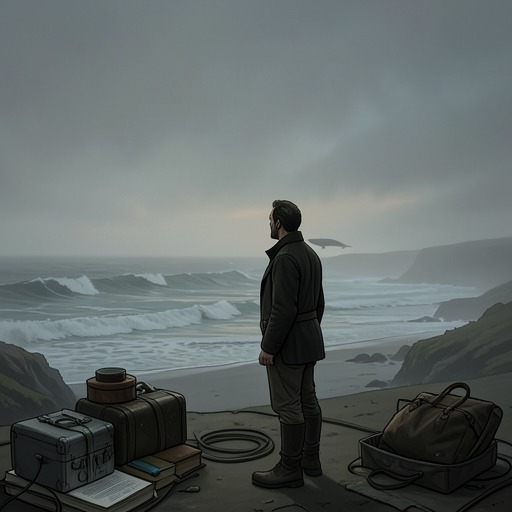
The sea is not merely a route between places or a backdrop to human history. It covers more than three-quarters of the Earth, sustains life through its smallest organisms, and shapes movement and borders. Its apparent sameness conceals continual change: it can rise into towering spectacle or become almost indistinguishable from the sky, and it gives as well as takes away. In this account, whales make that largely unseen ocean perceptible. Their presence turns the surface into evidence of a much larger life below it.
That presence also unsettles ordinary ideas of scale. Whales are mammals sharing human hearts and lungs, yet their size and aquatic environment make them seem almost geographical, belonging to dimensions people cannot inhabit. Seeing them can invite emotional identification, but the book treats that response cautiously: anthropomorphism may help people approach animals unlike themselves, while also risking the substitution of human feeling for animal life. Whales remain more than symbols, even when people make them symbols.
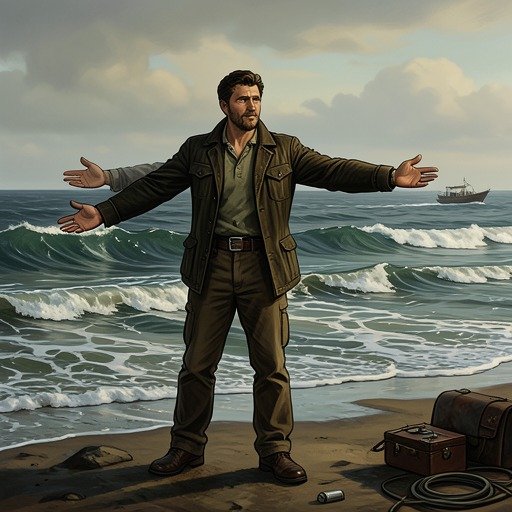
The author’s recollection of encountering wild whales brings this tension into focus. Their variety recalled a childhood fascination with different forms, from small porpoises to the great rorquals and the mysterious sperm whale. They seemed to restore the feared watery world as a populated one, a wide-ranging community whose apparent wholeness contrasted with human disarray. The contrast is not proof that whales live without conflict or need; it marks how their lives, moving through an open ocean, can challenge land-based assumptions about possession, borders, and dependence.
Bodies, movement, and social life
Whales belong to the order Cetaceans, divided into two broad suborders. Odontocetes, the toothed whales, include porpoises, dolphins, beaked whales, orcas, and sperm whales; the book gives their diversity as seventy-one species. Mysticetes, the baleen whales, include at least fourteen species. Instead of teeth, baleen whales have flexible plates of keratin, the material also found in human fingernails. Tooth buds form in the foetus and are later reabsorbed. The growing baleen plates line the gums, their edges fraying into bristles that help filter food from water.
The feeding mechanism is a striking adaptation to abundance at small scale. Baleen whales take in large quantities of water and prey, expanding the pleats beneath the throat and then contracting them to expel surplus water while retaining food. Humpbacks, for example, may eat a ton of fish a day. They feed on sand eels and other fish, but cannot drink the seawater in which they live; the fish help meet their water needs. Their immense size depends on consuming huge quantities of comparatively small prey.
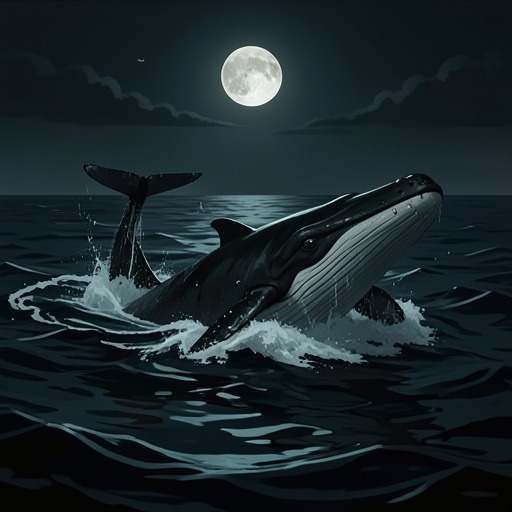
The book describes humpbacks migrating each year to the Gulf of Maine after months in the Caribbean, where they fast, mate, and nurse calves. Their journey can reach eight thousand miles, following routes established across generations. At the meeting of the Gulf Stream and Labrador currents, upwelling draws nutrients into the water and sets a seasonal food chain in motion. The whales feed on sand lances and herring, growing fat amid this abundance. Their breaching and other displays may communicate physical presence and power, but their purpose is not settled; play is another possible explanation. The uncertainty matters: an observer can witness the gesture without knowing what it means to the animal.
Whale societies, too, are presented as more complex than a view of isolated giants suggests. Research on sperm whales describes clans with distinctive patterns of behavior and repertoires of clicks. Foraging methods may be learned socially and passed between generations, including maternally. Their sounds include ordinary clicks, faster creaks associated with searching, and patterned codas that may function as exchanges, although their transmitted information remains unknown. Mature males also make slower clicks. The evidence supports social learning and cultural variation, but leaves the content of whale communication unresolved.
From resource to spectacle
For centuries, close human contact with whales was organized chiefly around capture. Whales supplied money, food, work, trade, and materials; the hunt could also bring danger to the people pursuing them. The whaling ship was built to collect, process, and store its quarry, not to make life comfortable for its crew. Its cramped social world reflected rank and inequality, while its labor drew people from many backgrounds. Frederick Douglass, after escaping slavery, arrived in a whaling port and worked at a range of hard jobs. Black sailors and other men of color made up a substantial part of the industry’s workforce, although their opportunities and conditions remained unequal. Whales were thus entangled not only in markets but in the labor and social structures of the societies that pursued them.
The industry’s decline did not immediately end the pressure on whale populations. In 1859, an oil well drilled in Titusville, Pennsylvania, signaled a new source of illumination and a turning point for the sperm-whale fishery. Yet petroleum and gas did not simply replace whale products overnight. Later, in 1868, Sven Foyn patented a grenade harpoon, and steam-powered ships equipped with harpoon-launchers made it possible to pursue large, fast rorquals that earlier hunters could not readily catch. As sperm and right whales became too depleted to hunt profitably, the new technology redirected killing toward other species. In the early twentieth century, European fleets opened Antarctic waters, and whale products were used in the manufacture of explosives. During the two world wars, tens of thousands of whales died; the book notes that the South Atlantic humpback population had been driven to extinction by 1918. Industrial efficiency and wartime demand made whales victims of the same system whose material needs their bodies served.
Knowledge, loss, and changing attitudes
The history of whaling is also a history of changing ways of seeing. A century that began with active hunting ended, in the book’s formulation, with people watching whales. Photography, film, and television brought whales into public view, while scientific work disclosed aspects of their bodies and societies that earlier observers could not know. Observation did not make the animals fully knowable, but it altered their public meaning: the whale became an emblem of vulnerable life in an age of threat, distinct from the monstrous figures of older stories and from the hunted resource of the commercial era.
That change in attention does not erase the scale of loss. Hunting may have damaged sperm-whale societies by removing matriarchs who carried essential knowledge, as well as large males involved in reproduction. Because sperm whales reproduce slowly, the effects of earlier culls may continue long after hunting has eased. The book places this concern within a broader crisis of extinction: during the period in which it was written, the Yangtze River dolphin was declared extinct, and the future of other cetaceans remained uncertain. Its starkest warning is that natural history could become history in the literal sense: a record of animals that have disappeared.
Whales consequently occupy two positions that cannot be cleanly separated. They are independent animals, with adaptations, migrations, and social lives that do not depend on human interpretation; they are also indicators through which people encounter the ocean and measure their own power over it. Their shift from hunted bodies to watched beings signals a moral and imaginative reversal, but not a completed one. To see a whale is to glimpse an oceanic life beyond human reach—and to confront the consequences of having treated that life as an inexhaustible resource.