
Grief as a Shared Language
The Whisper ManThis flow traces how grief isolates characters at first and later becomes the basis for recognition, care, and recovery.
increasing Bearing strength in each event
 decreasing
Bearing strength in each eventdecreasingSeparate Grief
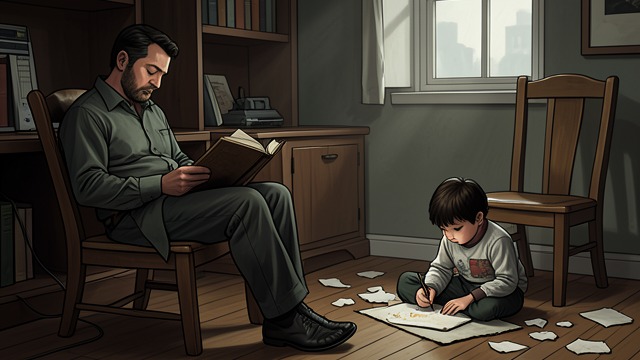
Separate Grief
Tom’s Withdrawal
Tom Kennedy grieves through exhaustion, resentment, and avoidance. He feels abandoned by Rebecca and ashamed that Jake’s needs sometimes exceed his capacity.
Jake’s Silence
Jake Kennedy grieves through drawings, imaginary companions, and the Packet of Special Things. He does not have the vocabulary to explain why ordinary life feels unsafe.
Mutual Misreading
Father and son love each other but interpret withdrawal as rejection. Their grief becomes a barrier because each waits for the other to speak first.
Grief Recognized
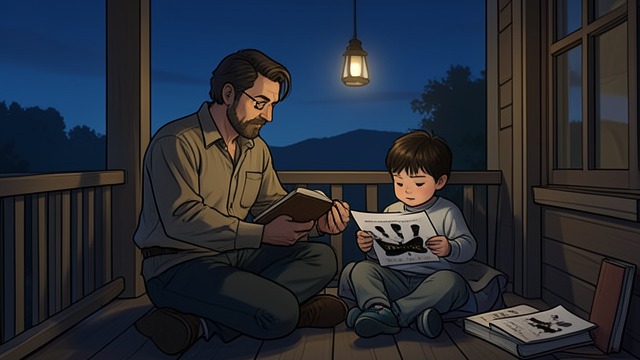
Grief Recognized
Tom’s New Attention
After surviving the attack, Tom becomes more attentive to Jake’s symbolic language. The child’s drawings and silences are no longer treated simply as problems.
Pete’s Example
Pete’s care for Jake reveals that parenting can be quiet, patient, and nonpossessive. Tom recognizes qualities he once believed he lacked permanently.
A Shared Night
Reading together and exchanging affection become ordinary acts with unusual importance. Grief begins to be carried jointly rather than privately.
Writing as Continuation

Writing as Continuation
The First Letter
Tom begins writing to Rebecca because direct conversation is impossible. The act gives shape to contradictory feelings without pretending grief is orderly.
A Wider Story
He realizes that the book must include Mister Night, the boy in the floor, the butterflies, and The Whisper Man. Writing becomes a way to preserve experience rather than escape it.
Addressing Jake
Tom deletes Rebecca’s name and begins a letter to Jake. The shift marks a movement from mourning the past to building a future relationship.
After Rebecca’s death
After the rescue
Two weeks after the rescue
