
The House and Its Buried History
The Whisper ManThis flow traces how 13 Garholt Street changes from a strange new home into the physical archive of crimes spanning two generations.
increasing Bearing strength in each event
 decreasing
Bearing strength in each eventdecreasingThe Scary House
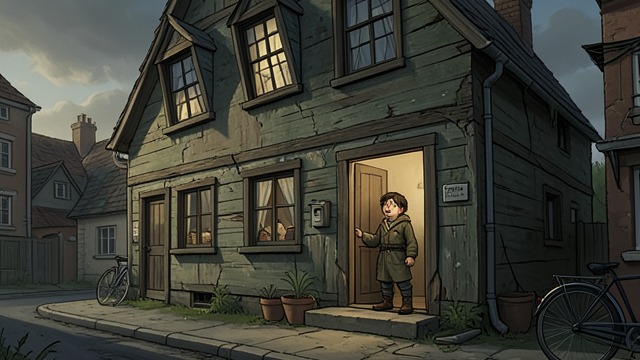
The Scary House
An Unwelcoming Property
Tom Kennedy sees 13 Garholt Street as a damaged, watchful building whose windows resemble a bruised face. Jake Kennedy, however, responds to it with immediate fascination.
A False Fresh Start
The house seems to promise safety and renewal after Rebecca’s death. Its history is unknown to Tom, who mistakes atmosphere for mere architectural eccentricity.
A Child’s Recognition
Jake’s attachment suggests that the property is connected to memories he cannot consciously explain. The house becomes less a setting than a concealed inheritance waiting to surface.
The Garage Remains
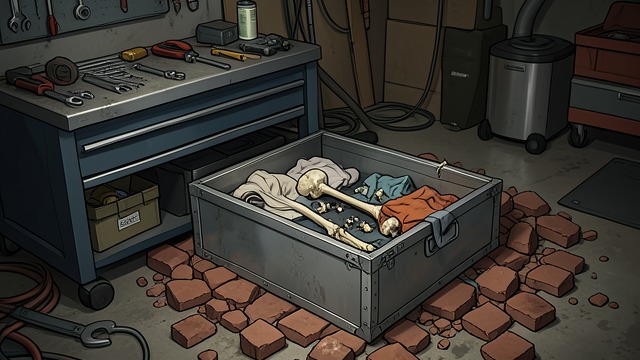
The Garage Remains
Searching the Debris
Tom Kennedy investigates the garage after Norman Collins’s suspicious visit. Beneath loose bricks, he finds a sealed box hidden under the old mechanic’s pit.
The Buried Child
The box contains the bones of a young boy and attracts the corpse moths found among the stored debris. The discovery transforms an unpleasant property into a crime scene with a twenty-year history.
The Past Identified
The clothing later identifies the remains as Tony Smith. Pete Willis’s long search finally has an answer, but the discovery also reveals that several outsiders paid to visit the body.
The House as Shrine
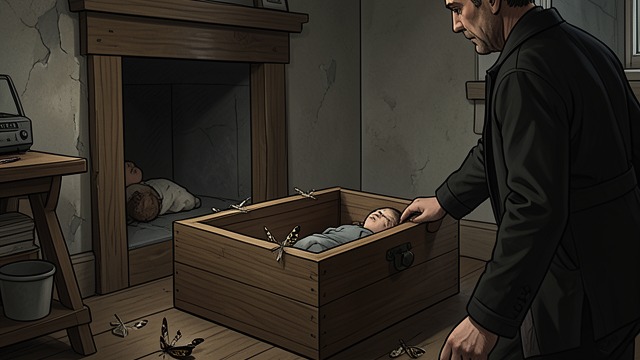
The House as Shrine
A Commercial Secret
Norman Collins explains that Julian Simpson and later Dominic Barnett allowed paying visitors to spend time with Tony Smith’s remains. The house was not merely a hiding place but an underground shrine.
A Corrupted Memory
Visitors treated the murdered child as an exhibit, turning private grief into ritual consumption. Collins distinguishes his own reverence from the others’ violence, exposing the self-deception within his moral language.
A Wider Horror
The house’s history shows how Frank Carter’s crimes continued to generate exploitation long after his imprisonment. The physical site preserved not only a body but a community of people willing to profit from terror.
September moving day
Day after Pete’s attack
During the police investigation
