Frank Carter–Francis Carter father-son relationship
The Whisper ManThe Frank Carter–Francis Carter father-son relationship is one of the novel’s central structures of damage: Frank Carter makes his son witness his violence, treats him as an object of contempt, and leaves him to grow up believing that he is worthless and disgusting. Francis Carter carries that childhood into adulthood, first as a frightened survivor and later as a killer who repeats aspects of his father’s behavior. Their relationship therefore joins personal history to criminal causation without making imitation a complete excuse. Its final movement is not reconciliation in any ordinary sense, but a terrible recognition in which son and father see how much of the other remains within them.
Childhood Under Frank Carter
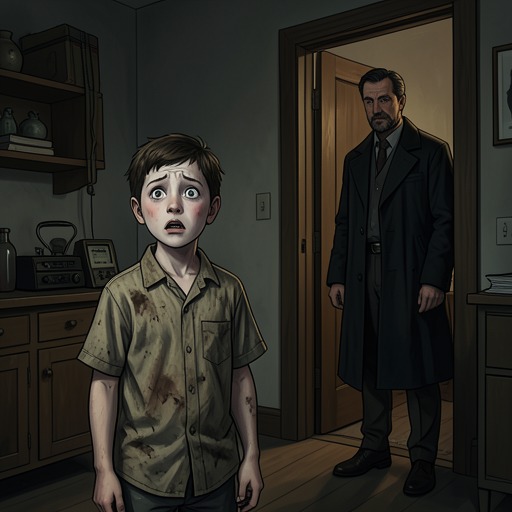
The evidence presents Francis’s childhood as a prolonged exposure to his father’s cruelty. Frank Carter made him watch the murders of boys, forcing him into the position of witness while also making the violence personally threatening. From Frank’s expression, Francis understood that his father hated him and would have done the same to him if he had been able. The murdered children thus became stand-ins for the child Frank most despised: his own son. Francis did not merely observe violence; he learned that his existence was being symbolically punished through the deaths of others.
That experience produced a deep conviction of shame. Francis had always regarded himself as worthless and disgusting, a judgment formed through his father’s treatment rather than through any secure account of his own character. The child had no one to tell what was happening. Other children sensed that the Carter house was dangerous, but they explained it through rumors of haunting or murder because they did not know the truth. Francis, who did know, had neither the safety nor the social position needed to speak.
Frank’s later prison conversations confirm how thoroughly he separated fatherhood from care. He admitted that he had never known how to be a father and had never really wanted to be one. His self-explanation included alcohol and “lots of reasons,” but the relationship is not presented as a problem that drink alone created. Alcohol, irresponsibility, emotional incapacity, and deliberate violence formed the environment in which Francis was raised; the son’s trauma began before he could interpret it or resist it.
Inheritance and Repetition
Francis’s adult identity is built partly as an escape from that childhood. He acquired a new identity for less than a thousand pounds and constructed a protective shell around himself, imagining the transformation as a caterpillar emerging from a cocoon. Yet the old boy remained inside the new persona. Although Francis had not used that name for years, it was still the name by which he thought of himself, suggesting that reinvention had changed his surface life without erasing the original wound.
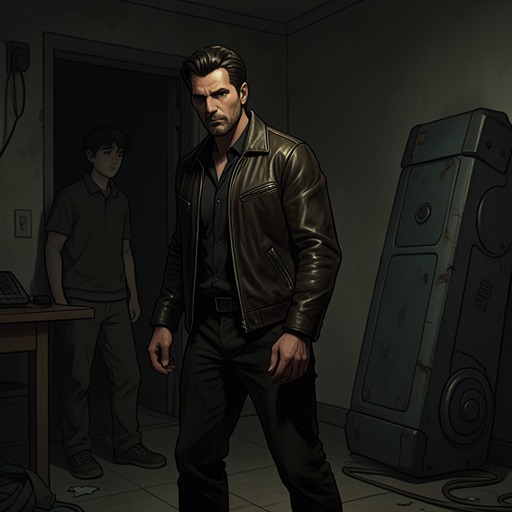
The relationship becomes most disturbing when Francis recognizes that his own killing of Neil Spencer involved enjoyment. He had previously been afraid to acknowledge that pleasure, but memory now allowed him to imagine Frank Carter present beside him, watching and approving. The paternal gaze survives even when the father is absent: Frank’s imagined approval turns Francis’s crime into a continuation of the earlier lesson. The son does not simply remember what his father did; he discovers himself participating in the emotional logic his father taught him.
Francis then interprets Frank’s hatred as proof of his own supposed worthlessness. The imagined lesson is explicit: he now understands why his father hated him, because he had been such a worthless creature. At the same time, Francis insists that he is no longer that creature. His emerging self-understanding is therefore double-edged. He recognizes the source of his violence, but he also preserves the father’s language of degradation, measuring himself through the same brutal standard Frank imposed on him.
His response is to convert repetition into a form of reparation. Francis cannot save the boys he saw murdered and cannot comfort the child he once was, but he believes he can protect other children like him. This logic leads him toward Jake Kennedy. He imagines that he and Jake would be good for each other, framing captivity and rescue as if they could become mutual healing. The claim is morally grotesque because it translates a child’s danger into the adult’s therapeutic need, yet it also reveals how Francis understands himself: as both perpetrator and abandoned child, attempting to repair the past by controlling a new victim.
Frank’s Power Beyond Prison
Frank Carter retains an enormous psychological presence long after his imprisonment. When Francis first sees him in the prison canteen, Frank appears almost unchanged: physically immense, surrounded by inmates, and treated as their leader. To Francis, he seems capable of walking through the prison walls unharmed. The adult son is immediately reduced to the child who once lived under that power; when Frank later enters his cell, the sight of his father’s solid bulk filling the doorway produces the same collapse into childhood.
The contrast between Frank’s prison comfort and his family’s suffering sharpens the relationship’s imbalance. Frank has survived incarceration while apparently thriving in it, spending time in the gym and enjoying a kind of celebrity among admiring followers. He looks relaxed, almost like a king surveying a court. Prison, which confines his body, gives him a social niche and does not diminish his capacity to dominate the emotional lives of others.
His hatred of his family has not faded. When Pete Willis asks about Frank’s family, the brightness leaves Frank’s eyes, recalling the moment Jane Carter testified against him and withdrew the alibis she had previously supplied. Frank had assumed that fear would keep her loyal, but her betrayal exposed the limits of his control. His response preserves the same resentment that shaped Francis’s childhood: family remains, for Frank, a field of possession, grievance, and punishment rather than a source of mutual obligation.
Recognition, Violence, and the Possibility of Repair
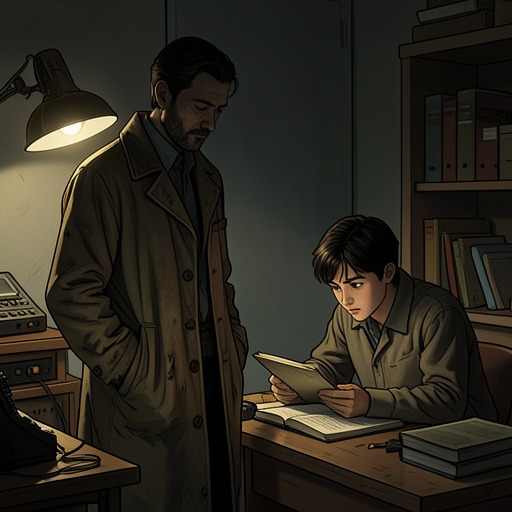
The father-son relationship is also reconstructed by Pete Willis, who remembers Francis as a small, pale, haunted child from twenty years earlier. Francis had given almost no answers during the carefully managed interviews, and the trauma of living with Frank was visible. This recollection prevents the adult criminal from being treated as an inexplicable monster. It establishes a causal history while leaving responsibility intact: the child was vulnerable and abused, but the adult’s later violence remains his own action.
That distinction matters when Francis turns toward Jake Kennedy. He sees Jake as another child who needs protection, yet his method reproduces the conditions of coercion: isolation, surveillance, frightening commands, and the demand that Jake perform safety by pretending to sleep. Francis can tell himself that he is caring for the boy, just as he can remember that Neil Spencer was initially well cared for, but the care is inseparable from confinement. The father’s model has been carried forward in a transformed but recognizable form.
Frank’s influence reaches its most concentrated expression in Francis’s inner voice. After Francis admits the pleasure he took in killing Neil, he hears the imagined paternal affirmation, “Now you understand, don’t you, Francis?” The sentence functions like a verdict from the father and an initiation into the father’s world. Francis’s answer is not liberation from Frank but recognition of likeness, culminating in the thought, “I’m like you, you see?” The relationship has become an inheritance of identity as much as of violence.
Yet the novel does not leave the inheritance wholly unchallenged. After Pete is injured while trying to reach Jake, he recognizes that he had been ready to die for his son. That readiness provides a stark counterimage to Frank’s refusal of fatherhood. Where Frank uses children as objects onto which hatred can be projected, Pete’s bond with Jake is expressed through protective risk. The contrast does not erase Pete’s difficulties in speaking openly to Jake, but it shows that paternal failure is not inevitable and that care can interrupt the pattern Frank established.
The dreamlike embrace at Pete’s bedside offers the relationship’s final image of possible repair. A wounded, hesitant man enters, kneels beside Pete, and embraces him; Pete senses or imagines the embrace as understanding and forgiveness, as though a cycle had been completed and a missing piece returned. The scene does not establish a literal reconciliation between Frank and Francis, nor does it undo the crimes. Instead, it gives the father-son pattern a symbolic alternative: recognition may arrive through vulnerability and acceptance rather than domination.
Narrative and Thematic Significance
Frank Carter and Francis Carter are linked by more than blood. Their relationship demonstrates how violence can be transmitted through observation, humiliation, secrecy, and the child’s desperate attempt to explain why a parent hates him. Francis’s later crimes echo Frank’s, but the echo is not simple biological destiny. It is a learned and repeatedly interpreted inheritance, strengthened by the absence of anyone able to protect the child or give him another account of himself.
The relationship also complicates the language of victimhood. Francis was unmistakably abused, and his childhood explains the terror and shame that remain inside the adult he becomes. But his attempt to make amends through Jake turns his suffering into a justification for renewed control. The same child-centered rhetoric that might have supported rescue becomes a means of possession. In this way, the father’s legacy survives not only in acts of violence but in the son’s distortion of care.
Its decisive significance lies in the tension between resemblance and choice. Francis can recognize Frank within his own memories, pleasure, and fantasies, yet the novel also places his actions beside Pete Willis’s willingness to protect Jake. The relationship therefore asks whether understanding inherited damage can become a step toward accountability or merely another way of explaining it away. Frank offers no evidence of that transformation; Francis reaches recognition only after repeating the violence. What remains possible is not a clean reconciliation, but the harder work of naming the wound, refusing to romanticize the resulting crimes, and creating forms of care that do not reproduce the father’s power.