Tom Kennedy–Jake Kennedy relationship
The Whisper ManThe Tom Kennedy–Jake Kennedy relationship is the novel’s central bond of love, grief, and attempted repair. Tom is Jake’s father, while Jake is a quiet, highly vulnerable child whose silence makes him difficult for Tom to reach. After Rebecca’s death, the two remain together but are emotionally stranded: Tom cannot always interpret Jake’s behavior, and Jake cannot explain what he remembers, fears, or needs. Their relationship becomes the point at which inherited trauma might either be repeated or interrupted, and Tom’s eventual willingness to die for Jake establishes the decisive truth of their bond.
Identity and Background
Tom’s relationship with Jake begins in an image of careful parental devotion. He remembers bringing Jake home from the hospital with Rebecca: it was dark and snowing, Jake was only two days old, and Tom drove with unusual caution while repeatedly checking the rearview mirror to make sure the baby was safe. Yet even in the act of remembering, Tom admits that he and Jake have always found it difficult to talk. His decision to write instead of speak shows both his love and the distance between them. Written communication becomes an attempt to say what ordinary family conversation has failed to carry.
Rebecca’s death transforms that difficulty into a crisis. Tom must manage ordinary parental tasks alone, including taking Jake for his first haircut, ordering school clothes, and wrapping Christmas presents while unable to see clearly through his tears. Holidays are especially unbearable because they require him to spend entire days with his son while feeling that grief has left too little of himself to fill the time. Tom loves Jake, but he also needs periods in which he can collapse and cry without being observed. His guilt is therefore inseparable from his exhaustion: he recognizes that he is not giving Jake the father he needs, even as he struggles simply to remain functional.
Silence, Misreading, and Mutual Isolation
Jake’s quietness intensifies Tom’s sense of failure. On the journey home from the 567 Club, Tom questions him about his day and receives no useful response. Jake either cannot remember or does not want to talk, and Tom imagines that he would have answered Rebecca instead. That comparison makes Tom feel anxious and inadequate, while Jake’s apparent refusal to meet him halfway turns concern into resentment. Tom wants to help his son and keep him safe, but he experiences Jake’s silence as the absence of any clue about how to do so.
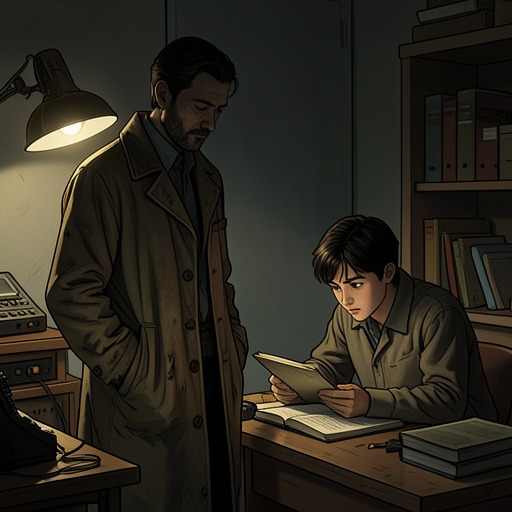
The 567 Club scene makes their separation visible. Outside, children are laughing and playing, apparently happy and ordinary, while Jake sits inside with his back to Tom, hunched over a drawing. Jake is small for his age, and his posture makes him appear to be trying to disappear into the picture. Tom knows that Jake hates being there, but still feels forced to use the club because he cannot bear to spend every hour of the holidays alone with him. The practical arrangement that gives Tom time to grieve therefore also confirms Jake’s sense of displacement. Neither father nor son openly objects; the silence protects them from confrontation while allowing the gulf between them to widen.
Tom’s frustration eventually hardens into anger. When Jake continues drawing instead of obeying him, Tom feels that his son is a problem he cannot solve and condemns himself as useless and ineffective. At the same time, he resents Jake for never offering an explanation or making an effort to communicate. The detail of Tom gripping the plate too tightly captures the bodily pressure beneath his controlled behavior. His anger is not evidence of indifference; it is the distorted form his desperate wish to protect Jake takes when he has no reliable way to reach him.
Shared Trauma and the Burden of Memory
The relationship is shaped by experiences that neither father nor son can fully articulate. Tom’s own childhood returns in a nightmare that is also a memory: as a boy, he approached the kitchen of his childhood home after hearing an argument downstairs. His mother’s voice was quiet and angry, apparently trying to protect him, while a man’s voice was loud and uncaring. Tom could not make out the words, but he understood that the scene was moving toward something terrible. The remembered kitchen doorway becomes an image of helpless witnessing, a position that later echoes Jake’s experience in the family home.
Jake’s most devastating memory is the sight of Rebecca lying at the bottom of the stairs. Tom knows that Jake was standing there, shaking and transfixed, when he found her. He moved Jake away and called an ambulance, but afterward could remember none of the practical actions he had taken. What remained was the conviction that Jake remembered everything, even though the boy would never discuss it. Jake’s silence is thus not simply stubbornness or withdrawal. It is connected to an experience too large for him to explain, and Tom’s inability to recognize that at first contributes to their painful miscommunication.
The pattern repeats in the night when Jake wakes Tom. Tom comes awake drenched in sweat to find Jake standing at the foot of the bed as a black silhouette, swaying gently from side to side. The scene unsettles Tom because Jake communicates through gestures, images, and frightening performances rather than ordinary speech. Later, Jake does directly acknowledge that he saw his mother. He remembers her pale face at the foot of the stairs and recalls Tom’s explanation that she had suffered a heart attack, though the fact seemed impossible to him because heart attacks happened to older people. The memory contains both the child’s confusion and the shared collapse that followed, when father and son cried together after Tom tried to explain what had happened.
Tom also struggles with the way his own past enters the present. When his father confirms that an act of domestic violence Tom remembers really happened, Tom confronts the possibility that his childhood memory has been distorted by emotion. His father admits that he came close to throwing a glass at Tom’s mother and acknowledges that he had once struggled with drinking and with being a good husband. The disclosure gives Tom a clearer history of violence and shame, but it also shows how easily destructive behavior can travel through family relationships. Tom’s task with Jake is not merely to survive grief; it is to prevent fear, anger, avoidance, and damaged communication from becoming the next generation’s inheritance.
Abduction and the Reversal of Dependence
When Jake disappears, the relationship’s hidden strength becomes visible through action. Tom’s fear is immediate and extreme, and Amanda Beck recognizes that he is imagining every terrible possibility. The possibility that Jake has been taken by the same man connected to Neil Spencer makes the danger worse, because Neil was initially cared for and then murdered. Tom’s love cannot be separated from terror: the prospect of a temporary appearance of safety followed by violence is more frightening than a simple disappearance because it threatens to corrupt the very idea of care.
Jake’s captivity also reproduces the conditions that have already defined his relationship with Tom. In the place where he is held, he is told to get into bed, close his eyes, and pretend to be asleep. He obeys partly because pretending to sleep is familiar from home, where he does it to avoid being difficult while Tom checks on him. The detail is unsettling because a behavior developed as a strategy within an emotionally strained household becomes useful under direct threat. Jake’s learned compliance is not proof that he trusts the captor; it is a survival response shaped by fear and by his long experience of managing adult emotions.
For Tom, the crisis changes passivity into determination. He forms a message in his mind and sends it toward Jake with all the force he can, hoping that his son will somehow receive its truth: that Tom loves him and will find him. The declaration matters because it is not an argument, explanation, or demand for a response. It is an unqualified promise offered across separation. Where earlier Tom treated Jake’s silence as a barrier, he now acts without requiring Jake to speak back.
The investigation also briefly reveals how their bond has become a source of information. When Amanda asks who drew a picture connected to the case, Tom explains that Jake had brought it home after his first day at school and had been copying it from the thick paper used there. Jake cannot or does not provide a conventional account of what he knows, but his drawings preserve traces that adults can learn to read. Tom’s growing attention to those traces marks a change from demanding direct answers to recognizing Jake’s own mode of communication.
Change, Rescue, and Consequences
After the immediate crisis, Tom’s relationship with Jake is still physically and psychologically damaged, but it is no longer defined solely by helplessness. Tom has spent nearly two weeks recovering from injuries inflicted by George Saunders, whom he now knows was once called Francis Carter. His body remains bandaged on one side, he cannot properly bear weight on one foot, and much of the day when he reached Jake survives only as a blurred series of impressions. Among those impressions is Jake shouting for him and the desperate need to reach his son. Tom understands that he had been ready to die for Jake.
That recognition changes Tom’s self-understanding. Earlier he saw himself as a failed father who could not manage grief, communicate with his child, or protect him from the consequences of Rebecca’s death. His willingness to die for Jake does not erase those failures, nor does it make the relationship uncomplicated. It proves instead that love has persisted beneath the anger, avoidance, and self-hatred. The decisive movement is from feeling unable to care correctly to acting with absolute commitment when Jake’s life is at stake.
Jake, meanwhile, has dealt with the horrors of the rescue better than Tom expected. Tom worries that the experience will make him more frightened and bring back the troubling behavior he had observed before, but Jake appears calmer than anticipated. Their physical embrace remains careful because Tom is injured, yet Jake hugs him gently and Tom returns the embrace as best he can. The modesty of that gesture is important: their repair is not presented as a sudden cure. It is an effort made within pain, limitation, and the knowledge that neither of them can undo what has happened.
The final domestic image places the Packet of Special Things beside Jake’s bed while he sleeps peacefully, warm and safe. Tom watches from the doorway and knows that there are still things he has not told Jake, including what he found inside the packet and the truth about the little girl. Even after rescue, complete communication has not arrived. The relationship has nevertheless acquired a new foundation: Tom remains present, Jake is safe, and the father’s care is now expressed through patience and protection rather than through demands that the child explain himself.
Narrative and Thematic Significance
Tom and Jake’s relationship functions as the novel’s principal test of whether trauma must be repeated. Francis Carter’s history shows the most destructive version of inherited violence: as a child, Francis was forced to watch his father murder boys, while understanding that his father hated him and might have done the same to him. Francis later imagines that rescuing children like his former self can make amends, but his warped attempt to protect Jake becomes another form of captivity. Care detached from freedom and accountability turns into possession.
Tom’s relationship with Jake offers a contrasting, imperfect route. Tom does repeat some damaging patterns: he becomes angry when Jake will not communicate, withdraws when grief overwhelms him, and sometimes treats his son’s behavior as a problem he ought to solve. Yet he also recognizes his failures, continues trying to reach Jake, and finally transforms love into a concrete promise of protection. The relationship therefore does not present fatherhood as natural mastery. It presents care as a practice of listening, endurance, and responsibility undertaken by someone who is frightened and often inadequate.
The bond is also contrasted with the relationship between Pete Willis and his own father. Pete’s father admits that alcohol had once shaped his life and concedes that he had struggled to be a good husband. Near the end, Pete senses an embrace from a wounded man and experiences it as understanding and forgiveness, as though a cycle had been completed and a missing part returned. Against that older relationship of violence, shame, and belated reconciliation, Tom and Jake’s story asks whether repair can begin before another generation is lost. Its answer remains cautious rather than triumphant, but the final image of Jake asleep beside his treasured objects confirms the relationship’s essential change: they are no longer merely surviving one another’s silence; they are learning how to remain together within it.