“The machine he made”
The Wife He Never Wanted: A Marriage-In-Crisis Billionaire Romance (Second Chance Billionaires)“The machine he made” is the book’s defining expression for the emotional machinery Elim Caldwell built into Maddox Caldwell: a life organized around targets, leverage, escalation, acquisition, and closure. The phrase explains why Maddox can sincerely love Paige Templeton while still treating her as an instrument, why his first attempts at restitution repeat the injury they are meant to repair, and why genuine change must appear not in a larger offer but in unobserved labor, restraint, and respect for Paige’s freedom.
Definition and Origins
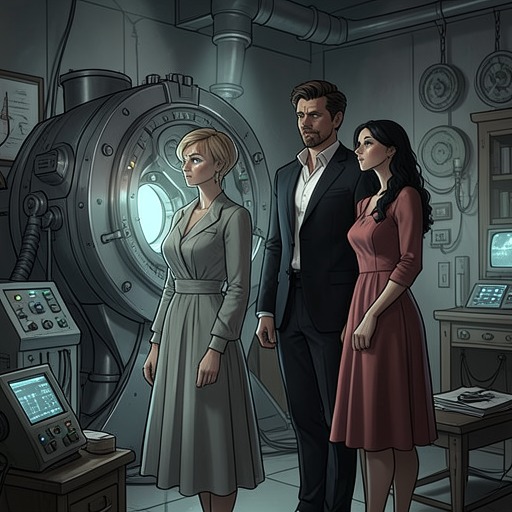
“The machine he made” refers to Maddox as the product of an inherited system rather than as a naturally ruthless man acting in isolation. Jayne Caldwell tells Paige Templeton that Elim shaped Maddox into a weapon before Maddox was old enough to refuse. This does not excuse Maddox’s conduct: he remains the adult who made the decisions and caused the damage. It does, however, change the moral picture from simple villainy to conditioning. Maddox hurt Paige without fully deciding to hurt her because the habits through which he understood ambition and intimacy had been installed before he could examine them.
The metaphor is also attached to Elim’s active direction of Maddox’s life. Elim pointed him toward the merger, Paige, and every target worth acquiring, while Maddox aimed himself where his grandfather directed and called that obedience ambition. The machine therefore has both an architect and a functioning subject. Elim supplies the design, but Maddox operates it until the mechanism becomes indistinguishable from his own identity.
The Machine in Marriage and Romance
Maddox’s strategic marriage to Paige demonstrates the machine’s most damaging operation. He married her as an instrument in a business arrangement, reducing her feelings to a negative entry on a balance sheet and treating the relationship as another equation in a deal. For two years, Paige’s requests were modest and personal: dinner on a Tuesday, his attention across a table, or a conversation that did not end when he stood to take a call. Maddox treated each request as a line item to be handled after the close, always postponing intimacy for the next task.
The machine converts love into a transaction because transactions are the only form of value Maddox has been taught to recognize. He could have bought Paige anything, but the thing she needed was not purchasable. The expression therefore exposes a reversal at the heart of the marriage: Maddox possesses enormous financial power but lacks the emotional currency required for presence, attention, and mutual recognition. Paige was never a deal, yet he repeatedly approached her as though a sufficiently strong offer could compel agreement.
When Paige leaves, his first response confirms that the machinery is still operating. Maddox calls the jeweler she likes, orders the anniversary dinner remade by the restaurant that catered their wedding, and writes David Templeton a letter listing concessions, absorbed Templeton costs, and rights he will surrender. He works through the night, increasing money, concessions, and spectacle until the campaign seems large enough to prove his sincerity. The gestures are genuine in feeling but transactional in form, which is precisely why they fail: every escalation tells Paige that he still sees her as something to win.
Recognition and Self-Correction
Jayne’s intervention gives the metaphor its explicit language. She tells Maddox to stop sending Paige things, stop running the play, and remain with what he did until he understands it. Her question is whether he can become something other than “the machine he made,” not whether he can design a more impressive campaign. The expression turns redemption from a matter of intensity into a matter of structural change. An apology, bracelet, dinner, or financial concession cannot answer whether Maddox has stopped using the mechanisms that produced the original harm.
Maddox’s realization is deliberately humiliating because it reveals that even his remorse has been automated. He understands that he married Paige as an instrument and has been groveling as an instrument. Every expensive, sincere gesture since her departure has been the machine trying to close her. He has used his grandfather’s tools to undo the damage those tools caused, without noticing that the attempted repair reproduces the original logic. The insight brings no relief; it turns his identity inside out by showing that his most generous actions can still contain the controlling structure he is trying to escape.
The first practical consequence is negative but decisive: he stops sending things. This refusal matters because it interrupts the familiar sequence of grand gesture, escalating offer, and deal structured until the other side must say yes. Maddox does not merely promise to abandon the method; he ceases to enact it. His change begins with the removal of pressure rather than the addition of persuasion.
From Campaign to Unobserved Labor
After stopping the gifts, Maddox goes to Harbor Street Shelter at six on a Saturday morning, before it opens, and asks the weekend coordinator for whatever job nobody else wants. He rejects the reflex to write another check and put his name on a new wing because a check would allow him to help without showing up. Instead, he chooses the early shift precisely because no audience will be present.
At Harbor Street Shelter, he cleans kennels, hoses runs, hauls soiled bedding, and scrubs drainage grates that have been neglected. The work is connected to the failing roof and to the need for an industrial washer, but it carries no nameplate, spectacle, or immediate reward. Maddox understands that if the labor counts for anything, it must count while nobody important is watching. This is the machine being dismantled through repetition: acquisition logic gives way to service, visibility gives way to anonymity, and control gives way to doing what the situation actually requires.
He also refuses to make the work another strategy for winning Paige. He tells himself to do it for the dog, for the roof that can be kept from collapsing, and because it is the first true thing in front of him. If the work makes him someone Paige can stand to be around, that remains her decision. This separation between action and entitlement is the expression’s ethical test. Maddox can help rebuild Harbor Street Shelter without converting the shelter into evidence that Paige owes him reconciliation.
The Conditional Offer and Its Correction
The machine briefly reappears when Maddox presents Paige with a blank program page for the shelter. He says, “I'll build it if you come back,” and the condition exposes the old reflex immediately: the gift is still a deal, and the campaign is still concealed beneath the offer. The sentence nearly destroys the significance of the blank page because it makes the shelter’s reconstruction contingent on Paige’s return.
Maddox then catches himself before Paige can answer. He takes back the condition, recognizes that it is exactly what he keeps doing, and states that the shelter will be built whether or not Paige ever speaks to him again. Her return is separate, and he does not get to make it a condition of anything. This real-time correction distinguishes the changed Maddox from the earlier one. The old Maddox did not notice his flaws because he assumed his method was simply competence; the new Maddox notices the mechanism surfacing and stops it without waiting for Paige to force the correction.
The Expression’s Final Significance
“The machine he made” remains more than a description of past damage. It is a recurring danger, capable of disguising itself as love, restitution, generosity, or even redemption. Maddox’s progress is measured by whether he can identify the machine while it is operating and choose an action that does not seek leverage in return. His continued work at Harbor Street Shelter matters because it is not a single conversion scene: he stays until closing, returns for the next shift, and keeps coming because the labor is not a plot or maneuver leading to the next acquisition.
The metaphor also clarifies Paige’s agency. She recognizes the cost of Maddox’s blank-page offer because surrendering control is the opposite of how he was built, but recognition does not obligate her to return. Understanding that Elim made Maddox into a weapon makes leaving sadder without making Paige want him back, and it does not erase the hostile takeover he carried out against her heart under the name of marriage. The machine can be understood without being forgiven, and Maddox can change without acquiring the right to dictate the result.
The later domestic scene with Skipper provides a quiet test of whether the mechanism has truly loosened. Maddox sees mud, a shredded pillow, stuffing, and a ruined designer rug, yet responds with a joke about darker colors and then kneels in his good trousers to clean the rug himself. He scratches Skipper behind the torn ear without fuss, speech, or an audience. The moment matters because no deal is available there and no campaign can be closed: there is only damage, a dog, and the ordinary work of repair. In that setting, “the machine he made” is not erased, but it no longer gets the final word.