Harbor Street Roof Collapse and Emergency Animal Transfer
The Wife He Never Wanted: A Marriage-In-Crisis Billionaire Romance (Second Chance Billionaires)Harbor Street Roof Collapse and Emergency Animal Transfer is the decisive disaster at the center of Harbor Street’s transition from an inadequate old building to a planned new shelter. The collapse is not presented as a random act of weather alone. A structural weakness had been visible beforehand, and the storm converts that neglected risk into an immediate threat to thirty animals. The emergency therefore joins two kinds of failure: the slow deterioration of a building and the longer failure to provide the shelter with sufficient resources. It also becomes a practical measure of character, especially for Maddox Caldwell, whose response changes Paige Templeton’s understanding of what his help can mean.
Causes and Forewarning
The roof failure begins as a problem Maddox notices while working at Harbor Street Shelter. After spending four shifts sitting quietly near Skipper, he looks up from the dog’s run and sees that the corner above it is sagging. The fascia dips, and a stain runs down the block where water has been entering for some time. Because Maddox has walked construction sites since childhood, he recognizes the signs as more than cosmetic damage: they indicate a failing load path and a structural problem moving toward seriousness.
Maddox reports the compromised corner to Claire and recommends an updated assessment. The warning matters because the later collapse occurs in precisely that location. Claire remembers that she should have followed up with the engineer he recommended, but Harbor Street lacks both time and money. The shelter’s vulnerability is thus established before the storm arrives; the weather triggers the disaster, but the underlying danger has accumulated through deterioration and delayed assessment.
Storm and Emergency Call
A weeknight storm brings straight-line winds and flash-flood watches across three counties. At the Templeton house, rain strikes hard enough to rattle the gutters, while Paige remains uneasy about the old shelter and the animals beneath its roof. Claire’s call comes late at night, and the first fact she gives Paige is stark: the roof has come down.
The collapsed section is the east runs, the same corner Maddox had flagged. Part of the intact wing goes with it, and water begins pouring into the main kennel room. Claire has thirty animals to move within an hour, but emergency boarders and veterinary clinics are full, while flooding has affected much of the county. The crisis is therefore both structural and logistical: the animals are in danger, and there is nowhere prepared to receive them.
Paige responds immediately. She tells Claire to crate the animals closest to the water first and drives through the rain toward Harbor Street. During the journey, she realizes that Skipper’s old kennel was the section that collapsed. Maddox had adopted him only days earlier, after sitting on the concrete floor for four shifts until the scarred, unwanted dog approached and rested nearby. Without that adoption, Skipper would probably still have been in the run. The disaster makes his safety newly concrete: he is warm and dry because Maddox acted before the roof fell.
Mobilization and Transfer
Two miles from Harbor Street, Paige accepts that she needs Maddox’s help. The decision is deliberately practical rather than romantic. She is not calling the husband who had treated their marriage as a merger; she is calling the only person she knows who can put a roof over thirty animals quickly. Maddox has an empty unfinished development with apartments that are not yet occupied, and Paige asks for the building because its roof still holds.
Maddox gives her the development without hesitation. He explains that the utilities are shut off but can be restored within forty minutes, and that he can start the heat, contact the site manager and local crew, and get workers and trucks moving. He does not require Paige to explain or justify the request. He asks only whether she has reached the shelter, then says he will meet her there after getting assistance organized.
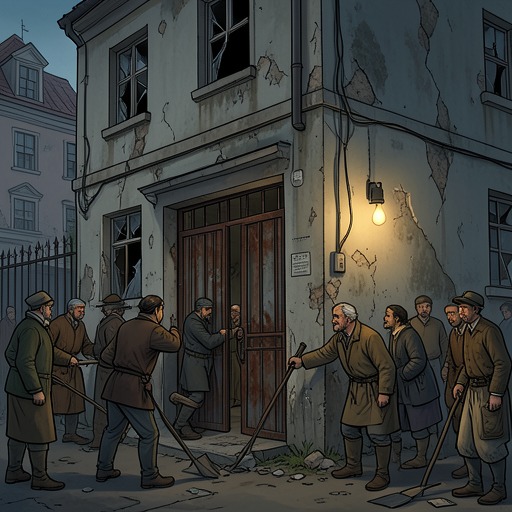
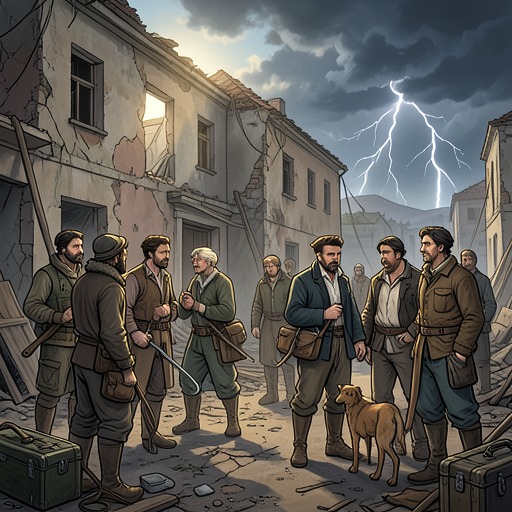
Harbor Street is already full of water and chaos when Paige arrives. Claire and two volunteers carry crates through ankle-deep runoff, while the east end lies open to the sky. Paige joins the work immediately. Frightened dogs, yowling cats, and whimpering puppies pass from hand to hand through a line of soaked volunteers. She stops a border collie from escaping through the open wall, carries a senior cat in a pillowcase when the carriers run out, and helps Claire coax a terrified pit bull from a run near the collapse while water rises over their boots.
The rescue is marked by pressure and scarcity rather than orderly heroics. A puppy screams continuously as Paige carries it, and the smell of wet concrete and fear fills the damaged shelter. The work narrows attention to the next crate, the next animal, and the water still entering the building. The event’s value shift is immediate: Harbor Street changes from a place of shelter to an exposed danger, while the evacuation changes the animals from trapped occupants into a moving population requiring coordinated care.
Maddox’s Unobserved Labor
The Caldwell trucks arrive in the storm with men in rain gear behind a site manager. Maddox is among them, already soaked through. He does not approach Paige first or use the emergency as an occasion to reclaim emotional access. Instead, he goes to Claire, who is directing the evacuation, asks what she needs, and performs those tasks.
The development opens its doors twenty minutes later. Utilities hum, heat pushes back the cold, and the unfinished lobby becomes a temporary shelter. Crates are stacked two high along the drywall, blankets are spread across the concrete, and volunteers and the Caldwell crew move briskly among the animals. The relief is not abstract: the animals now have dry space, warmth, and walls that hold while the storm continues to strike the glass.
Near midnight, Paige finds Maddox holding a shivering terrier mix inside his ruined jacket. He had already been caring for the dog before she came upon him, so the tenderness cannot be dismissed as a staged gesture. His help has taken the form of labor, trucks, utilities, heat, and physical presence rather than flowers, publicity, or a speech. Paige recognizes that there is no press and no engineered audience; the witnesses are soaked volunteers and frightened animals.
The evacuation succeeds materially. Claire counts the animals from a clipboard, and every one is accounted for. Nobody is lost in the dark. The outcome is not luck alone: it depends on Claire’s direction, Paige’s immediate work, volunteer coordination, and Maddox’s rapid deployment of Caldwell resources. When Paige thanks him, he shifts the terrier higher against his chest and tells her that she would have found another way, because she always does. The exchange does not resolve their marriage, but it establishes a form of cooperation in which help is offered without demanding emotional credit.
From Temporary Refuge to Reconstruction
The emergency transfer saves the animals but leaves them homeless. A week after the storm, Harbor Street cannot reopen in the old building. Insurance coverage is partial: water damage is covered, but preexisting deterioration in the flagged corner is excluded, and code upgrades are not covered. Reopening would require a modern-code rebuild rather than a simple repair, and the cost exceeds what the shelter has ever possessed. Even before the storm, the cramped site lacked the capacity Harbor Street needed; afterward, it is a wet ruin with a financial gap no grant can close.
The disaster therefore prevents a return to the old arrangement. Its consequence is not merely temporary displacement but a forced decision about what Harbor Street should become. The failed corner had been a warning of gradual deterioration, while the storm reveals that repairing the same inadequate structure would preserve the conditions that made the crisis possible.
Maddox’s next response turns emergency assistance into reconstruction planning. He comes to the Templeton kitchen table with a cardboard tube of drawings and a laptop rather than roses. His materials include preliminary feasibility sketches, three possible sites, zoning and access notes, flood-plain data, and construction figures backed by the Caldwell name. He also brings a largely blank program-requirements document covering intake capacity, an isolation ward, quiet rooms, and community space.
The blankness is central to the meaning of his offer. Maddox says that he knows buildings but does not know shelters, while Paige and Claire know what every room and run must accomplish. He commits money, land, and crew, but leaves Paige and Claire to decide what gets built. Claire immediately begins specifying the shelter she has needed for years, including a genuine quarantine wing with separate air handling and an indoor community room large enough for adoption events.
This reconstruction plan is not a return to the pre-storm Harbor Street. It treats the collapse as evidence that resilience requires better design, adequate capacity, and decisions made by the people who understand the animals’ needs. Maddox supplies construction power, but Paige and Claire retain the authority to shape the institution. In that sense, the transfer leads directly toward a new shelter whose foundation is organizational as well as physical.
Narrative Significance
The event links disaster sociology to emotional change through a single chain: a visible warning, an extreme storm, emergency mobilization, temporary shelter, and participatory rebuilding. It distinguishes hazard from vulnerability. Wind and flooding create the immediate danger, but long-term deterioration, limited funding, an unsuitable building, and delayed assessment determine how severe the consequences become.
For the animals, the central outcome is survival through collective action. The evacuation moves dogs, cats, puppies, and other residents from a collapsing kennel into a heated unfinished lobby, and the final count confirms that all thirty are safe. For Paige, the crisis creates an uncomfortable but consequential recognition: Maddox’s usefulness is no longer confined to financial power or control. He can also act quickly, accept direction, and work without an audience.
The event also changes the meaning of rebuilding. Maddox’s earlier way of operating involved controlling variables and presenting finished answers. After Harbor Street’s collapse, he offers resources while leaving the design authority with Paige and Claire. The disaster thus becomes a test he passes not by making a grand romantic claim, but by putting labor behind a structure that others are allowed to define. Its deepest significance lies in that contrast: the old roof fails because warning and need have been left unresolved, while the future shelter begins when responsibility, expertise, and choice are placed together.