Harbor Street shelter collapse and displacement
The Wife He Never Wanted: A Marriage-In-Crisis Billionaire Romance (Second Chance Billionaires)Harbor Street shelter collapse and displacement is the decisive disaster in the shelter’s history: a severe storm brings down the east-run roof at Harbor Street, displaces every animal housed there, and exposes how long-term deterioration had made the building vulnerable before the weather became the immediate trigger. The emergency is simultaneously a life-safety crisis and a structural turning point. Harbor Street cannot return to its former premises, but the evacuation creates the conditions for a new shelter designed around the animals’ needs and the people who understand them.
Structural Vulnerability Before the Storm
Maddox Caldwell discovers the danger while working at Harbor Street and sitting on the concrete floor of Skipper’s run. Skipper is a scarred older Shepherd and Lab mix who has spent sixteen months at the shelter, largely overlooked because adopters pass the senior black dog in favor of puppies and smaller animals. Maddox does not force contact with him. After three shifts of quiet work, he sits in the run without reaching toward the dog, and on the fourth Skipper crosses the space and lies nearby. From that position Maddox notices the roofline above the kennel.
The warning is not merely cosmetic. A sagging corner, a dip in the fascia, and a water stain bleeding down the block show that water has been entering the structure for some time. Maddox recognizes a failing load path and understands that the problem has moved toward serious structural danger. His experience on construction sites allows him to see a building beginning to fail before its collapse becomes visible to everyone else. He reports the compromised corner to Claire and recommends an updated assessment, but the shelter lacks both time and funds, and the reassessment does not occur before the storm.
The Collapse and Emergency Evacuation
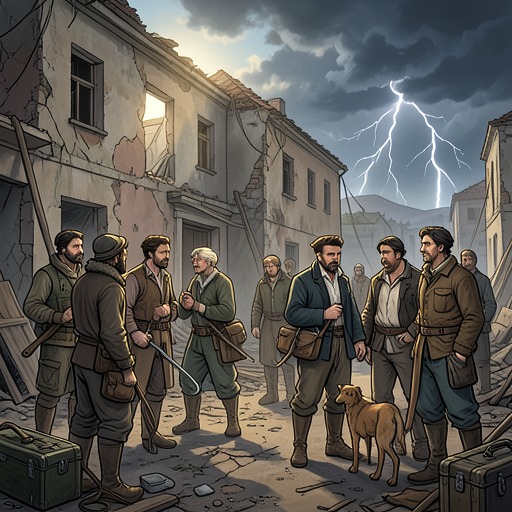
During a night of straight-line winds, flash-flood warnings, and heavy rain, Claire calls Paige Templeton with the stark announcement that the roof has come down. The east runs have collapsed, specifically the corner Maddox had flagged. Part of the intact wing falls with it, water enters the main kennel room, and thirty animals must be moved within an hour. Emergency boarders and veterinary clinics are already full, while flooding affects half the county, leaving Claire with no immediate destination for the animals.
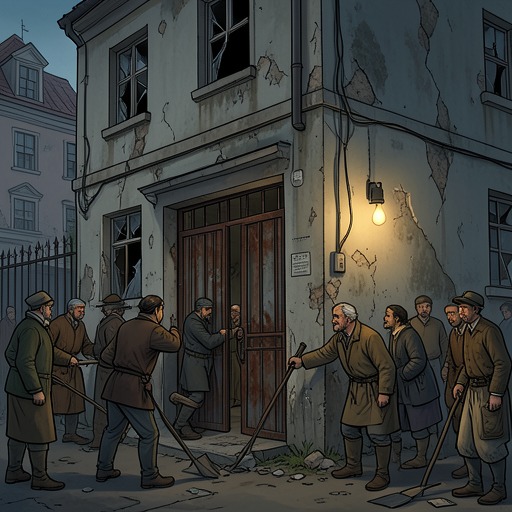
Harbor Street becomes a scene of water, noise, and improvised coordination. Claire and two volunteers carry crates through ankle-deep runoff while rain pours through the section of building that has opened to the sky. Paige helps move frightened dogs, yowling cats, and whimpering puppies through a line of soaked volunteers. She prevents a border collie from escaping through the open wall, carries a senior cat in a pillowcase when the carriers run out, and holds a flashlight in her teeth while Claire coaxes a terrified pit bull from the run nearest the collapse. The work is organized around successive immediate needs: the next crate, the next animal, and the rising water.
The collapse also gives Skipper’s adoption an unforeseen life-or-death significance. The fallen section is the run where Skipper had lived for more than a year. Had Maddox not taken him home days earlier, the old dog would probably still have been in that kennel when the roof came down. No one deliberately left Skipper in danger, but the uncompleted structural reassessment meant that the shelter’s most vulnerable resident could have been trapped by the very defect Maddox had recognized.
Mobilization and Temporary Displacement
Maddox responds by mobilizing Caldwell trucks and workers from the storm. He arrives in rain gear and does not approach Paige first or turn the emergency into a personal scene. Instead, he goes to Claire, who is directing the evacuation, asks what she needs, and performs the requested work. Paige watches him haul crates through the rain like any other person on the line, without press coverage or an engineered opportunity to be seen.
The temporary refuge comes from the Caldwell Development. Twenty minutes after the trucks arrive, the unfinished building opens its doors, its utilities operating and its heat pushing back the cold. The animals are settled in a dry unfinished lobby filled with crates, blankets, and the smell of wet animals while the storm continues against the glass. Near midnight, Paige finds Maddox holding a shivering terrier mix inside his soaked and ruined jacket. The scene confirms that his care is not a performance arranged for Paige: he was already holding the animal when she came upon him, and his actions throughout the evacuation were directed toward the animals rather than toward winning recognition.
Why Harbor Street Cannot Reopen
A week later, the animals are safe but homeless, and the old shelter is no longer viable. The insurance coverage is partial: water damage is covered, but preexisting deterioration in the flagged corner falls under an exclusion, and code upgrades are not covered. Reopening would therefore require a modern-code rebuild rather than a simple repair. The cost exceeds what Harbor Street has ever possessed, and even before the collapse the cramped site lacked the capacity the shelter needed.
Claire presents the conclusion plainly at the Templeton Family Home: the old building is gone as a shelter, and the question is whether Harbor Street can exist at all after the disaster. The collapse thus produces more than temporary displacement. It threatens the organization’s continuity, exposes the financial consequences of deferred maintenance, and makes restoration of the exact former site both impractical and insufficient.
Reconstruction as Shared Design
Maddox’s response changes the meaning of reconstruction. He arrives with a cardboard tube of drawings and a laptop rather than flowers or a finished presentation. His preliminary materials include feasibility sketches, three possible sites, zoning and access notes, flood-plain data, and construction figures backed by the Caldwell name. He also brings a mostly blank program-requirements document with fields for intake capacity, an isolation ward, quiet rooms, and community space.
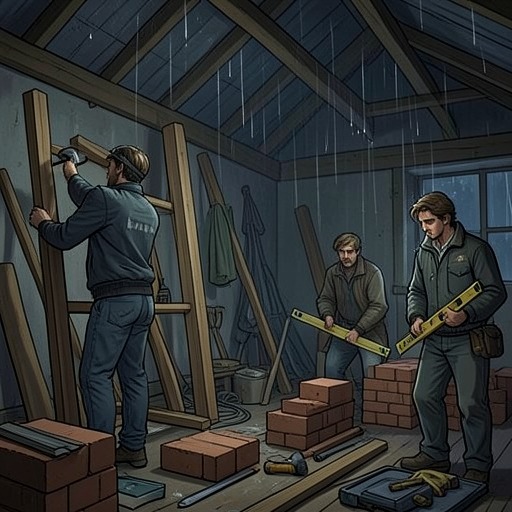
Instead of presenting a completed solution, Maddox tells Paige and Claire that he knows buildings but does not know shelters. He commits money, land, and crew while giving them authority over the design. Claire begins specifying the rooms she has needed for years, including a true quarantine wing with separate air handling and a community room large enough for indoor adoption events. The reconstruction therefore does not simply replace a failed roof. It converts the knowledge gained through the emergency into a more resilient institutional plan.
For Paige, the blank document is crucial because it reverses Maddox’s old method of control. He once entered negotiations with every variable managed and the answer already prepared; here he leaves the page open and puts the pen in Paige’s and Claire’s hands. The offer gives them a say rather than taking the decision away from them, and its significance lies as much in shared authority as in the money or construction capacity behind it.
Consequences and Lasting Significance
The rebuilt Harbor Street opens on a Saturday in October, retaining its name despite the collapse. Skipper is the first dog through the door, and Paige has placed his torn ear into the shelter’s logo. The new building includes the isolation ward, separate air handling, a real quarantine wing, and an indoor community room, all features Claire identified at the Templeton kitchen table. Families can move through rows of animals beneath walls that hold and a roof that no longer requires anyone to pray when the sky darkens.
The collapse consequently becomes both a record of institutional vulnerability and the origin of institutional resilience. Its immediate logic is disaster response—recognize danger, move animals, secure temporary space—but its larger effect is governance: the shelter is rebuilt according to the lived requirements of its director and advocates. Skipper’s survival connects the smallest act of trust, a dog crossing a kennel floor, to the largest structural transformation, a new Harbor Street designed to protect animals more adequately than the old building could. Maddox’s early warning, emergency labor, and later commitment all matter because they are converted into practical safety rather than spectacle.