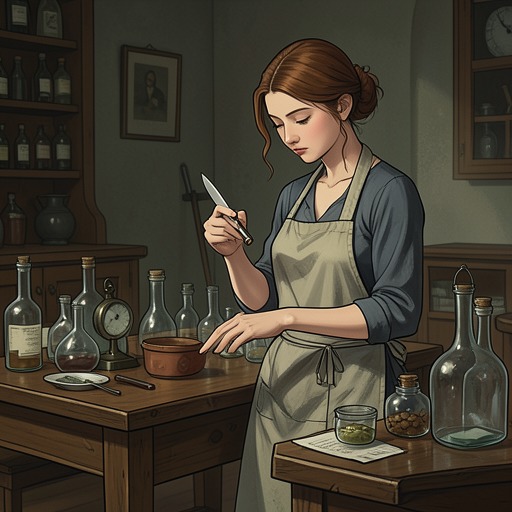
Cendre is what the fire could not take
The Wife He Threw Away: A Billionaire Secret Baby, Marriage-in-Crisis, Second-Chance Grovel Romance“Cendre is what the fire could not take” is the central definition of Maison Cendre and its ash philosophy. Spoken by Estelle to Ada Hart when Ada is stripped of her marriage, birth name, and stolen creative credit, the expression turns destruction into a test of survival: what remains after false sweetness, borrowed prestige, and self-deception have been burned away is the only thing worth preserving—and, ultimately, worth wearing.
Origin in Ada Hart’s Ruin
The phrase is born at the moment Ada Hart decides that her former identity cannot simply be recovered. After the Éternel launch gala publicly credits Chloe Beaumont with the fragrance Ada created, Sebastian Vale tells Ada that she married up and reduces her to “a nose in a white coat” without the Vale name. Ada leaves the marriage and goes to Paris, determined to conceal both the husband she left and the surname she was born with. Estelle recognizes the scale of what has been taken from her, describing Ada as the woman who built a four-hundred-million-dollar creation while another woman wore it “like a borrowed coat.”
Estelle then proposes burial rather than restoration. She tells Ada that they will bury Adeline Hart together and build from the ash, naming the new house Maison Cendre. In this context, Cendre does not mean that Ada has become empty. It marks the rejection of the identity imposed on her by the gala, the marriage, and the Vale Group system that converted her authorship into someone else’s public image. The ash is the residue that cannot be claimed by the person who caused the fire.
A Philosophy of Authorship and Survival
Ada explains the principle directly: Cendre is not the fire; it is what the fire could not take. The house therefore becomes more than a luxury fragrance business. Its name establishes a rule about creative ownership. The sweetness, the attractive top notes, and the lie Ada once told herself in the jasmine fields of Grasse are treated as burnable surfaces. What survives is harder, less decorative, and more truthful.
The first fragrance Ada creates under Maison Cendre is Revenant, built from smoked iris, cold stone, green vitality, ash, and cedar. Its reception gives material form to the philosophy. The scent appears to break the rules of the counter, yet Delphine Cross sells its first two hundred flacons by hand in the back rooms of shops unwilling to place it in their windows. Maison Cendre’s rise thus begins not with inherited prestige or conventional advertising, but with a product whose strangeness carries the evidence of survival.
The phrase also opposes the way Éternel is publicly narrated. At its launch, Vale Group presents the fragrance as a secret labor of a visionary woman and names Chloe Beaumont as both muse and artist. Chloe claims to have dreamed of the scent her whole life, although she has never entered Ada’s laboratory. Four years later, the lie remains institutionalized: Chloe is still displayed as the creator of Éternel, while the original formula’s sandalwood base and jasmine heart are detached from Ada’s name and converted into corporate property.
The Burning Away of the Lie
The expression acquires its sharpest ethical force when Sebastian Vale finally confronts the history he helped create. He recognizes that the gala was not merely a business error. He stood before six hundred people and forty cameras, raised Chloe’s hand, kissed her knuckles, and then told Ada that she was disposable without the Vale name. Ada was five weeks pregnant and carrying a pregnancy Sebastian did not know about; she left with their unborn child after he chose pride over the sentence that might have restored their marriage.
When Sebastian later discovers Theo Hart is his son, the residue of the past becomes impossible to manage as a story. He remembers the field outside Grasse, the vow to spend his life failing to deserve Ada, and the same man later humiliating her in the gallery. The expression’s logic is therefore applied not only to Ada’s rebuilding but to Sebastian’s moral reckoning. His polished explanations burn away, leaving the fact that he knowingly allowed the theft and benefited from it.
Sebastian’s public audit of Éternel makes the metaphor literal in institutional terms. On his signature, Vale Group releases keycard logs, notarized formulation notes in handwriting that is not Chloe’s, and a four-year provenance chain leading repeatedly to Ada. The statement declares that Chloe Beaumont was never the creator, that Vale Group knew it, and that the correction is overdue. The audit destroys the protective story around the fragrance, but it also exposes Sebastian himself as the husband who allowed the theft to happen.
From Ash to an Unconditional Future
The phrase does not authorize revenge for its own sake. When Ada considers whether she wants Sebastian’s ruin, Estelle warns her to build whatever she wants because she intends to live inside it, not because she wants him to die in it. Ada’s movement away from revenge does not erase the damage; it changes the use of the surviving material. The ash becomes a foundation for a future rather than fuel for another destruction.
Sebastian’s later restructuring of the fragrance business follows the same principle. He transfers the entire fragrance house into the merged entity rather than preserving a diluted Vale stake, removes the board’s ability to decide whose name appears on whose work, and places full creative and commercial control under an independent authority. Most importantly, he makes the arrangement unconditional. There is no requirement that Ada accept it, speak to him, forgive him, or return as Mrs. Vale. He understands that a gift tied to gratitude becomes a leash, so he removes every thread connecting Maison Cendre’s control to his own access to Ada.
The phrase finally becomes a measure of conduct rather than merely a brand slogan. Sebastian learns that earning Ada’s trust cannot be accomplished by a spectacular gesture or by reclaiming the romance of the Grasse jasmine fields. He must earn it through daily, unphotographed work, without expecting public credit. In that sense, what survives the burning is not the old marriage in its former form, but the possibility of a relationship rebuilt on acknowledged debt, independent authorship, and responsibility.
Narrative and Thematic Significance
“Cendre is what the fire could not take” organizes the book’s contrasts between fragrance and flower, image and creator, inheritance and earned value, and public applause and private truth. Éternel is made into a scalable asset through a false creator narrative, while Maison Cendre gains force by preserving the history of what was nearly destroyed. The expression insists that a product’s meaning cannot be separated from the person whose labor made it real.
Its imagery also gives the novel a recurring structure of combustion and residue. The gala burns Ada’s public identity; Paris supplies the place where she rebuilds; Revenant carries ash and grief into a new artistic language; the audit burns away the corporate lie; and the later transfer of control leaves behind an institution in which authorship can no longer be casually reassigned. Cendre therefore names both damage and resistance, but its decisive meaning lies in the second term: the part of a person, work, or future that survives the forces that tried to possess it.