Maison Cendre Paris Atelier
The Wife He Threw Away: A Billionaire Secret Baby, Marriage-in-Crisis, Second-Chance Grovel RomanceMaison Cendre Paris Atelier is the workshop and emotional stronghold through which Ada Hart converts betrayal into an independent fragrance house. Conceived in Paris after the Éternel Launch Credit Theft, it is not merely a shop or production site: it is the place where Ada reclaims her name, protects Theo Hart, preserves the authorship denied to her, and builds a business whose authority rests on craft rather than dynasty or publicity.
Origin in Ash
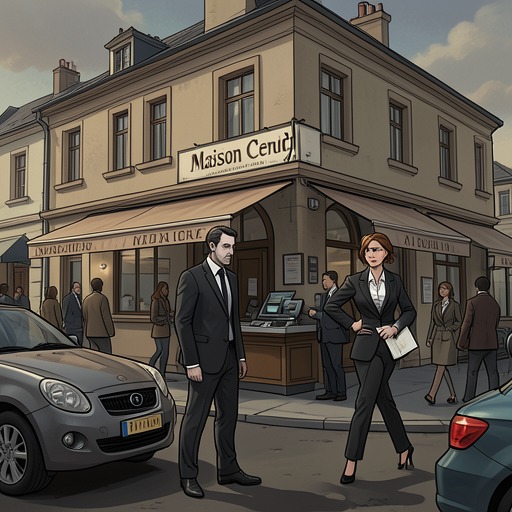
Maison Cendre Paris Atelier begins in a narrow shopfront on Rue des Cendres, chosen for its name and painted grey. Ada establishes it while pregnant, her body changing as the ruined year becomes the beginning of another life. She initially works under the public name Adeline Rousseau, her mother’s maiden name, keeping the Vale connection away from the enterprise and from the copper-headed boy sleeping in the next room. The atelier therefore starts as both a commercial venture and a defensive enclosure: a place where Ada can make perfume without allowing the world access to her true identity or her son.
The name Maison Cendre gives the workshop its governing philosophy. Ada explains that Cendre is not the fire but what the fire could not take: the sweetness, decorative surface, and self-deception are burned away, leaving what survives. The atelier’s identity is consequently founded on endurance rather than inherited prestige. Its first fragrance under the name, Revenant, embodies that principle through smoked iris, cold stone, a green, unkillable heart, and ash and cedar beneath notes that evoke grief or fury. The house initially sells its first two hundred flacons by hand in back rooms of shops that refuse to display it, but a critic’s account of the scent as the future of French perfumery leads to a waitlist by autumn.
The Atelier as Working Instrument
The workshop is shaped by Ada’s technical practice and by the material inheritance of Estelle. Estelle gives Ada her old perfume organ, a two-hundred-tier bench on which she had built her early career, and instructs her to finish what she has begun. Ada does so, turning the inherited instrument into the foundation of Maison Cendre’s creative authority. Four years later, the atelier’s organ extends along the north wall and contains three hundred essences, each keyed by Ada’s own hand. Unlike the hidden laboratory associated with her former marriage, it has no thumbprint locks and no secret kingdom: everything bears Ada’s name openly.
The mature atelier occupies a seventeenth-century hôtel particulier on a quiet corner of the Marais. Its courtyard is the color of weak honey, and a plaque outside makes passersby slow even when they belong to the city’s established houses. Inside, cool stone, drying orange flower, and the animal warmth of ambers give the place a sensory identity grounded in actual materials. The mother accord of Ada’s newest scent breathes cold jasmine into the room during the attempted acquisition by Vale Group, making the meeting a confrontation not only over property but over the living evidence of Ada’s authorship.
The atelier is also a collaborative structure. Delphine Cross enters it during the dead weeks of winter as a girl seeking work, first minding the counter and then helping to mind Ada herself. By spring she is the nearest thing to family Ada will permit. Delphine handles buyers, profiles, and the men who investigate a perfume house run by two women without a dynasty behind them, while Ada remains at Estelle’s organ and composes. Their division of labor allows the workshop to grow quietly and evenly, with Delphine carrying the public and commercial burden so Ada can protect the creative center.
Refuge, Boundary, and Threat
For four years, Maison Cendre Paris Atelier functions as a carefully guarded life. Ada permits only four people to matter to her publicly and privately, and the atelier contains the routine that makes her separation from Sebastian Vale sustainable: a stone courtyard, Delphine’s presence, Estelle’s mentorship, and Theo building a kingdom from crayons. The workshop is therefore a domestic space as much as a professional one. Theo’s existence is shielded by Ada’s reclusive public identity, while the ghostly figure of Adeline Rousseau becomes a wall between the press and the child.
That protected order is broken when the courtyard door opens without a knock and Delphine returns pale, phone clenched in her hand. Vale Group has formally filed through its acquisitions office and wants to buy Maison Cendre. The approach threatens every principle embodied in the atelier: its independence, its creator attribution, its refusal to let a powerful house remove Ada’s name from her own formulas, and its separation from the man whose earlier decisions made such protection necessary.
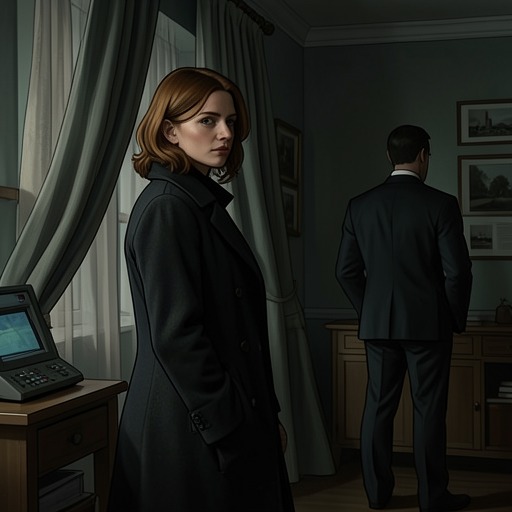
Sebastian’s arrival turns the workshop from refuge into a site of recognition. He could have sent an acquisitions team or more money, the language he has historically used, but instead enters the atelier himself. The smell of sandalwood and an intensely green and white sweetness recalls the field near Grasse before he speaks. Ada receives him in the grey, chapel-like shop where blotters lie across the counter, and the space forces the past into contact with the life she has built without him.
Encounters and Reclaimed Authority
The atelier later becomes the setting in which Sebastian first confronts Theo. Ada places herself between them, moves Theo toward Delphine, and keeps the child behind the studio door while Sebastian recognizes the boy’s eyes as his own. During their first supervised meeting, Sebastian abandons the armor associated with Vale Group and folds himself onto the atelier floor among Ada’s sample bottles. His height, wealth, and corporate power are deliberately made physically small in the workshop, while Theo decides whether he can approach.
The same space becomes a controlled arena for reconstructing Éternel. Ada lets Sebastian into the back lab because his memory is necessary: the evidence is scattered across four years and two hundred essences, and a mother accord exists nowhere on paper because it was created through the private grammar the former couple once shared at a bench of amber and civet. With two blotters placed on the organ, Ada begins again from the base, using the accord itself to establish that Chloe Beaumont never touched a molecule of the fragrance. The atelier thus converts memory into evidence and creative intimacy into an auditable fact.
When Sebastian later crosses the threshold again, Ada insists on slowness and refuses to let him invent a future without her consent. The house she calls clean, hard-won, and Sebastian-free now contains him, but only under conditions she sets. He lowers himself onto a rug scattered with wax nubs while Theo watches from behind his guardedness. The gesture does not erase the past; it shows the new terms of access to the place where Ada’s life, work, and authority are joined.
Commercial and Thematic Significance
Maison Cendre’s rise alters the balance of the fragrance industry. By the time four years have passed, major houses send cars to the Marais to learn what Paris will covet years ahead. Vale Group’s fragrance arm falls forty percent year over year while Maison Cendre’s newest launch sells out across three continents in a weekend. Reviewers describe the competing house as alive and human, qualities associated with the emotional force that once made Éternel valuable but that Vale’s chemists can no longer reproduce.
The atelier’s power rests on a contrast with the launch structure that dispossessed Ada. Vale Group once presented Chloe as the face and supposed creator of Éternel because her appearance and family connections promised access to Paris, while Ada was reduced to a chemist whose work could be attached to a marketable name. Legal paperwork then attempted to formalize Chloe as creative director, and a campaign document treated disclosure of Ada’s marriage as a standard conflict-of-interest matter. Maison Cendre reverses that logic: its founder’s name is visible, its formulas remain attached to their maker, and its public mystery protects rather than erases authorship.
The workshop also gives material form to the novel’s distinction between a product and the person who made it. Éternel can be launched before six hundred people and forty cameras while its true creator watches another woman receive the credit. Maison Cendre cannot be separated so easily from Ada’s hands, organ, essences, and chosen name. Its authority accumulates through the trace of making: the three hundred essences keyed by Ada, the accords built in the atelier, the hand-sold first flacons, and the partnership that lets Delphine carry the world while Ada remains at the bench. In that sense, the Paris atelier is the durable answer to the earlier theft. It is not only where Ada makes perfume; it is where the story of who made it can no longer be filed away under somebody else’s name.