Maison Cendre's Rise
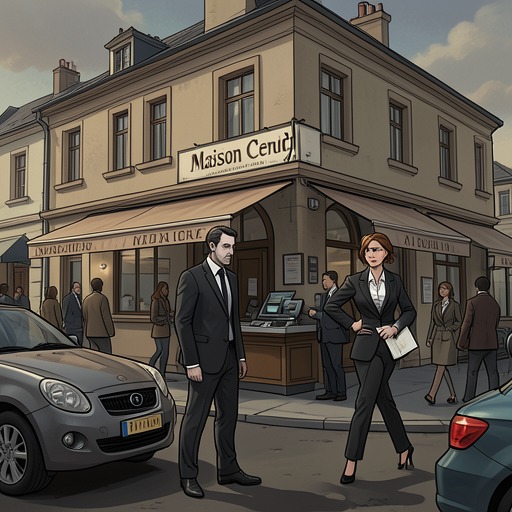
The Wife He Threw Away: A Billionaire Secret Baby, Marriage-in-Crisis, Second-Chance Grovel RomanceMaison Cendre's Rise is the central commercial and ethical reversal of the fragrance empire surrounding Ada Hart, Sebastian Vale, and Vale Group. After the public theft of Ada’s authorship at the Éternel launch, Ada rebuilds her career in Paris under another name, creating a house whose success depends not on a borrowed face or inherited prestige but on the unmistakable authority of the person who made the scent. Its ascent turns private injury into a durable institution and makes Maison Cendre the force that eventually compels Vale Group to confront what it took.
Causes and Foundation
Maison Cendre begins in the aftermath of the Éternel launch, where Vale Group presents Chloe Beaumont as the creator of a fragrance Ada had developed in secrecy. The gala’s language converts Ada’s intimate creative vocabulary into corporate mythology: the scent is announced with a sandalwood base and jasmine heart, while Chloe is introduced as both muse and artist. Chloe then claims that she has dreamed of the scent her whole life, despite never having entered Ada’s laboratory. Sebastian Vale, Ada’s husband, publicly raises Chloe’s hand and kisses her knuckles while hundreds of guests and cameras celebrate the false attribution. Ada carries the immediate wreckage with her: a positive pregnancy test, her wedding ring, and the collapse of the future she believed she shared with Sebastian.
The betrayal is reinforced by institutional decisions that make the theft appear ordinary. Sebastian argues that a four-hundred-million-dollar brand needs a marketable story, a recognizable face, and a name capable of opening Parisian doors. He tells Ada that she is a chemist and that Chloe photographs well, reducing the creator to a technical function while assigning public meaning to the substitute. Legal then formalizes Chloe as Creative Director of Maison Éternel, giving the impersonation endorsement rights, likeness authority, and a licensing structure. Even a routine spousal-disclosure form becomes part of the machinery: Sebastian is asked to countersign paperwork identifying his wife while the brand’s public documents erase her. Maison Cendre is therefore not merely a new business. It is Ada’s answer to a system that used branding language, corporate procedure, and family prestige to make dispossession look like strategy.
The House and Its First Scent
Ada names the new company Maison Cendre, or Ash, because ash represents what remains after fire has removed sweetness, prettiness, and self-deception. Delphine Cross initially thinks the name is unsuitable for a luxury fragrance house, but she accepts Ada’s reasoning and follows her from the earlier rented laboratory into a Paris walk-up. For Ada, Cendre is not the fire itself; it is what the fire could not take. The name gives the company a philosophy of survival rather than a decorative identity, defining the house through what endured the destruction of Ada’s former life.
The first fragrance created under the Maison Cendre name is Revenant. Its composition is deliberately difficult: smoked iris, cold stone, a green and apparently unkillable heart, and a base of ash and cedar that some wearers read as grief while others read as fury. The scent breaks the conventions of the counter, yet its resistance becomes part of its power. Delphine sells the first two hundred flacons by hand, wrist by wrist, in back rooms of shops unwilling to display the house in their windows. The early sales establish a model opposite to Vale Group’s spectacle: direct contact replaces mass prestige, and the fragrance must be recognized on the skin before the institution is willing to recognize it.
Maison Cendre’s reputation changes when a woman wears Revenant to the opera. A critic describes smelling the future of French perfumery on a stranger’s throat and spending the entire second act trying to identify it. By autumn, the house has a waiting list. Within two years, Paris has decided that Maison Cendre is the house that refused Paris, and the city’s refusal to be refused turns the company’s marginality into desirability. Scarcity, mystery, and the scent’s emotional force combine into a new kind of luxury authority: Maison Cendre does not inherit legitimacy but makes its exclusion part of its appeal.
Authorship, Secrecy, and Partnership
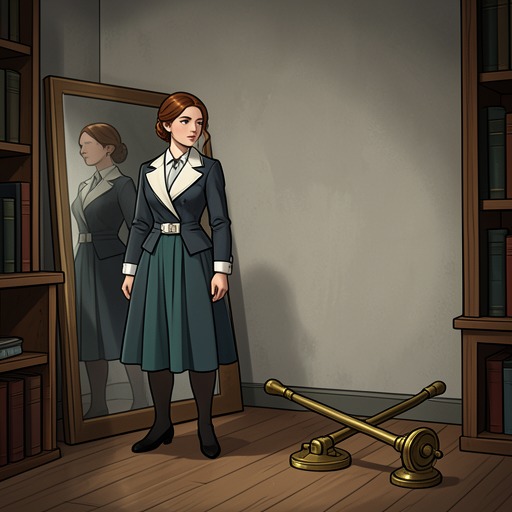
Ada protects Maison Cendre by keeping its creator hidden. In public she uses Adeline Rousseau, her mother’s maiden name, a name Vale Group has never touched. The press imagines her as reclusive, difficult, and almost spectral, and Ada allows those inventions to stand because each false version of Adeline creates distance between the public and Theo Hart, the copper-haired boy sleeping in the next room. The concealed identity is not an affectation of celebrity culture. It is a practical wall around her son and a refusal to let the Vale name reclaim what Ada has built.
Unlike Éternel, Maison Cendre does not surrender authorship for a more profitable public story. Every flacon, ledger, and press line carries the credit “A composition by A. Rousseau.” Ada permits no muse to occupy the creator’s place and no white-clad face to replace the person at the bench. She has learned the cost of allowing another woman’s name to stand where hers belongs and would rather close the doors than pay that cost a second time. The policy makes authorship a condition of the house’s existence, not an accessory to its marketing.
Delphine and Ada divide the work according to that principle. Delphine takes the world so Ada can take the bench: she handles buyers, profiles, and the men who circle a house run by two women without a dynasty behind them, while Ada remains in the atelier with Estelle’s Perfume Organ and composes. Their partnership is described as the cleanest of Ada’s life because it aligns public labor with private expertise instead of confusing visibility with creation. Maison Cendre grows quietly and evenly, like ash settling into everything, while Theo grows alongside it, drawing lions on walls, flacon proofs, and even a valuable contract. His steel-grey eyes remain the one unmistakable feature Ada cannot compose out of him, linking the hidden house to the father and family she has kept outside its walls.
Commercial Consequences and Conflict with Vale Group
Maison Cendre’s success eventually becomes a direct threat to Vale Group. At a Vale board meeting, the company’s fragrance division is down forty percent year over year, and the reason is repeatedly named: Maison Cendre. The Paris house is not yet five years old, has no legacy, and relies on no heritage advertising, yet it is consuming Vale’s position in the market. Its newest launch sells out across three continents in a single weekend, while reviewers describe its scents as alive and human—the same emotional qualities Éternel once possessed but Vale’s chemists can no longer earn.
The contrast reveals why Maison Cendre matters commercially. Vale Group has treated fragrance as an expandable asset made from product, story, face, distribution, and inherited reputation. Maison Cendre makes the creator’s integrity part of the product’s value. The scent is not separable from the person who composed it, and its scarcity is not merely a supply tactic: it is bound to the house’s refusal to flatten authorship into endorsement. Maison Cendre’s reputation therefore threatens the structure that made Éternel profitable, because it demonstrates that consumers can respond to a different kind of brand legitimacy—one grounded in human presence rather than corporate narration.
Sebastian responds by proposing acquisition. The move departs from the traditional Vale method of starving, undercutting, or poaching a rival, but his desire to own what he cannot replicate brings Maison Cendre back into the orbit of the empire that helped create it. At a later Federation gala honoring Maison Cendre, Chloe still appears beside Sebastian while the screen continues to identify her as the creator of Éternel. Four years after the theft, the old lie remains commercially usable: Chloe is still crowned with Ada’s two years of work, her field, and her jasmine heart. Yet the room no longer orbits Chloe. Maison Cendre has become the institution with the genuine gravity.
Reversal and Lasting Significance
Maison Cendre’s rise changes the balance between Ada and Vale Group from personal abandonment to structural confrontation. Its existence makes the stolen credit impossible to treat as a closed domestic quarrel. The house has its own scents, ledgers, reputation, partnership, and commercial constituency; it can stand against the family empire because it has converted survival into governance and authorship into lawlike practice.
That reversal ultimately reaches Sebastian’s decisions inside Vale Group. When the board prepares to bury him over the future of the fragrance division, he transfers the entire fragrance house into the merged entity rather than preserving the diluted family stake his counsel designed. He strips the board’s approval mechanism from the transfer language and places full creative and commercial control, including the founder’s seat, in an independent authority answerable to no Vale. The act directly undoes the structure that once allowed a room of executives to decide whose name belonged on whose work. Its significance lies not in generosity but in removing Vale’s ability to govern the house and its authorship.
Maison Cendre's Rise thus functions as both business success and moral evidence. It proves that Ada’s work could flourish without the Vale name, Chloe’s face, or the corporate story that displaced her. Its ash philosophy turns loss into a rule: what survives the fire must not be handed back to the people who lit it. By the time Maison Cendre becomes powerful enough to reshape the fragrance industry and force a reckoning inside Vale Group, Ada has ceased to be the missing creator in someone else’s legend. She is the founder of a house whose very existence restores the distinction between a perfume, the person who makes it, and the institution that claims to own it.