The Vale name was never mine
The Wife He Threw Away: A Billionaire Secret Baby, Marriage-in-Crisis, Second-Chance Grovel Romance“The Vale name was never mine” is a recurring expression of renunciation in the story of Sebastian Vale, Ada Hart, and Theo Hart. Its decisive significance changes over time: at first, Sebastian uses it to deny Ada’s place within the family and to excuse his own submission to Vivienne Vale and the Vale Group; later, he turns the same idea against the inheritance itself, naming Theo Hart outside the Vale lineage and finally rejecting the family when it demands that he choose the surname over Ada and his son.
First Utterance as Cruelty
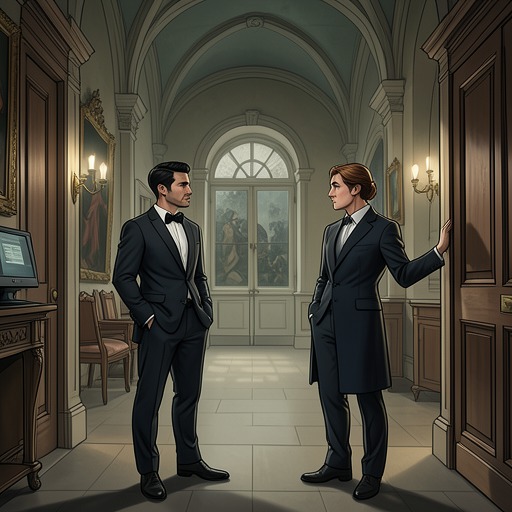
The expression first appears during the Éternel launch gala, when Sebastian tells Ada that she married up and that, without the Vale name, she is merely a chemist in a white coat. Ada answers that he is right and says, “The Vale name was never mine.” She removes Ada’s wedding ring and places it on the stacked champagne bottles, transforming the surname from a symbol of marital belonging into an object she can physically leave behind. Sebastian experiences relief because he mistakes her composure for acceptance, but her calm is the first sign that the marriage and the identity he has imposed on her are already ending.
Sebastian’s later reflection makes clear that the sentence does not initially express moral clarity. He has allowed Vivienne to lead him toward the public humiliation because he believes a Vale must not contradict his mother before six hundred people, and because part of him has begun to believe that Ada is an obstacle to the company’s image. Chloe Beaumont reinforces that logic by presenting herself as the suitable face of the brand, while Sebastian accepts approval from the board and his father’s men as proof that he has finally become the man the Vale system requires. The expression therefore begins as an act of displacement: Sebastian uses Ada’s exclusion from the Vale name to conceal his own fear of failing to deserve it.
The ring’s removal gives the phrase a material consequence. Sebastian tells Ada to keep the ring, imagining that she may want it returned for the next woman who photographs well, while he privately keeps hold of the ring’s absence and rehearses the word “reasonable” as if the marriage could be repaired through market logic. When Marchetti later presents a spousal-disclosure form requiring Ada’s particulars and countersignature, Sebastian stands at the doorway of his own house and lowers his pen toward the blank where her name should be. The surname has become not merely a family label but an administrative mechanism capable of making Ada visible or erasing her.
From Inherited Name to Chosen Identity
The expression acquires a different force when Sebastian encounters Theo. Looking at the child’s grey eyes, copper hair, and hand closed around his finger, Sebastian names him “Theo Hart,” explicitly refusing the Vale surname. He insists that the boy will carry his mother’s name cleanly into the world, without being traced back to the gala, the banner, or the lie represented by the woman in white. In this context, “The Vale name was never mine” becomes a rejection of inherited ownership rather than a weapon against Ada.
Sebastian’s choice also marks a change in what he believes a father is allowed to claim. He initially treats his son as something he might obtain through the methods used to acquire companies. Later, he ends his planned custody action, destroys the workups on Ada’s background, and tells Harrow that he will not take Theo as he takes companies. He says that Theo is the one thing he refuses to own and that he wants to earn a place in the boy’s life. The expression’s logic is thus extended from surname to relationship: neither family identity nor biological connection grants Sebastian an automatic right to possession.
Ada sets the conditions for Sebastian’s first supervised meeting with Theo in her atelier. The agreement limits him to supervised visits on her ground, initially to twenty minutes, with the meeting ending immediately if Theo becomes tired, turns away, or reaches for Ada. It forbids discussion of the past, the word “father,” press coverage, security displays, and the Vale name in Theo’s hearing. Sebastian accepts every condition. The acceptance demonstrates that rejecting the Vale name requires more than an emotional declaration; it requires surrendering the privileges of a man accustomed to buying or breaking boundaries.
The Name as Property and Contract
The expression also illuminates the story’s wider conflict over authorship, marriage, corporate ownership, and legal recognition. Vale Group’s acquisition offer for Maison Cendre arrives on Vale letterhead with a sum large enough to purchase Ada’s house and everything in it forty times over. The offer attempts to convert the one thing Sebastian has learned he cannot have into property. Ada recognizes the logic immediately and refuses to let Maison Cendre become another asset absorbed into the Vale empire.
Her counterproposal is a merger of equals between Maison Cendre and the fragrance division of Vale Group. She requires her house, formulas, and name to appear publicly and permanently in the founding documents, preventing the press or the corporation from quietly removing her authorship again. Chloe Beaumont’s name must be removed from the company’s materials, and Ada demands fifty-one percent control of the division bearing her perfumes. The terms answer the earlier insult at the gala: Ada will not accept the Vale name as a substitute for her own work, and she will not surrender control of a kingdom she built molecule by molecule.
The merger documents contain a further schedule concerning the minor child, T. Hart. Ada has created a legal path for Sebastian to receive recognition and access to Theo, including a place for his name in a column that had remained blank for three years. The arrangement separates biological relationship from entitlement. Sebastian can be recognized as Theo’s father only through terms that respect Ada’s authority and Theo’s welfare, not through the automatic force of the Vale surname. In this sense, the phrase becomes an argument against the idea that legal or dynastic status is naturally fair merely because it is formally available to the powerful.
Renunciation and Reversal
The expression reaches its sharpest reversal when Vivienne Vale demands that Sebastian choose between “the Vale name” and Ada and his bastard son. Sebastian answers that Ada is Ada, that his son is Theo, and that the day he is being asked to make that choice is the last day being a Vale means anything to him. The earlier sentence, spoken to defend the family’s hierarchy, has become the ground from which he repudiates it.
This confrontation is significant because Sebastian does not answer by seeking the family’s approval or by negotiating a more favorable inheritance. He identifies the name as the instrument through which Vivienne has controlled him and used him to reproduce the family’s values. His refusal breaks the equation between masculinity, authority, and possession that governed the gala. The Vale identity no longer represents success, legitimacy, or protection; it represents the demand that he abandon the people whose dignity and love cannot be acquired.
The final emotional consequence appears when Theo calls Sebastian “Papa.” The child says the word as though it has always belonged to Sebastian, despite the gala, the banner, the separation, and the absent years. Sebastian, known as the Blade of Vale Group, puts his head down on the atelier table and weeps. The scene makes the expression’s final meaning unmistakable: the identity he once defended is less important than the relationship he has had to earn, and the boy’s chosen name and chosen address matter more than the family title Sebastian was born to protect.
Literary Function
As an expression, “The Vale name was never mine” is both a verbal motif and a test of whether speech produces genuine change. Sebastian first repeats the logic of the family that has shaped him, using the surname to make Ada seem temporary and himself seem entitled. Later, he makes the harder distinction between a name inherited from power and a relationship established through responsibility. His renunciation is completed not by a corporate announcement but by accepting limits, refusing ownership of Theo, and allowing recognition to proceed on Ada’s terms.
The phrase therefore tracks the movement from bad faith to accountability. Sebastian once tells himself that public cruelty is business judgment and that emotional damage can be repaired through reasonableness, a ring, or a return to the old arrangement. The repeated idea of the Vale name exposes that self-deception: the name was never a neutral inheritance but a structure that taught him to confuse possession with love. By the end, rejecting it allows him to become answerable to Ada and Theo as separate people rather than as extensions of his family’s prestige.