Theo's concealed parentage
The Wife He Threw Away: A Billionaire Secret Baby, Marriage-in-Crisis, Second-Chance Grovel RomanceTheo's concealed parentage is the secret around which the second half of the story turns. Born after Ada Hart's public humiliation and departure from Sebastian Vale, Theo is deliberately given a name that excludes the Vale dynasty and is kept outside Sebastian's knowledge for four years. The concealment begins as Ada's protection against a man who discarded her and becomes a test of whether Sebastian can recognize fatherhood without treating his son as property. When the truth finally surfaces, it transforms Sebastian's understanding of the gala, the marriage, and the child he never knew he had.
Origin of the Secret
Theo's existence is rooted in the night Sebastian publicly reduced Ada to a subordinate within the Vale order. At the Éternel launch gala, Sebastian told her that she had “married up,” that the Vale name was never hers, and that without it she was merely “a nose in a white coat.” He had allowed Vivienne Vale to lead him toward the same cruelty, accepting the family belief that Ada was an outsider who should be grateful for access to his name. He also let Chloe Beaumont present herself as the face of the fragrance business, while Ada's creative authorship was pushed aside. Sebastian recognized the possibility of taking back what he had said, but chose pride and the performance of the Vale man instead.
Ada left that night without using Sebastian's name. The flight record later shows her traveling to Paris under Rousseau, her mother's maiden name, on a one-way economy ticket rather than using the private resources available to her as Sebastian's wife. The choice is more than practical concealment: it removes her from the Vale archive and reaches back toward a maternal identity untouched by Vale Group. Sebastian understands only afterward that she had not merely left the house; she had shed the identity he had imposed on her.
Ada's Deliberate Erasure of Vale Identity
Ada's decision to conceal Theo is inseparable from her reconstruction of herself as Adeline Rousseau and later as the founder of Maison Cendre. In Paris, Estelle identifies the woman behind the stolen authorship and tells her that the girl who created a four-hundred-million idea has been buried beneath another woman's public image. Ada accepts the language of burial as a survival strategy. From the ash, she builds Cendre, a house founded on what remains after everything that can burn has been consumed.
When Theo is born, Ada names him Theo Hart, not Theo Vale. She explicitly chooses her own family name for him: the name of a woman who made things with her own hands and asked no man's permission. The name is intended to carry him into the world without tracing him back to the gallery, the banner, or the lie that destroyed his parents' marriage. Ada's vow is absolute: Theo will never know the man who threw them away. The concealed parentage therefore protects both a child and a newly claimed history. It denies Sebastian access not only to his son but also to the story that would allow the Vale family to absorb the child into its power structure.
Ada also manages visibility with exceptional care. She refuses public photographs and lets the press invent Adeline Rousseau as a reclusive, difficult, almost ghostlike creator. Her invisibility creates a wall around the copper-headed boy sleeping nearby. The public may pursue an imagined founder, but the imagined woman has no son for reporters or Vale Group to find. At the same time, Ada refuses to surrender authorship: every flacon, ledger, and press line identifies the work as a composition by A. Rousseau. She will hide her face, but not the credit that had once been taken from her.
The Secret's Practical Protection
The concealment is maintained through rules rather than accidental silence. When Sebastian travels to Paris to pursue Maison Cendre's acquisition, Ada requires that Theo remain sealed upstairs with Delphine Cross throughout the meeting. He is not to come down for the crèche, the courtyard, or any other reason until the last black car has left the street. Delphine understands why without being told: Theo's grey eyes resemble Sebastian's, and the child's presence could expose the bloodline before Ada is ready to confront it.
The secret is nearly breached by a child's drawing. At the atelier door, Sebastian sees a crude lion taped at the height of a small arm. It has grey scribbled eyes, a mane like a sunburst, and the name THEO written beneath it in the uncertain capitals of a child learning to write. The drawing gives the hidden boy a visible presence before Sebastian has the knowledge to interpret it. When Sebastian asks whether it belongs to Ada, the question carries a fear he cannot yet formulate: the house he has treated as an acquisition target contains a child whose existence has been kept beyond his reach.
Discovery and Recognition
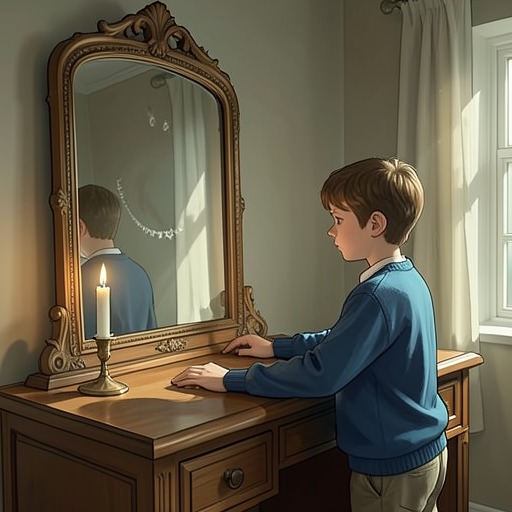
Sebastian learns Theo's name when the child cautiously identifies himself. Theo holds a drawing of a lion against his chest, studies Sebastian as if deciding whether he can trust a door, and answers only, “Theo.” That guarded introduction is the first direct contact between father and son, although Sebastian does not initially possess the relationship's language. The child's name triggers an involuntary calculation. Ada left in June, and the timing places her approximately five weeks pregnant when she stood before Sebastian at the gala with an empty hand after he had discarded her. The ring, the departure, and the pregnancy align at once.
Sebastian recognizes the physical evidence as well. Theo has the copper hair and grey eyes that Sebastian knows as his own. The arithmetic becomes undeniable: Theo is not merely a child in Ada's protected household but Sebastian's son. The discovery changes the meaning of the past. Ada's stillness after the insult, her departure under Rousseau, and her refusal to return were not only the consequences of a broken marriage; they were also the actions of a mother shielding a child from the man who had made himself unworthy of access.
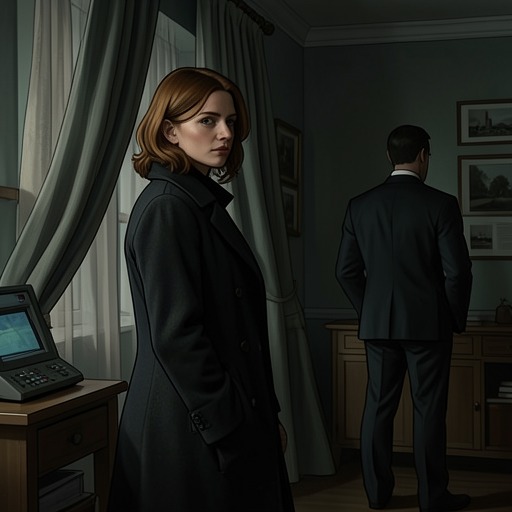
Ada immediately understands that Sebastian has understood. She sees the calculation complete on his face, and Sebastian sees the color leave hers. The concealment therefore ends not through a confession or a legal document but through mutual recognition. The truth passes between their faces before either parent can control its consequences. Theo's identity has been hidden from Sebastian, but it has never been uncertain to Ada, Estelle, or Delphine; what changes is Sebastian's position in relation to it.
Sebastian's Ethical Reorientation
The discovery does not entitle Sebastian to immediate possession. Instead, it exposes the danger of applying his old methods to fatherhood. He has spent his adult life taking control of companies, deals, and public narratives, but he rejects that approach when Theo becomes real to him. Sebastian ends the engagement and orders the workups on Ada's circumstances destroyed, refusing to become the first mover in a custody fight. He states that he wants to earn Ada and Theo rather than take them, and that Theo is the one thing he refuses to own.
This decision marks the first direct challenge to the Vale identity that produced the concealment. Sebastian's mother frames the conflict as a choice between the family name and “that woman and her bastard,” treating Theo's concealed parentage as a weapon against both Ada and the child. Sebastian answers by naming them correctly: Ada is Ada, and his son is Theo. He declares that this is the last day that being a Vale means anything to him. The secret thus forces a public and genealogical choice. Sebastian can preserve the inherited name by denying the family connection's moral reality, or he can accept the relationship while surrendering the authority that once defined him.
Disclosure and Meaning
Theo's concealed parentage ultimately resolves through relationship rather than blood alone. Sebastian's recognition of the child is only the beginning; fatherhood has to be earned through patience, supervised contact, and the relinquishment of coercive control. The child is not treated as proof of Sebastian's entitlement to Ada, nor as an asset that can restore the marriage on demand. Instead, Theo becomes the measure of whether Sebastian can act without acquisition, leverage, or the protection of the Vale mask.
The emotional disclosure arrives in an ordinary moment rather than a public gala. Theo calls Sebastian “Papa” while drawing a lion, treating the word as natural despite the years of absence. Sebastian collapses over the atelier table among blotters and stems and weeps: the Blade of Vale Group is undone not by a takeover, threat, or business loss, but by a boy naming his lion. Ada witnesses the scene and finally cries as well, four years late and exactly on time. Theo's concealed parentage has therefore moved through three meanings: first a shield against Sebastian's violence, then the revelation of his moral failure, and finally the basis for a father-son bond that exists only after he stops claiming the right to possess it.