Vale Group's Attempt to Acquire Maison Cendre
The Wife He Threw Away: A Billionaire Secret Baby, Marriage-in-Crisis, Second-Chance Grovel RomanceVale Group's Attempt to Acquire Maison Cendre is the corporate action through which Sebastian Vale tries to purchase the Paris fragrance house that is defeating his own company, only to discover that the founder he intends to absorb is Ada Hart, the wife he abandoned through the Éternel credit theft. The attempt turns a business strategy into a delayed confrontation with stolen authorship, marital betrayal, and the limits of ownership: Sebastian travels to Paris believing that every valuable thing can be acquired, while Maison Cendre has been built precisely around the principle that its creator will not sell the part of herself embedded in the house.
Causes and Commercial Background
Four years after Ada Hart left Sebastian, he had transformed himself into the colder and more efficient version of the Vale heir. Vale Group had doubled in size, yet Sebastian remained emotionally and domestically empty. The corporate crisis that redirected his attention toward Maison Cendre was measurable: Vale Group's fragrance arm had fallen forty percent year over year. The decline was not merely a financial embarrassment, because the division contained the company's most important growth engine and embodied the authority Sebastian had used to define himself.
The board supplied the rival's name as though it were naming a threat that everyone feared: Maison Cendre. The Paris house was less than five years old and possessed none of the conventional advantages of legacy, heritage advertising, or an established corporate mythology. Nevertheless, its newest fragrance had sold out across three continents in a single weekend. Reviewers described its work as alive and human, language that suggested not only technical success but an emotional quality Vale Group's established chemists could no longer produce. Maison Cendre was doing what Éternel had once done: making consumers press a scented wrist to the face and enter a private history.
Sebastian's response was immediate and characteristic. Rather than starve the competitor, undercut it, or poach its talent—the established Vale playbook—he proposed buying it. His stated objective was to obtain the creative ability he could not replicate, but the decision also carried a more intimate hunger. He wanted to own the nose he could not name, defeat, or stop thinking about. The acquisition therefore joined corporate necessity to a desire for possession: Maison Cendre represented both a dangerous competitor and the one thing Sebastian could not reproduce through power alone.
The Acquisition Attempt
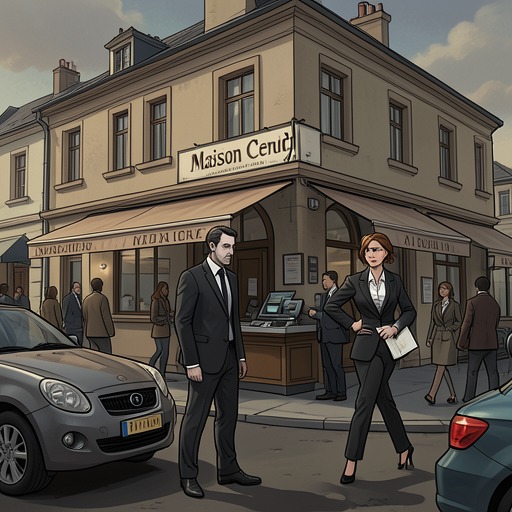
Sebastian was told that Maison Cendre's founder would not sell and had already rejected major luxury groups, including LVMH and Kering. He dismissed the warning with the certainty of a man accustomed to turning resistance into a price. He ordered a dossier, signed the acquisition mandate at 9:04 that night, instructed his pilot to file for Charles de Gaulle, and boarded the jet himself. His decision to travel personally made the attempt more than a delegated corporate transaction. He intended to sit across from the founder, make an offer no reasonable person could refuse, and watch the refusal fail.
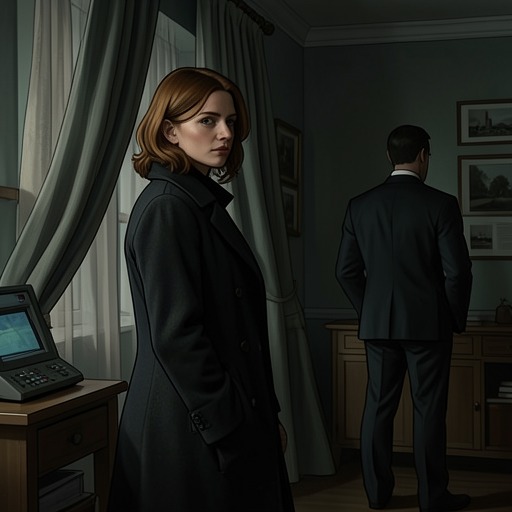
The dossier named the founder and creative force as Adeline Rousseau. It described her as French, trained in Grasse, reclusive, and protective of her face as if it were part of a formula. No photograph had been cleared for the file, and the documents offered neither an obvious financial weakness nor a vulnerability Sebastian could exploit. He read the name flatly and professionally, unable to recognize that it would undo the assumptions governing his entire life. The closed identity of the founder and the house's resistance to purchase unsettled him precisely because they denied him the usual instruments of control.
The attempt is also defined by its contrast with the earlier treatment of Ada's work at Éternel. At the launch gala, Vale Group presented Chloe Beaumont as the woman behind the fragrance, despite Ada's secret two-year creation of it. Sebastian had raised Chloe's hand and kissed her knuckles before six hundred guests and forty cameras while Ada carried a positive pregnancy test and her wedding ring in a clutch. He then signed documents formalizing Chloe as Creative Director of Maison Éternel, transferring legal weight, endorsement rights, likeness, and the licensing chain to a woman who had never entered Ada's laboratory. The later acquisition of Maison Cendre repeats the same institutional logic in a new form: the company first converted creative labor into a corporate asset under someone else's name, then attempted to purchase the creator who had rebuilt her authority elsewhere.
The Hidden Identity and the Reversal of Meaning
The acquisition dossier's Adeline Rousseau identity conceals Ada Hart's presence, making Sebastian's journey an instance of dramatic irony. He believes he is pursuing an anonymous founder whose commercial success threatens Vale Group. In fact, he is approaching the woman whose work he once subordinated to a marketable face and a powerful family network. His ignorance allows the acquisition to appear rational within the language of corporate strategy, but that rationality is built over an unrecognized personal history.
The contrast between Maison Cendre and Éternel sharpens the reversal. Éternel became a four-hundred-million-dollar brand through a public story that attributed Ada's creation to Chloe Beaumont. Its launch narrative celebrated a muse and artist who did not correspond to the actual chain of labor. Maison Cendre, by contrast, is associated with the founder's guarded identity, her refusal to sell, and a creative force that consumers experience as human rather than merely branded. The novel thus distinguishes a fragrance from the institutional story attached to it. A formula may be copied, manufactured, marketed, and sold, but the authority that makes it feel alive depends on who is permitted to stand behind the work.
Sebastian's eventual recognition makes the journey more than a failed acquisition. At a later Fragrance Federation gala honoring Maison Cendre, he sees Ada and understands that the rival founder is the woman he lost. Chloe Beaumont still appears publicly as the creator of Éternel, with the old fraud displayed on the screen behind her, but the room no longer orbits Chloe. The old rage rises and then settles, because Maison Cendre's presence has displaced the false story. Sebastian's attempt to buy the house has already failed at the level of meaning before any formal negotiation can succeed: the object he wanted was inseparable from the person and history he had tried to erase.
Consequences for Sebastian and Vale Group
The attempt exposes Sebastian's continuing reliance on the Vale method—identify the threat, assign it a price, and turn resistance into leverage. His earlier professional behavior after Éternel's launch shows the same mechanism. While Ada was absent, he went to the tower, chaired meetings, approved a second production run, and operated as a clean, decisive blade while Éternel generated forty million dollars in pre-orders during its first eighteen hours. The corporation could continue expanding while his marriage collapsed, because its systems treated private damage as irrelevant to commercial momentum.
Maison Cendre interrupts that separation between business and injury. The rival house forces Sebastian to confront the fact that the creativity he seeks cannot be detached from the person whose dignity was denied. His acquisition plan begins as an effort to own the missing source of Vale Group's vitality, but its revelation makes ownership itself morally suspect. The house's refusal to sell demonstrates that control over a creator is not equivalent to access to a product, and that a corporate structure can preserve the appearance of legitimacy while concealing the theft on which its success rests.
The consequences extend to Vale Group's governance. When Sebastian later audits Éternel and proposes to expose the fraud publicly, the board warns that he would gut the story supporting a four-hundred-million-dollar brand, damage Chloe Beaumont, endanger European distribution tied to her family, and perhaps lose both the chairmanship and the Vale name. He accepts those consequences. In the emergency restructuring, he signs the entire fragrance house into the merged entity rather than retaining the diluted family stake his counsel had designed. He removes the board mechanism that allowed a group of men to decide whose name belonged on whose work and places full creative and commercial control under an independent authority, with the founder's seat protected from Vale control.
Significance and Ending
The attempted acquisition is a pivotal reversal in the novel's treatment of ownership. Sebastian initially believes that buying Maison Cendre will give him the one thing he cannot reproduce. The action instead reveals that the house's value lies in an authorship and independence that cannot be purchased without destroying the conditions that made it valuable. Its refusal to sell becomes a counter-principle to the earlier theft of Ada's credit: Maison Cendre does not allow the market to convert its founder into a removable face.
The event also gives physical form to Sebastian's moral injury. He was not merely deceived by Chloe Beaumont; he participated in the administrative process that made the deception durable. He signed the Creative Director paperwork, approached spousal disclosure with a pen in hand, and allowed the organization to treat Ada's work as a corporate asset separated from her name. When he later chooses public audit and structural surrender, the remedy matters because it accepts institutional and personal loss rather than seeking forgiveness through a private gesture.
By the time he transfers control of the fragrance business, Sebastian no longer treats the house as a possession that can lead him back to Ada. He specifically excludes any hidden thread tying the independent authority to himself: no contact provision, no condition requiring Ada's acceptance, and no board seat reserved for a reconciled Mrs. Vale. That final arrangement completes the arc begun by the acquisition attempt. The man who flew to Paris to make an offer no reasonable person would refuse ultimately gives up the mechanisms that would have allowed his generosity to demand Ada's gratitude. Maison Cendre defeats Vale Group not by becoming its property, but by forcing Sebastian to understand that the creator's freedom is part of the work's truth.