L'Île
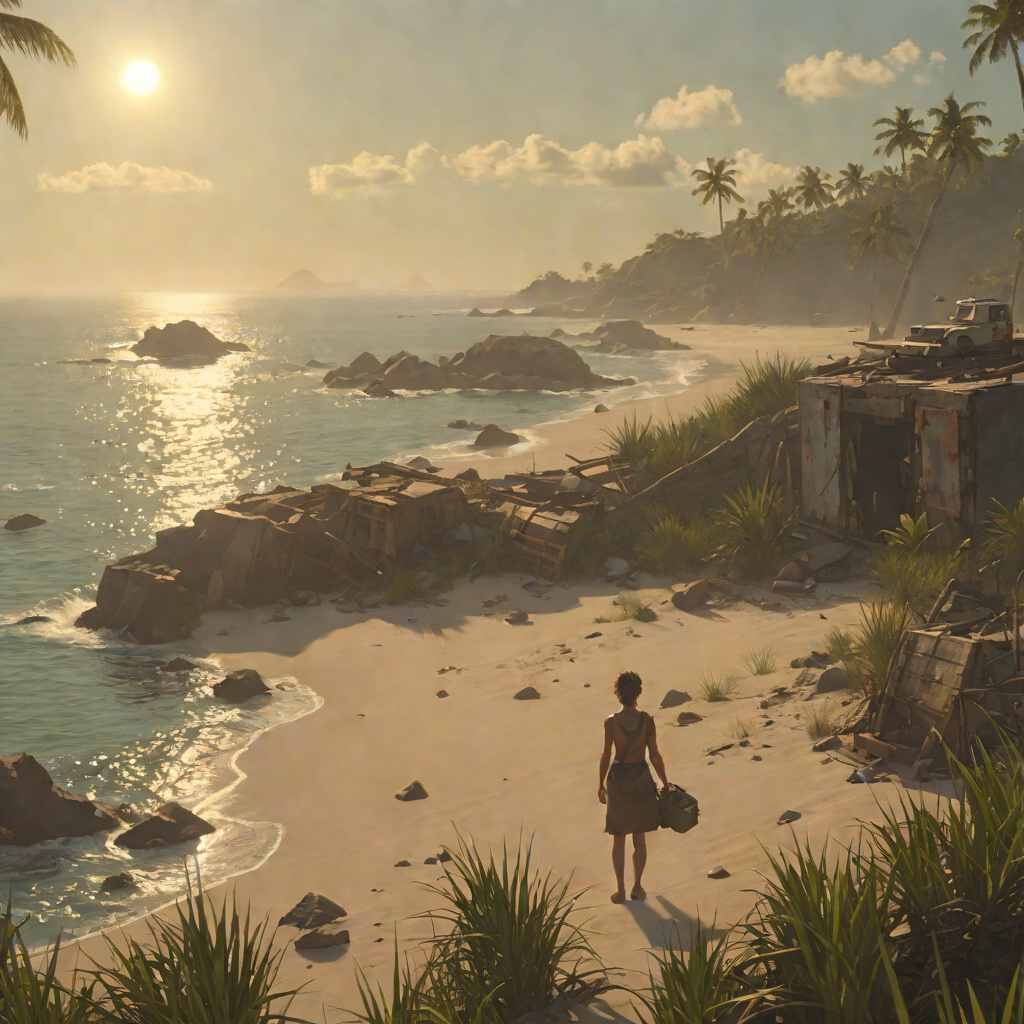
The Wild RobotL'Île is the wild, rocky island that serves as the entire world of the story, the place where a robot named Roz is stranded and must carve out an existence. It is the setting for her entire journey, from her accidental awakening to her final departure, and its geography, wildlife, and seasons are not just a backdrop but the very forces that shape her transformation from a lost machine into a beloved member of a wild community. The island is both a prison and a home, a place of profound isolation and of deep connection, and its character is as central to the narrative as any of its inhabitants.
Geography and First Impressions
The island first appears as a green smudge on the horizon, seen by the five crates that survived a hurricane and drifted along an ocean current. As they draw closer, the soft green shapes resolve into the hard edges of a wild, rocky island. The first crate to reach the shore is smashed against the rocks, destroying the robot inside, leaving only four survivors. Roz's own crate eventually washes ashore, and she is accidentally activated by curious sea otters.
Roz's first true understanding of her situation comes when she climbs to the top of the mountain at the island's center. From this highest point, she turns her head slowly and sees the ocean stretching to the horizon in every direction. It is at this moment that she finally realizes she is on an island. Looking down, she surveys her new home: from a sandy southern point, the island grows wider, greener, and hillier until it culminates in the rocky cone of the mountain. In places, the mountain has collapsed into steep cliffs. A waterfall plunges from a cliff, feeding a river that winds through a great prairie at the island's center, flowing past wildflowers, ponds, and rocks before disappearing into the forest. The island is teeming with life—vultures circling the foothills, lizards warming on distant rocks, a badger emerging from a berry bush, a moose wading in a stream, and a flock of sparrows wheeling in unison over the trees. Into this vibrant ecosystem, a strange new kind of life has arrived: artificial life.
A New Life in the Wild
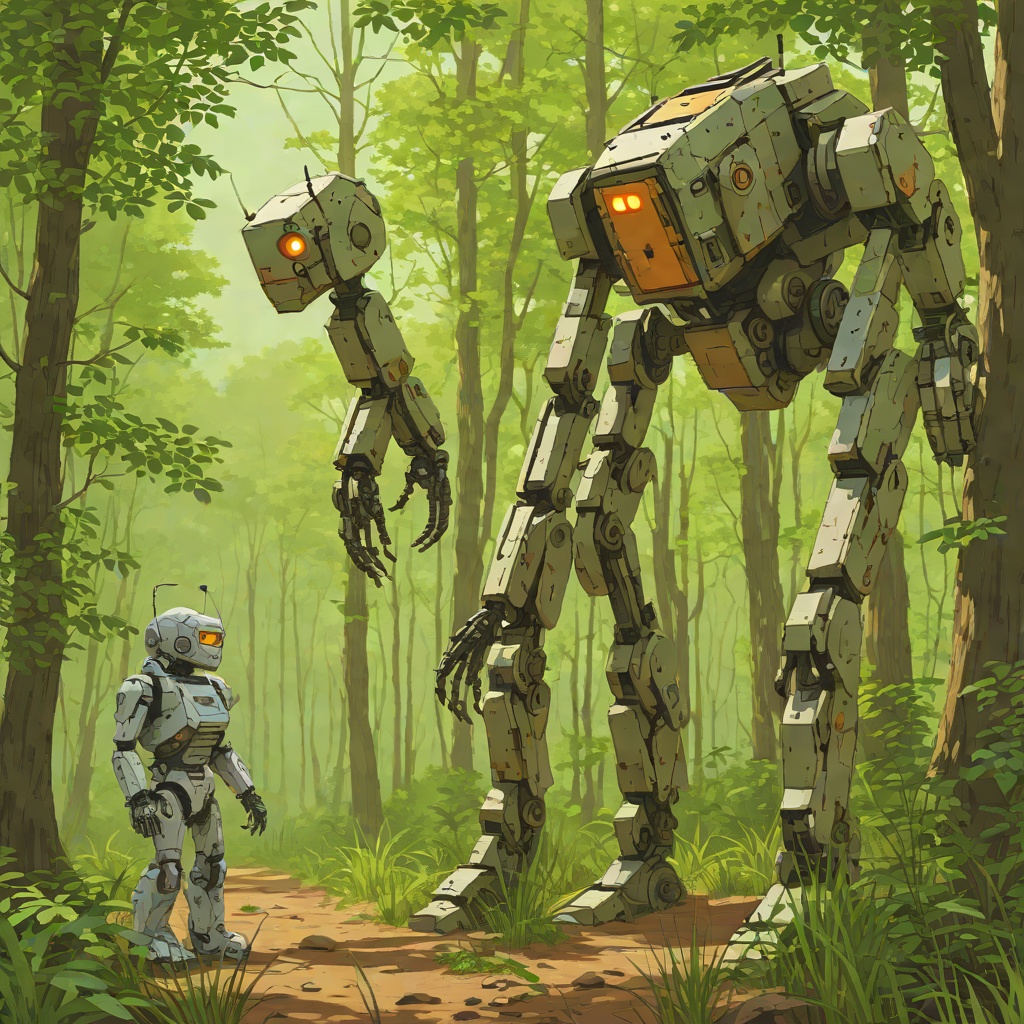
Roz had no idea how she arrived on the island. She did not know she was built in a factory, stored in a warehouse, and transported across the ocean on a cargo ship. She did not know a hurricane had sunk the ship and left her crate bobbing on the waves for days until it finally washed ashore. She did not even know she had been accidentally activated by the sea otters. As she looked out over the island, it never occurred to her that she might not belong there. As far as Roz knew, she was home.
Her integration into the island's life begins with observation. Camouflaged, she secretly watches the animals' normal behavior. She notices chickadees flitting among the same flowers and singing the same song each morning, a lark diving to the same rock and singing the same song each afternoon, and two magpies singing together across the same meadow each evening. After weeks of robotic study, she knows what each bird will sing, when it will sing, and finally why it will sing. She begins to understand the birds, and then the porcupines, salamanders, and beetles, discovering that all the different animals share a common language, each species speaking it with its own accent.
Building a Home and a Community
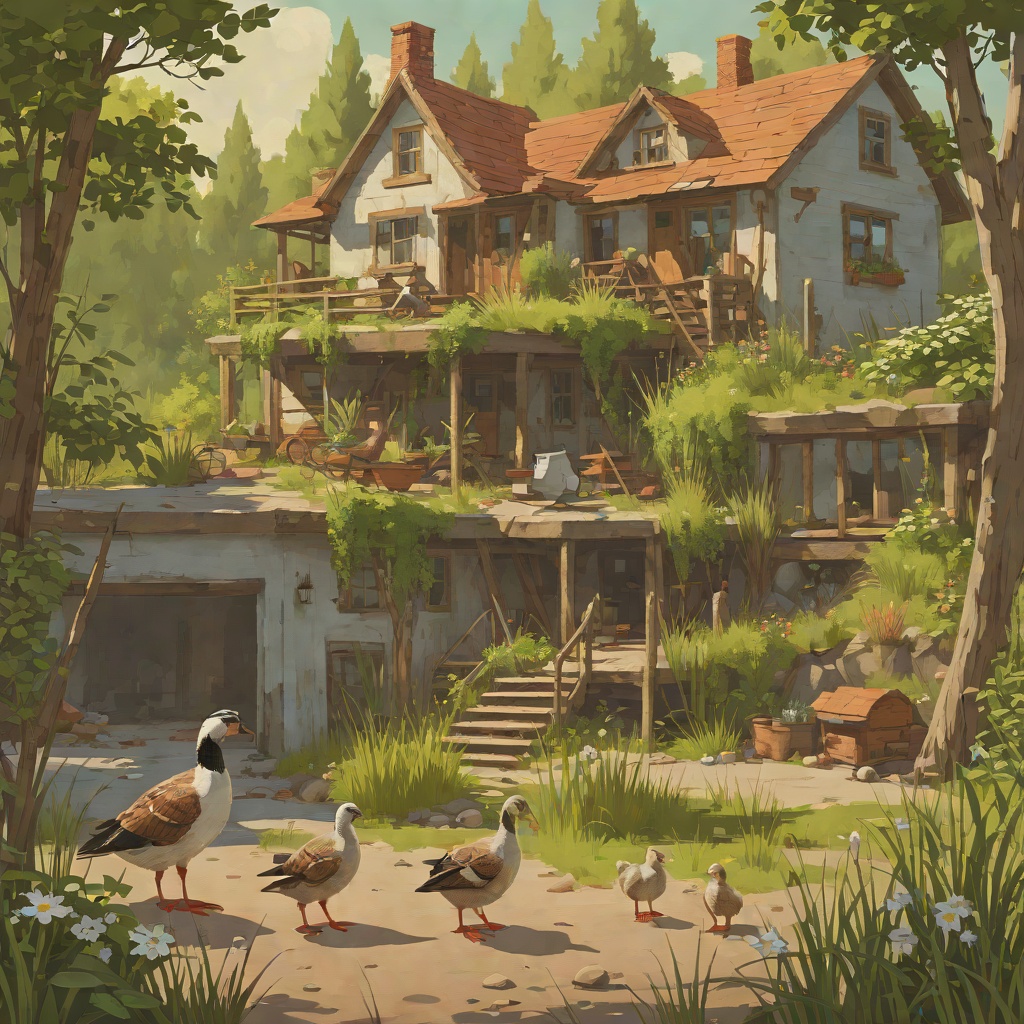
Roz's understanding of the island's inhabitants leads her to seek their help. She observes that different animals have different ways of surviving and asks each of them to teach her their techniques. Some are hostile—an owl calls her unnatural, and a marmot named Digdown cries that the monster is waiting to swallow them—but others, like the fox Fink, are more receptive. This knowledge and cooperation culminate in the construction of her first home, a lodge built under the guidance of Mr. Beaver. It is a great dome of wood, mud, and leaves, larger than a beaver's hut, with a single opening for a door that Roz can slide a heavy stone across. Inside is a large round room with a vaulted ceiling high enough for Roz to stand, a fireplace in the center of the floor, a lattice of fine branches above as a vent, long stones lining the walls like benches covered in thick cushions of moss, and even a hole to store food and water for Brightbill, the gosling she has adopted.
The lodge becomes the first of many. As winter descends, Roz builds a second lodge across the frozen pond, in a dense area of forest where many animals desperately need warmth. She tests the ice by throwing a heavy stone and watching it bounce, then crosses to find a moose named Broadfoot waiting to lead her to a clearing. She lights a fire and asks the gathering creatures to collect stones, branches, and frozen mud. With her construction expertise and a small army of helpers, the second lodge is built quickly, and the animals joyfully accept her truce, dragging themselves into the warm wooden dome. She warns them that the fire will keep them alive but can become deadly in an instant. By dawn, heavy snow is falling again, and Roz is already leaving the Nest to build a third lodge in the Great Prairie, where violent winds have created huge drifts. She perseveres, then begins a fourth, and then a fifth. The island becomes dotted with lodges that all glow warmly during the long winter nights, and inside each one, animals laugh, share stories, and cheer for their good friend Roz.
The Island's Stories and Roz's Legacy
The island is not only a physical place but also a repository of stories. The tale of how Roz helped a fish named Rockmouth spreads across the river and the island, followed by other robot stories: of Roz growing gardens in dry, barren places, of Roz caring for sick animals, of Roz creating ropes, wheels, and tools to help her friends. Most of the new stories, however, concern the robot's wildness. Roz had noticed that the more she acted wild, the more the animals loved her. So she barked with the foxes, sang with the birds, and hissed with the snakes. She got high with the weasels, sunbathed with the lizards, and jumped with the deer. That spring was a very crazy time for the robot.
Farewell to the Island
L'Île is also the site of Roz's final, most profound act. After the RECO robots are defeated, Roz has her army of animals gather every piece of the dead robots and every gun and load them onto the airship, ensuring the RECOs can never return. When the time comes for her to leave, a light mist falls as the animals finally guide Roz through the ship's door. Her head slowly turns to face the crowd of geese, beavers, owls, insects, foxes, raccoons, vultures, moose, bears, opossums, fish, deer, otters, turtles, woodpeckers, squirrels, frogs, hares, and so on—all the animals of the island have come to say goodbye. "Goodbye, wild animals!" Roz's voice echoes in the gray mist. The wild animals smile, and then some begin to roar, others to scream, and still others to howl, chirp, and growl. Soon all the creatures are crying out their farewells to Roz. The chorus of wild voices grows louder and louder, shaking the robot's body, shaking the ship, echoing across the island and rising into the clouds, until their voices gradually fade into silence. The island, which had been her home, is left behind, but the stories of Roz and the wild life she lived there remain.