La Crête ouest
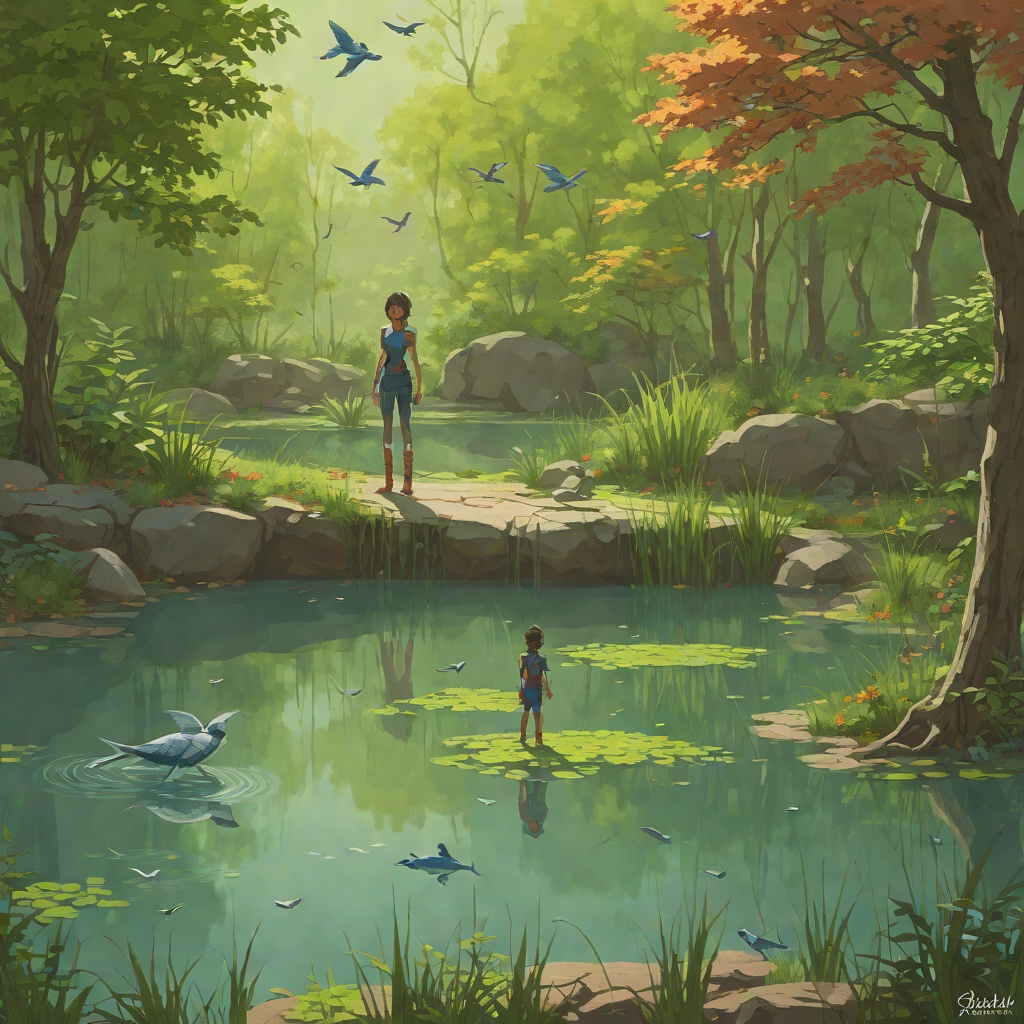
The Wild RobotLa Crête ouest is the grassy ridge that forms the western high ground of the island, a place where the forest gives way to open slopes and the horizon opens onto the dark, restless ocean. It is first introduced when Roz carries Brightbill across the island to show him the world beyond his pond-side home. Leaving the forest behind, the two cross La Grande Prairie and climb the hill to the top of the ridge, where a grassy slope descends toward the waves that surround the island. It is here that Brightbill, wide-eyed at the sight, declares that he is a good swimmer but not good enough to cross this body of water — and here that Roz corrects him, explaining that this is not a pond but an ocean, and that she doubts any bird could swim across it. The moment establishes the ridge as the threshold between the known island world and the vast unknown sea, and it is the first time the gosling confronts the true scale of the world beyond his home.
A Place of Flight and Learning
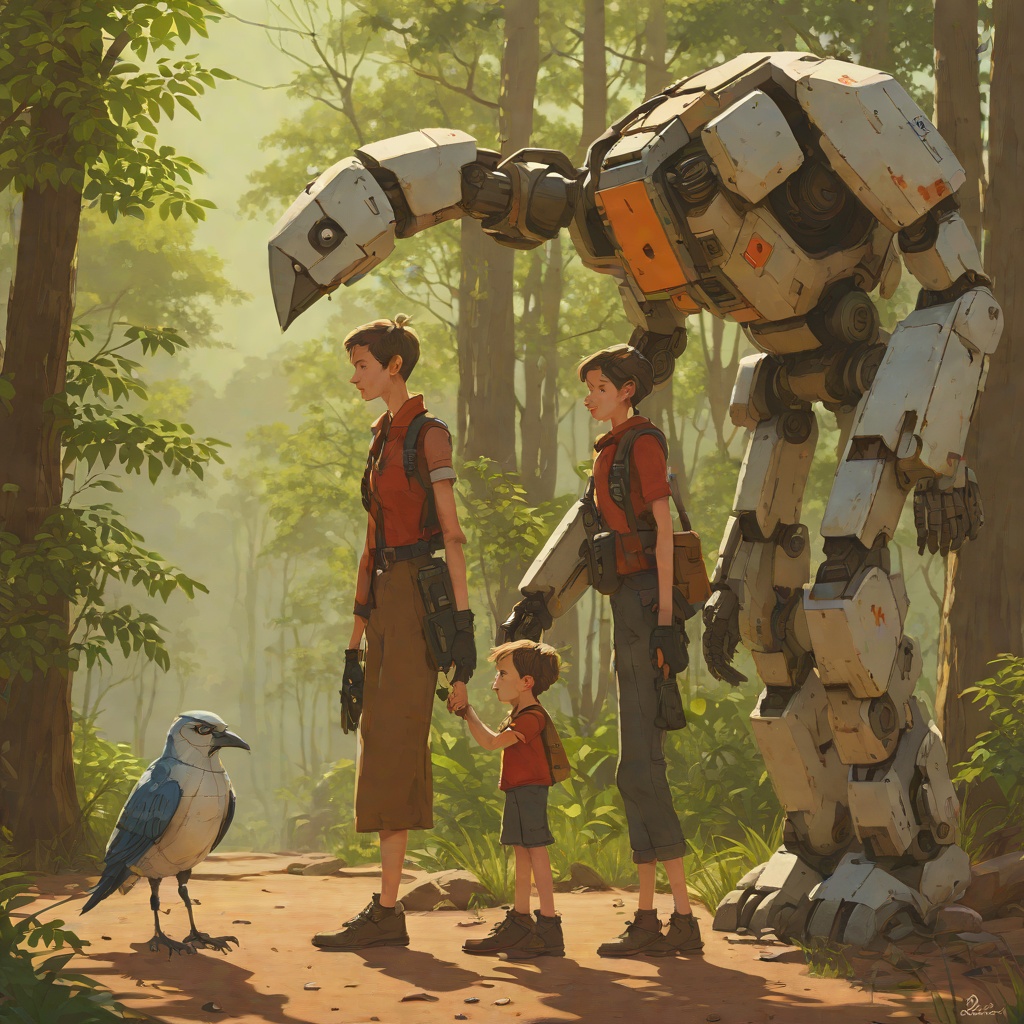
Brightbill becomes a flight enthusiast, and his favorite place to fly is the grassy ridge. The robot and the gosling spend many afternoons there, working on the subtleties of flight together. It is on one such afternoon, while practicing on the ridge, that they notice something mysterious far out at sea. Brightbill spirals down toward his mother, drops onto the grass, and points at the horizon, asking what the thing is. This moment marks the ridge as the vantage point from which the wider world first intrudes upon their island life, and it is the place where Brightbill's skill as a flyer is honed under Roz's patient guidance. The ridge thus serves as both a training ground and a lookout, a place where the gosling's curiosity about the world beyond is first awakened.
The Sunrise Confession
After the great bonfire celebration, when all the other animals have gone home and only Roz and Brightbill remain in the meadow, the robot suggests they go for a walk. They walk and fly to their favorite place on the grassy ridge, but this time they do not stop there. They follow the ridge to the mountain and climb to its steep summit just in time to see the sunrise. As the first rays of sunlight warm her body, Roz tells Brightbill that she has been up there once before, that she sat on a rock, looked out over the island, and thought she would always be alone. But she was wrong. When Brightbill asks if she is happy, the moment becomes the emotional culmination of their relationship — the ridge and the mountain beyond it serving as the setting where Roz acknowledges how much her life has changed since she first arrived on the island. The place that once symbolized her isolation becomes the place where she confesses that she is no longer alone.
The Ridge in Roz's Wider Life
The grassy ridge is not merely a private retreat for Roz and Brightbill; it is part of the larger landscape through which the robot moves as she integrates into island life. Roz's habit of careful observation, which began with the birds and extended to porcupines, salamanders, and beetles, reflects the same patient attention she brings to the ridge and its surroundings. Her study of animal behavior — noticing chickadees flitting among the same flowers and singing the same song each morning, a lark diving to the same rock each afternoon, two magpies singing together each evening — is the kind of methodical watching that also characterizes her time on the ridge with Brightbill. The ridge is thus one node in a network of places where Roz learns the language of the island, a place where the wildness she gradually adopts is practiced and perfected. When she later barks with foxes, sings with birds, and hisses with snakes, she is drawing on the same capacity for observation and imitation that she first exercised in places like the ridge. The location stands as a testament to how far the robot has come from her mechanical origins, a place where the boundaries between machine and nature, between isolation and belonging, are most visibly dissolved.