Le Jardin de Roz
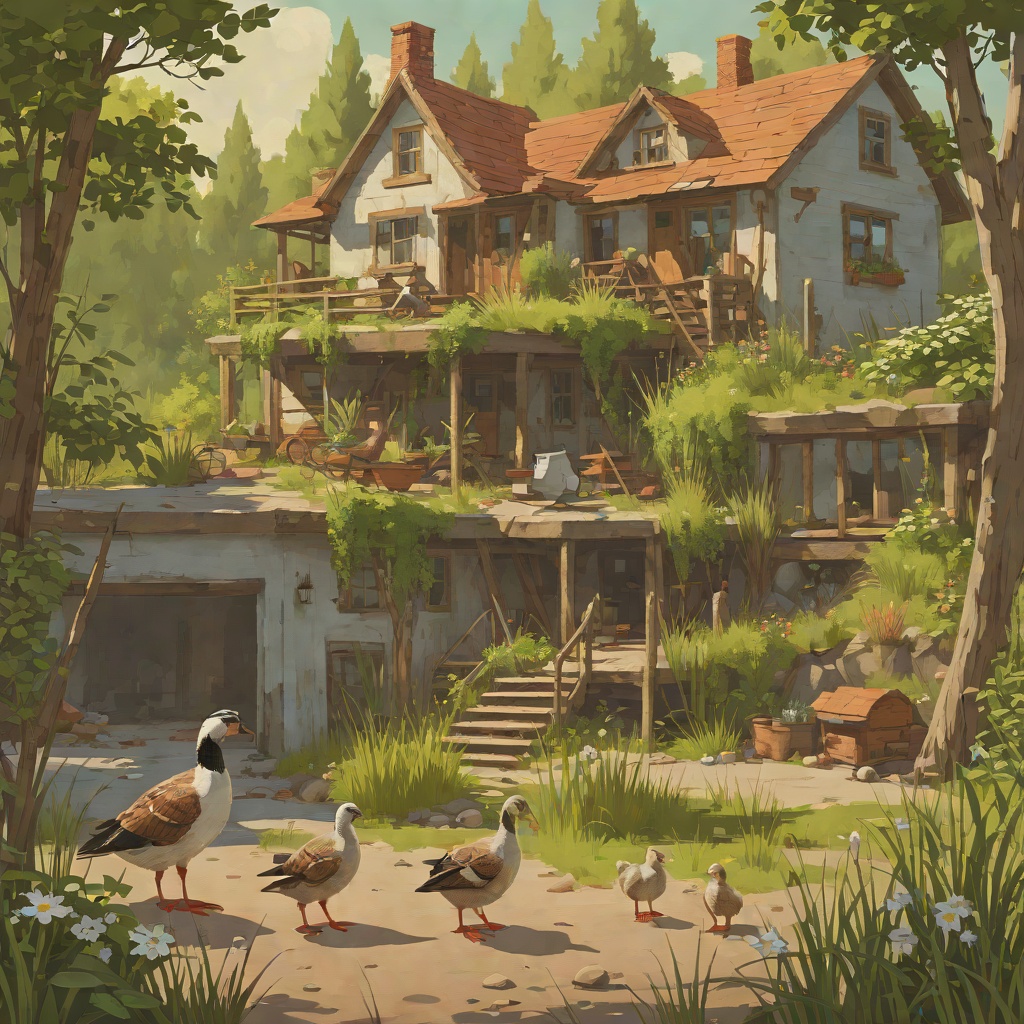
The Wild RobotLe Jardin de Roz is the wild, deliberately unkempt garden that the robot Roz establishes around her lodge, the Nid, on the island. More than a plot of cultivated ground, it is the instrument of Roz's social transformation: the project that draws her neighbors to her, the daily setting for her bond with her adopted gosling Brightbill, and the proof that a machine built for unknown purposes could nurture living things. The garden's creation marks the precise moment the island's animals stop fleeing from Roz and begin seeking her out, and its fate across the seasons charts the rhythm of her belonging and her solitude.
Creation and the Garden's Design
The garden began as a bargain. Tawny, a doe, offered to help Roz cultivate a garden on the condition that her family be allowed to eat from it, and the robot agreed, quietly leading Tawny back to the Nid. Once there, Tawny took charge of the preparation. She had Roz clear away all the dried brambles, weeds, and leaves from the plot, then called on her burrowing friends, the moles and the marmots, to dig into the earth and loosen the soil. But the most distinctive step came next, when Tawny asked all the neighbors to do something quite particular: to leave their droppings around the Nid. The more droppings, she explained, the richer the soil and the healthier the garden. The request drew immediate attention, and soon the place swarmed with curious woodland creatures eager to learn about the gardening project. In this way, the robot met her neighbors, and the plan to help her make friends began to work. A festive mood settled over the Nid that day, with animals coming and going, chatting and laughing, each choosing a spot, depositing their contribution, and leaving with a smile. A smiling tortoise, bringing her contribution slowly, remarked that she should not delay any longer. Roz, walking among them to thank everyone, explained that she was not capable of defecating, and so their excrement was greatly appreciated.
Once the ground was fertilized, it was time to plant. Tawny led Roz and Brightbill to a lush meadow, where the robot pushed her fingers into the soil and felt the spongy layer of roots beneath the grass. Slowly and carefully, she rolled up wide strips of sod, exposing the dark, wormy earth, carried the rolls back to the Nid, and spread them out to form an uneven lawn. Then she transplanted clumps of wildflowers, clover, berries, shrubs, and grasses until the Nid was surrounded by a messy collection of plants. Tawny acknowledged that it was not much to look at at first, but promised that the grass would grow into the gaps and the flowers and bushes would straighten up within a few days, and that she would return soon to make sure everything took root. Before long, she said, it would be a fine wild garden.
A Place of Daily Life and Visitors
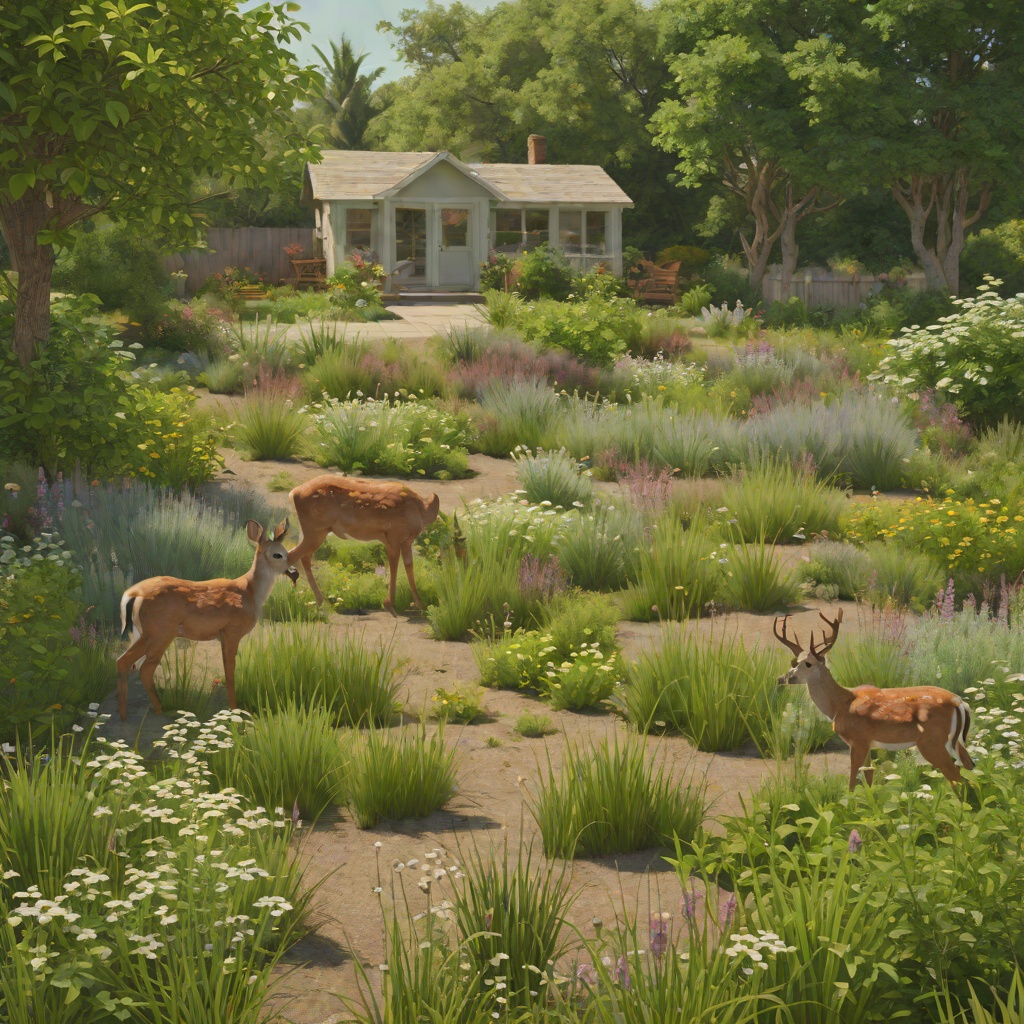
The garden quickly became the center of Roz and Brightbill's daily routine. Like most goslings, Brightbill followed his mother everywhere, a slow, wobbly little creature, but Roz was rarely in a hurry, and together they loved to walk along the forest paths and by the edge of the pond. Most of their time, however, they spent in their own garden. The plot was no longer dilapidated; thanks to the robot's particular attention, it now overflowed with color, scent, and flavor. It was evident that Roz had been designed to work with plants. Tawny, arriving with her family to graze in the wonderland of growing things, praised the garden as beautiful and predicted that Roz would see a lot of them there. She meant what she said. Every morning at dawn, Roz and Brightbill heard soft footsteps outside the Nid, and there would be Tawny and Crownpoint and their fawns, Willow, Thistle, and Brook, happily nibbling at the garden.
The deer were not the only regular visitors. The beavers liked to gnaw on a certain hardy shrub at the edge of the garden. Digdown, the old marmot, came to nibble on berries. Broadfoot, the giant male moose, came to chew on tree shoots. And of course, the bees and butterflies were there every day, floating joyfully among the flowers. It always seemed that there were friendly animals lingering in the garden. The change in how everyone treated Roz was remarkable. The animals that once fled from the robot in fear now stopped at the Nid just to spend time with her. Neighbors smiled and greeted Roz and Brightbill whenever they passed, and at the Dawn Truce, the other mothers were eager to share their parenting advice, such as making sure Brightbill got enough rest, since a tired gosling was a grumpy one.
The Garden as a Stage for Wildness and Repair
The garden also served as the setting for Roz's growing wildness and for the repair of her body. After her wooden foot was damaged, Mr. Beaver, Trunktap, and the Fuzzy Bandits set to work. Trunktap jumped onto an old, crisp pine and dug some deep holes in the bark, and a thick, syrupy resin began to flow from the trunk. Mr. Beaver gathered handfuls of the resin and spread it over the entire wooden foot and the vines until everything was shiny and sticky. When the resin dried shortly after, Roz's foot was finished, and the robot walked around her garden declaring that she was as good as new. But it was the first wooden foot they had ever made, and within a week the vines came undone and the foot slipped. They returned, determined to do things right, finding even harder wood and stronger vines, experimenting with the resin by heating it near the fire, letting it boil and thicken until it became an indestructible glue. They kept tinkering with their design until Roz finally had a wooden foot she could rely on. Mr. Beaver tapped his fingers on the new and improved creation with a cry of "Huzzah!" Roz moved more slowly than before and limped slightly, but she was herself again, a relief to everyone, especially Brightbill.
Winter Silence and the Garden's End
When winter came, the island fell quiet. The migratory birds had all left, the hibernators were sleeping, and everyone else had begun their simple winter routines. Everyone except Roz. Now that she was alone, the robot did not know what to do with herself. She stood in her gray garden and watched a layer of ice slowly form on the pond. Sometimes she heard her good friends the beavers going about their business under the ice, and she wondered when she would see them again. She stood there until snowflakes began to fall from the sky, swirling in the breeze and slowly accumulating on the ground, on the trees, and on the robot. She crouched into the Nid, slid the stone door behind her, and sat in the darkness. Hours, days, and weeks passed without the robot moving. She did not need to move; she felt perfectly safe in the Nid. And so, in her own way, the robot hibernated. The garden, once the vibrant heart of her social life, stood gray and frozen, a silent witness to her isolation.
Narrative Significance
The garden is the physical embodiment of Roz's integration into the island's ecosystem, a space where her mechanical nature and the organic world meet and cooperate. It is where she learns the animals' language of survival, where she demonstrates her capacity for nurturing, and where the community gathers around her. The garden's transformation from a barren plot to a wild, abundant space mirrors Roz's own transformation from a strange, feared machine to a beloved neighbor. Its winter desolation, in turn, marks the limits of her belonging, reminding her that she is not a creature of the seasons. The stories that spread across the island about Roz cultivating gardens in dry, arid places, caring for sick animals, and creating ropes, wheels, and tools for her friends all trace back to this original plot of ground, making Le Jardin de Roz the seed of her legend as much as the source of her friendships.