Le dirigeable des RECO
The Wild RobotLe dirigeable des RECO is the sleek white airship that carries the three RECO hunter robots to the island, marking the violent intrusion of the manufactured world into Roz's wild home. It is both the instrument of Roz's capture and the vessel of her departure, framing the novel's central conflict between nature and technology. The ship appears twice in the story, each time as a harbinger of profound change: first bringing the hunters who shatter the island's peace, and finally carrying Roz away from the only home she has ever known.
Appearance and Arrival
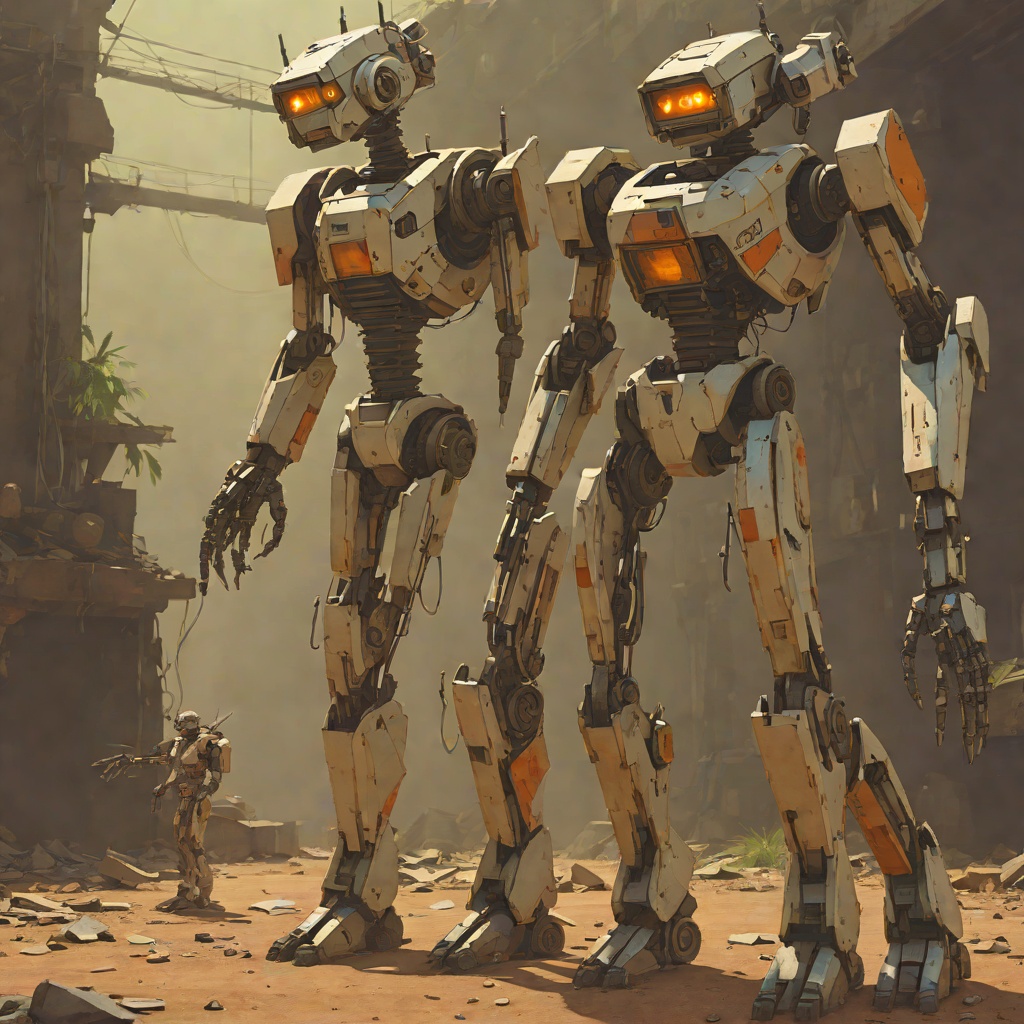
The airship first appears as a distant hum on a perfect day. Brightbill, enjoying the wind and sun with his mother, hears a faint buzzing and squints toward the south, spotting a familiar shape in the sky. He tells Roz, "Maman, il y a un dirigeable qui vole dans cette direction." The ship approaches like a giant migratory bird, an elegant white triangle with a single dark window facing forward. Through that window, three identical robots look out. They resemble Roz but are larger, bulkier, and shinier, with the word RECO lightly engraved on their torsos followed by their individual unit numbers: RECO 1, RECO 2, and RECO 3. The airship's arrival is thus framed as a kind of unnatural migration, a mechanical echo of the natural patterns Roz has spent her life learning.
The Hunt Begins
When the RECOs land, they immediately begin their search. A quick analysis reveals that Roz has disappeared, and the three robots turn and return to the airship. The door opens with a buzzing sound, and the robots disappear inside. When they emerge back into the meadow, each carries a silver rifle in his hands. The hunt for Roz is officially open. Without speaking, the RECOs spread apart, deploying in their standard search pattern: RECO 1 walks straight toward the southern tip of the island, RECO 2 walks straight up the mountainside, and RECO 3 walks directly into the forest. The airship itself remains as a silent base of operations, the source from which the hunters draw their weapons and to which they return.
The Departure
At the story's end, the airship serves a very different purpose. After Roz's capture, the goose returns to his flock, and the robot takes one last look at her home. The door closes with a buzzing sound, and the airship's engines automatically start. The ship floats slowly over the island, turns toward the south, and disappears into the clouds. This departure mirrors the arrival: the same elegant triangle, the same dark window, the same silent engines. But where the first flight brought violence and disruption, the second brings a quiet, almost gentle removal. Roz, who had become the island's protector and friend, is taken away in the very machine that was built to destroy her kind's wildness.
Symbolic Significance
The airship embodies the stark contrast between Roz's adopted world and her origin. The island is a place of organic life, of lodges built from wood and mud, of fires that warm cold creatures, of stories shared in the dark. The airship is a product of the factory, sleek and artificial, with no trace of the natural world. Its single dark window suggests a cold, mechanical gaze, while the island's animals look at the world with living eyes. The ship's triangular shape is sharp and geometric, standing against the rounded domes of the lodges Roz built with the animals' help. It is a reminder that Roz, despite all her wildness, was never truly of this place. The airship is the physical proof of her otherness, the machine that comes to reclaim what the wild had almost made its own.