Oies
The Wild RobotIdentity and Place in the Island World
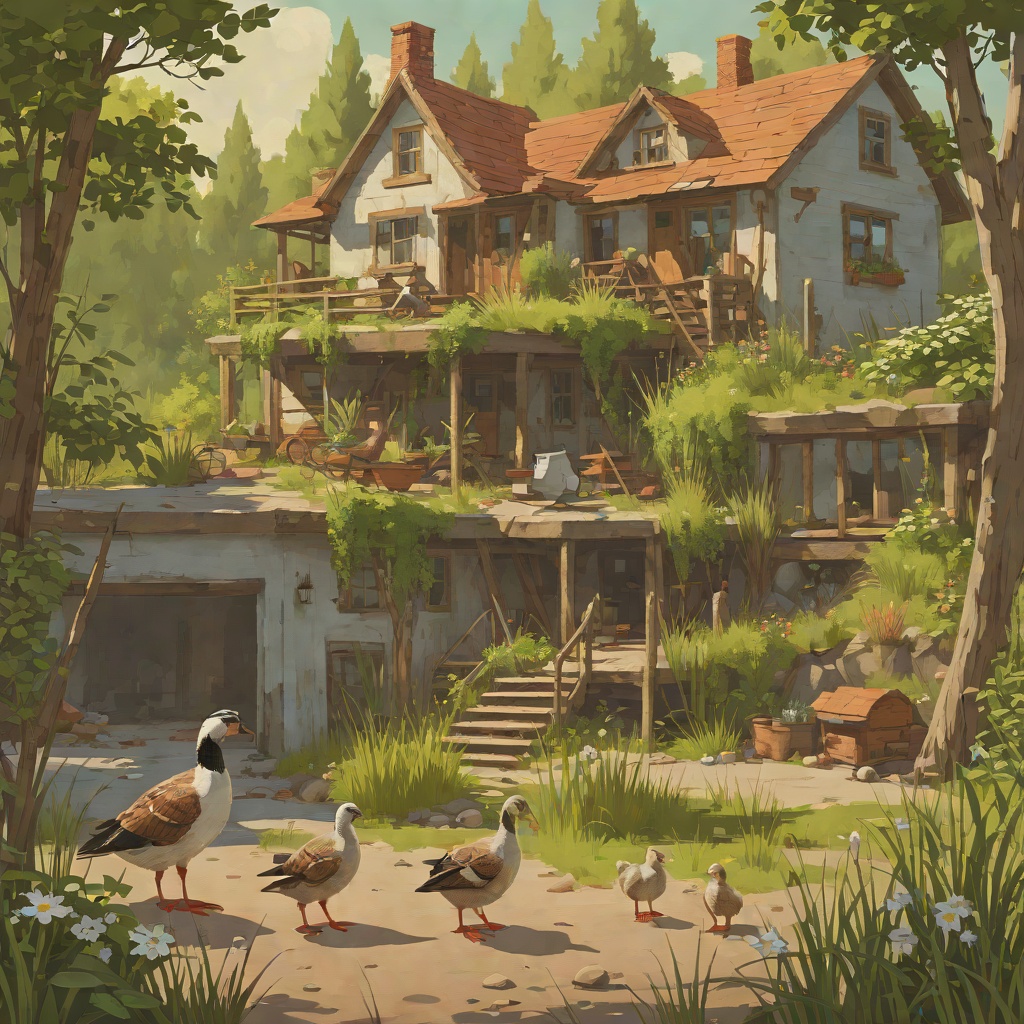
The Oies are one of the island's migratory species, distinguished from the resident animals by their annual long-distance travel. While creatures like the frogs, bees, snakes, and even the bears would soon disappear into hibernation for the winter months, and while some birds such as the owls and woodpeckers would stay to nest and eat the few remaining edible things on the island, the migratory birds prepared for the long journey south to their warm wintering grounds. Among the birds destined to leave were the Oies. Their lives are governed by instinct and weather: the journey south would take a few weeks depending on the weather, and they would return to the island after four or five months, again depending on the weather. This seasonal cycle makes them a species defined by absence and return, in contrast to the island's permanent residents.
The Oies also hold a special place in Roz's story because they are the first animals whose language she learns. It began with the birds generally; they had always been nervous when the robot was near, staring and shrieking before scattering. But once Roz was camouflaged, she could secretly observe their normal behavior up close. She noticed chickadees flitting among the same flowers and singing the same song each morning, a lark diving onto the same rock and singing the same song each afternoon, and the same two magpies singing together each evening across the same meadow. After weeks of robotic study of the birds, Roz knew what each bird would sing, when it would sing, and finally why it would sing. The robot was beginning to understand the birds, and through them she discovered that all the different animals shared a common language, simply speaking it in different ways, as if each species spoke with its own accent. The Oies, as the most prominent migratory birds, are thus part of the foundational discovery that allows Roz to communicate with the entire island.
The Old Goose and the Adoption of Brightbill
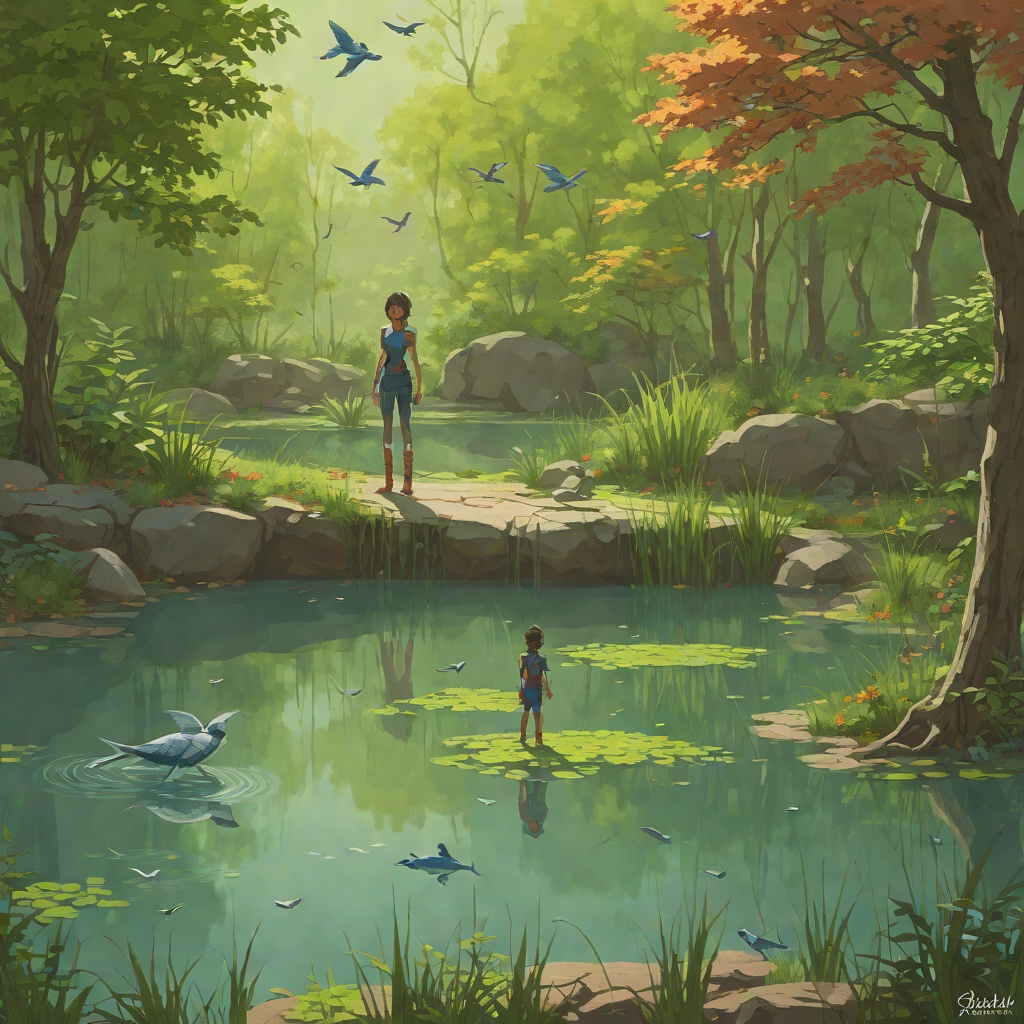
The Oies enter the story directly when Roz, carrying a newborn gosling on her shoulder, seeks help from the island's animals. Normally the forest animals would have fled from the monster, but they were terribly curious about why she carried a newborn, and once Roz explained the situation, they actually tried to help her. A frog pointed Roz toward the squirrels, a squirrel recommended she talk to the magpies, and then a magpie sent them to the beaver pond. There, the ground grew wetter, the grass grew taller, and soon the robot and the gosling looked out across a wide, murky pond. Dragonflies buzzed in the reeds, turtles sunned themselves on a log, schools of small fish gathered in the shade, and floating at the center of the pond was an old gray goose. This old goose, a member of the Oies, becomes the link between Roz and the gosling's heritage, the one who can explain the bird's nature and needs.
The old goose's presence at the pond establishes the Oies as a source of knowledge and guidance for Roz. The robot's friendly greeting across the water, announcing that she had an adorable little gosling with her, opens the conversation that will lead to Brightbill's upbringing. The Oies are thus not merely background wildlife but active participants in the story's central adoption plot, the community that legitimizes Roz's role as a mother even though she is a machine.
The Flock's Departure and the Instinct to Fly
As autumn approached, the island's animals began thinking about their winter hibernation, and the migratory birds, including the Oies, prepared for their long journey south. Brightbill, now a young goose, felt the pull of this instinct. He told his mother that lately he had felt a strong urge to fly, not just around the pond or the island, but to make a long flight, a journey. Roz recognized this as instinct, explaining that all animals have instincts that help them survive. The Oies' departure is thus framed as a natural, necessary part of their life cycle, one that even the robot mother cannot prevent.
The flock's plans were detailed and communal. Loudwing explained that it would take a few weeks to fly south, depending on the weather. Another goose described how they would join other flocks at the edge of a beautiful lake in the middle of a great sprawling field. And someone else noted that they would return to the island after four or five months, again depending on the weather. This picture of the Oies as a connected, migratory community, joining other flocks and traveling in formation, contrasts with Roz's solitary existence and sets up the central separation of the novel.
The Return and the Confirmation of Bond
After months of absence, the Oies' return is one of the novel's most significant moments. It was a quiet afternoon on the pond, but the calm was gradually replaced by sounds not heard there for many months. The sounds grew louder and louder, and then a flock of geese appeared above the trees, honking loudly. Most goose flocks move lazily through the sky and drift away in crooked lines, but not this one. This flock was fast, flying in perfect V formation, and it was led by a small, graceful goose. This leader is Brightbill, returned to the island and to Roz, his perfect formation a sign of his growth and mastery of his instincts.
The return of the Oies, led by Brightbill, confirms the strength of the bond between the robot and her adopted son. The geese's seasonal cycle, which once threatened to separate them permanently, now brings them back together, and Brightbill's position at the head of the flock shows that he has fully become what his instincts demanded while still choosing to return to his robot mother. The Oies, through their departure and return, thus measure the depth of Roz's integration into the wild and the enduring nature of her family.