Rockmouth
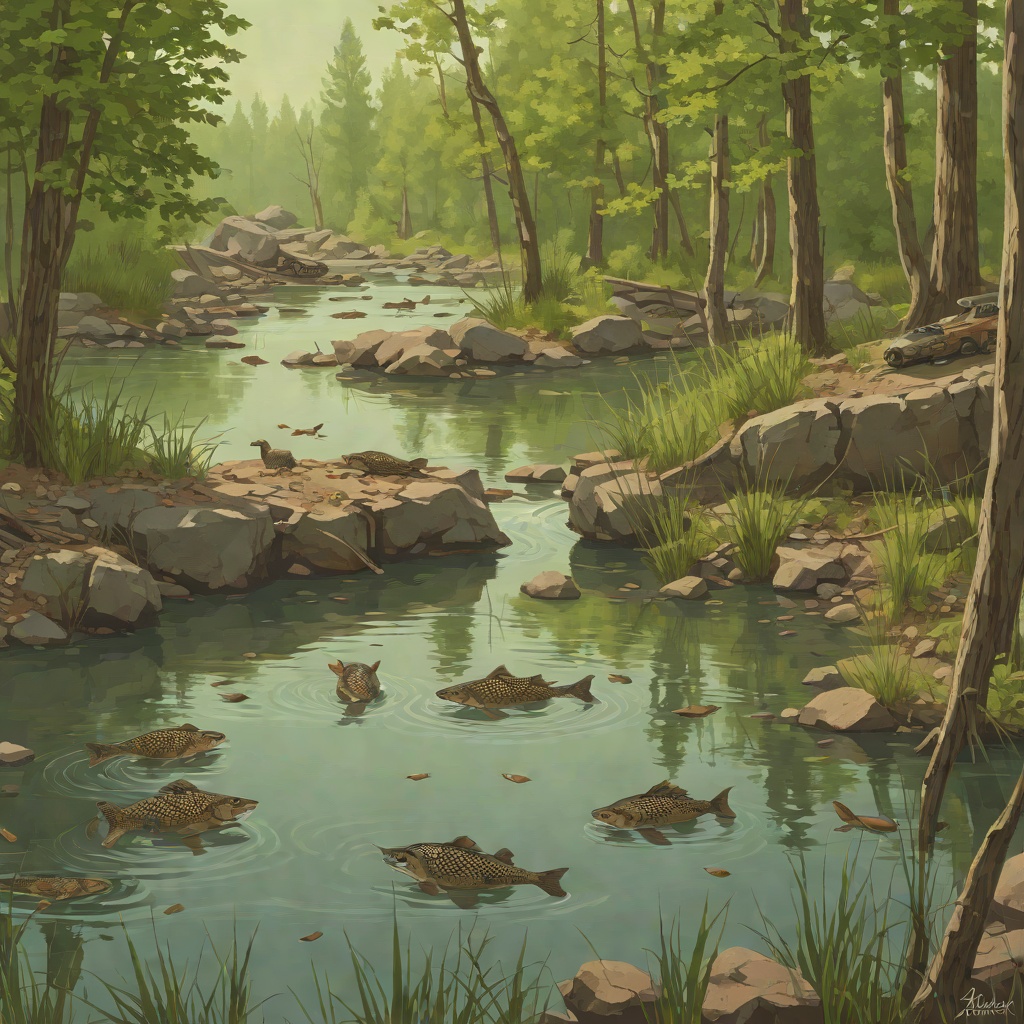
The Wild RobotRockmouth is the giant pike of the island's pond, a creature defined by his size, his teeth, and his temper. He is introduced as a problem that has plagued the pond "for as long as anyone could remember," a resident threat so familiar that the animals have simply learned to live with his presence. Yet for all his notoriety, Rockmouth had never attacked the goslings before — a restraint that makes his sudden assault on the young geese all the more shocking, and all the more revealing of the deeper grievance that drives him.
Identity and Introduction
Rockmouth is first seen in a moment of crisis, when the pond's tranquil morning erupts into panic. Something moves violently through the flock of geese, and that something is Rockmouth, the "giant toothy pike." The description emphasizes his defining features: his immense size and his prominent teeth, the physical tools of his predation. He is old, described later as "the old grumpy pike," and his reputation precedes him. The fish have been a problem in the pond for as long as anyone can remember, yet this attack marks a dangerous escalation — he has never before targeted the goslings. This distinction matters: Rockmouth is not merely a nuisance but a predator who has, until now, observed some unspoken boundary. His breaking of that boundary is what forces the community, and especially Roz, to reckon with him.
The Attack on Brightbill
The attack itself unfolds with terrifying speed. One moment the pond is calm; the next, the geese are panicked as Rockmouth moves violently through their group. All the parents immediately rush to protect their young — all except Roz, who can only stand in the shallows and watch. Her son Brightbill, the gosling she raised, is left behind by the other geese and swims desperately toward his mother. "Swim to me, Brightbill! Quickly!" she calls, but the gosling kicks as fast as he can while remaining a lone, easy target on the water. The pond ripples as Rockmouth dives beneath the surface. The scene is a stark demonstration of Roz's limitations: for all her strength and programming, she cannot swim, cannot enter the deep water, cannot physically shield her son from a predator of the depths. The moment crystallizes the vulnerability at the heart of her motherhood.
The Rescue of Paddler and the Revelation
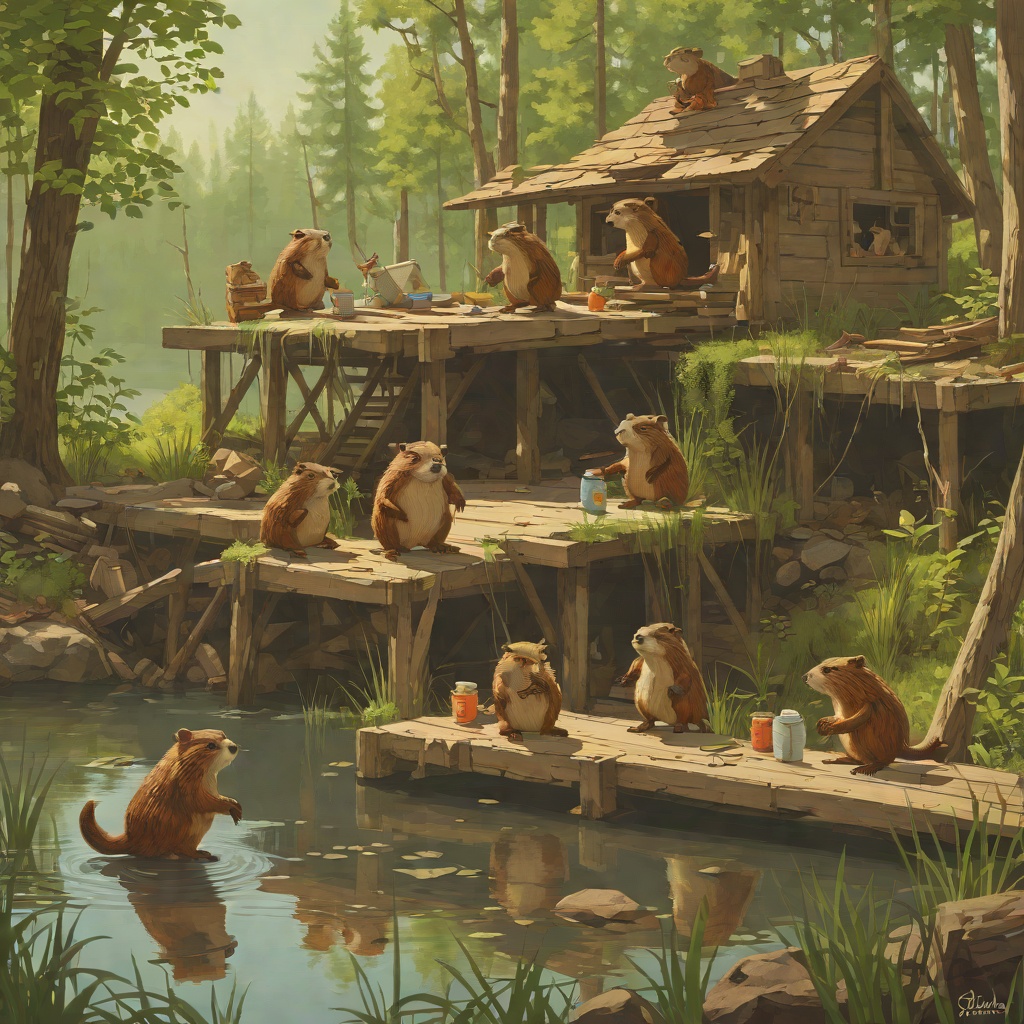
Rockmouth's next appearance raises the stakes further. Paddler, a young beaver, splashes and cries in the pond, his tail caught in the pike's jaws. With Mr. and Mrs. Beaver nowhere to be seen, Roz grabs a fallen tree branch and wades into the shallows. "Grab this!" she says, extending the branch, and Paddler seizes it with his large teeth as Roz lifts him out of the water — with Rockmouth still hanging onto the young beaver's tail. In a quick motion, Roz pulls the branch and seizes the fish with both hands. Paddler collapses into the water, where his parents suddenly appear. Mrs. Beaver is furious, calling Rockmouth a nuisance who has finally gone too far, and demands that Roz throw him to the vultures. Roz refuses: "I can't do that. But maybe I can help." This refusal marks a turning point, as the robot chooses understanding over vengeance.
Roz places Rockmouth in a deep puddle near the pond where he cannot swim away, and waits for the fish to explain himself. Fish are not very talkative, especially grumpy fish like Rockmouth, but eventually he opens up to the robot. The revelation reframes everything: Rockmouth lived in the river, but the beavers trapped him in the pond when they built their dam. He has been angry about it ever since. The pike's aggression is not mindless malice but the response of a creature displaced from his home, imprisoned by the community's engineering. Mr. Beaver protests that this gives Rockmouth no right to attack his son, but the explanation has already shifted the moral ground. Rockmouth's grievance is real, and Roz's solution addresses the cause rather than the symptom.
The Return Home
Roz fills a barrel with water and the grumpy fish, then carries Rockmouth through the forest and the prairie until she reaches the river's edge. "Welcome home," the robot says, and tips the barrel over, sending the fish tumbling into the water. Rockmouth's face breaks the surface, he flashes a big smile at Roz, and then swims rapidly away. The moment is brief but resonant: a predator who has terrorized the pond is returned to his rightful home, and his smile suggests a gratitude that fish, especially grumpy ones, rarely express. The resolution is not punishment but restoration — Rockmouth is not destroyed but relocated, his anger answered with an act of care.
Narrative Role and Significance
The story of how Roz helped Rockmouth spreads across the river and the island, becoming one of the first "robot stories" to circulate among the animals. It is soon followed by other tales: Roz growing gardens in dry, barren places; Roz caring for sick animals; Roz creating ropes, wheels, and tools to help her friends. But most of the new stories concern the robot's wildness — her willingness to engage with the island's dangers and difficulties. Rockmouth's arc thus serves a dual purpose. On the surface, it is a discrete episode of problem-solving, a demonstration of Roz's growing integration into island life. Beneath that, it establishes a pattern: Roz does not destroy threats but understands them, seeking the root cause of conflict and addressing it with compassion. The pike who once terrorized the goslings becomes, in the island's collective memory, the first proof that the robot's kindness extends even to its most feared creatures. His smile as he swims away is the story's quiet reward — a sign that even a grumpy old pike can be moved by being truly seen and helped.