Bouncing back and resilience
The Woman in Cabin 10Bouncing back and resilience are presented as choices made under pressure, not as a guarantee that suffering leaves a person stronger. Carrie’s mother gave her a childhood image of falling and recovering; Laura Blacklock, after being trapped aboard the Aurora, finds a different kind of resilience in recognizing what she no longer wants and committing herself to a riskier future. The idea joins survival to change, while the story’s contrasts insist that endurance alone is not the same as freedom.
The image Carrie inherits
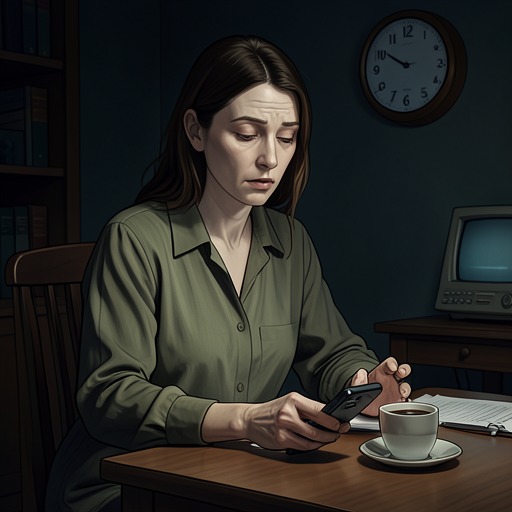
Carrie recalls that her mother called her Tigger and told her that, however hard she fell, she always bounced back. The phrase gives resilience a personal history: it is not an abstract virtue but an affectionate account of how Carrie was seen by someone who knew her before her present fear and guilt. Remembering it, Carrie gives a shaky laugh, then turns quickly to practical matters, warning Laura that the suspicious cook may prevent her from bringing supper. The shift from an intimate memory to food and concealment makes her resilience feel precarious and practical, not triumphant.
The two women also find a small point of recognition in a book they loved as children. They recall its ending, with a ring of trees, and the emotion it still brings them. That shared response briefly establishes a common life beyond the roles of captor and captive. Yet Laura immediately questions the meaning of her own gratitude: Carrie is keeping her imprisoned and controlling her access to food and drugs. Laura wonders whether she is developing Stockholm syndrome, then considers that Carrie may be even more deeply bound to her situation. Her image of two animals in separate compartments of the same cage complicates any easy account of either woman’s recovery: sympathy can coexist with coercion, and a moment of tenderness does not dissolve the confinement.
Carrie’s divided courage
Carrie’s history with Richard Bullmer helps explain the conflict between attachment and self-preservation without making them equivalent. She describes meeting him while waitressing at The Magellan and trying to become an actress. Richard, already married to Anne Bullmer, presented their relationship as a love story obstructed by a cold marriage and Anne’s illness. Carrie believed that he was honest about his marriage and that they would be together after Anne died. He also involved her in impersonating Anne: she wore one of Anne’s kimonos, hid her hair beneath a swimming cap and scarf, and studied a film of Anne speaking so she could imitate her manner. Their successful outing to the theater let the disguise feel like a game, but it also made Carrie part of a deception organized around Richard’s wishes.
When Laura warns that Richard may turn against Carrie once he has Anne’s money, Carrie rejects the idea that he is anything but a good man who loves her. She later admits that she would not betray him and fears that helping Laura could expose her to a murder charge. Her resistance is therefore rooted in both emotional commitment and the danger she sees in changing sides. Laura appeals to Carrie’s ability to prevent another death, arguing that the guilt of Anne’s death has already driven her close to breaking. Carrie’s admission that Anne was supposed to die at home, in her own bed, reveals the distance between the story she expected and the violence that followed. The fear and guilt Laura sees in her do not erase her responsibility for holding Laura; they make her eventual decision more morally complicated than a simple escape from Richard’s influence.
Survival inside the cage
Laura’s appeals to Carrie are also acts of survival. She fears that Richard will kill them both and asks Carrie to help them get out. In trying to persuade her, Laura offers to give evidence and even proposes an account in which she left the ship at Trondheim and blacked out. She knows that the earlier report of a body going overboard was not believed, and invokes that failure to make her proposed story sound plausible. At the same time, she privately recognizes the physical evidence that could contradict it: DNA, fingerprints, dental records, and Anne’s blood. Her bargaining is a desperate effort to find a route through captivity, not proof that she believes an invented account could withstand scrutiny.
The balance between the women changes when Carrie decides on a plan that requires her to give up her own identity temporarily. She removes her headscarf, revealing her shaved head, and tells Laura to leave the ship dressed as Anne and board a plane as Carrie. Laura objects that Carrie should come too, but the proposal makes the scale of Carrie’s choice clear: she is offering the passport and the disguise that can let Laura escape, while placing herself in a precarious position. Later, Laura remembers Carrie as brave but fragile, recalls the bruise on her collarbone and the fear in her eyes, and thinks of how much Carrie gave up for her. Resilience here belongs not only to the person who gets away. It also appears in a compromised, frightened act of help that cannot undo Carrie’s earlier participation in the crime.
Laura’s chosen future
After the ordeal, Laura revisits the life she had been pursuing before the voyage. She has spent nearly ten years working at Velocity and had remained there while Ben and others took risks and moved on, partly because she was afraid and partly because she felt indebted to the magazine for standing by her during difficult times. She had also imagined that Rowan Lonsdale’s maternity cover might give her a lasting opportunity, but Rowan was expected to return within six months, perhaps sooner. Laura recognizes that climbing the career ladder is no longer what she wants, and may never have been what she wanted in the first place.
The contrast she draws is specific: she does not want the life of Tina West and Alexander Belhomme, moving between countries, luxury resorts, and Michelin restaurants. She also rejects the kind of travel writing she associates with Rowan’s reporting of stories people like Richard Bullmer want told. Laura wants to write about what people prefer to conceal. Freelancing, she concludes, could let her work from anywhere; she asks Judah Lewis to go with her to New York rather than asking him to sacrifice his own prospects for hers. When he asks whether she is serious, she takes a breath and confirms that she has never been more serious. Her recovery is thus expressed as a change in direction, not a return to the ambition she carried aboard the ship.
A future after the fall
Even after learning of Richard’s death, Laura cannot immediately accept it. She can imagine Carrie’s suicide but struggles to believe that Richard, who had fought so fiercely to control events, would simply give up. Her difficulty accepting the report shows that survival does not erase fear or uncertainty; the past continues to press against the future she is trying to imagine. She deliberately turns her thoughts toward New York and the leap of faith ahead. In a final image, she sees herself balanced on a rail above dark waves, but this time she feels no fear. She has fallen before and survived.
That image gathers the concept’s central distinction. Bouncing back does not mean that the fall was harmless, that all guilt can be shed, or that a person returns unchanged. Carrie’s inherited phrase is tested by her entanglement with Richard and by the risk she takes to help Laura. Laura’s recovery is measured less by an effortless return to normal than by her willingness to choose a different life after surviving the ship. The novel makes resilience a capacity to act again amid vulnerability: sometimes by enduring, sometimes by helping, and sometimes by finally stepping away from a future chosen out of fear.