Judah Lewis
The Woman in Cabin 10Judah Lewis is Laura Blacklock’s partner, known to her as Jude and signing his messages as J. Although he is away when Laura boards the Aurora Borealis, his presence shapes nearly every stage of her experience: she thinks of him during the home invasion that precedes the voyage, regrets the unresolved conflict between them, longs for his physical reassurance when communications fail, and imagines his devastation when she is falsely believed dead. Judah’s importance is therefore not limited to the final rescue. He is the relationship against which Laura measures fear, guilt, loyalty, and the possibility of returning to ordinary life.
Identity and Introduction
Judah is first established through Laura’s instinctive wish that he were present during the intruder’s attack on her flat. Faced with a prepared man wearing latex gloves, Laura’s thoughts race toward her missing phone, her drunkenness, and the fact that Judah is away in Ukraine. His absence intensifies the danger, while his remembered practical competence offers a sharply contrasting image of safety: only the previous weekend he had patiently repaired her showerhead with epoxy resin after laughing at her attempt to fix it with duct tape. The memory makes their intimacy concrete. Judah is someone associated with tools, patience, and the ordinary shared knowledge of domestic life, precisely when Laura is trapped in a scene of calculated violence.
Their relationship is already strained by the time Laura leaves for the cruise. When Judah returns injured, with a stitched lip and a tooth that has been pushed back into place at University College Hospital, Laura apologizes repeatedly and struggles to face the remorse created by their unresolved argument. Judah is exhausted and initially refuses to continue the conversation, but then reveals that he turned down a job in New York for her. The disclosure changes the meaning of their conflict: his silence is not indifference but the wounded consequence of a major sacrifice he believes he has made for their relationship.
Relationship Under Strain
The Aurora Borealis voyage turns Judah’s absence into a persistent emotional pressure. As the ship leaves Hull and the English coast disappears, Laura checks her phone for a message from him, but receives nothing before the signal fades. The silence follows her into the voyage. Judah’s email of 22 September shows that he is actively worried: he says that he loves and misses her, asks whether the cruise is going well, and reassures her that his injured tooth may recover, even while joking that he is self-medicating with vodka. His message presents the tenderness that Laura cannot access in real time and confirms that the communication breakdown is mutual rather than a simple withdrawal on his part.
Judah’s concern becomes public when Laura stops responding. On 24 September, he posts that she has not checked in for several days since leaving on a press trip. He explains that she last contacted him on Sunday, that she has ignored his email and text from Monday, and that she has not updated Facebook or Twitter. His repeated requests for information become increasingly urgent, especially because Laura’s silence is out of character. Working from Moscow and unsure whether she has been trying to call, he identifies the ship as the Aurora after asking Laura’s mother, Pamela Crew, and says he will try to contact it. The sequence turns private anxiety into an organized missing-person alarm.
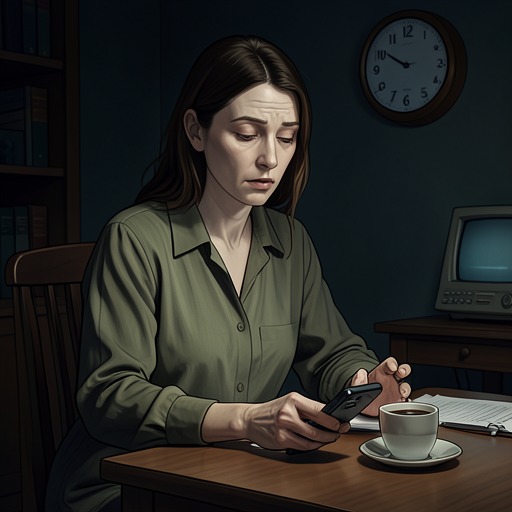
Laura continues to experience Judah as both comfort and uncertainty. While confined aboard the ship, she fears that his silence may mean he is still angry with her, but she also hopes that a failed Internet connection indicates he has been trying to reach her. A remembered flash of his hands on her back and her face against his chest nearly overwhelms her with longing. In this way, the relationship is represented through interrupted communication and bodily memory: when messages cannot cross the sea, Laura’s recollection of Judah’s touch becomes the most immediate evidence of the life she wants to regain.
Public Defense and Witness
Judah refuses to let Laura’s mental-health history become an explanation for her disappearance. On the Whodunnit forum, anonymous and speculative posters turn Laura’s medication into a claim that she is unstable or suicidal, while others cast suspicion on Judah because he was abroad. Judah registers under his real name and directly rejects both distortions. He clarifies that Laura takes medication for anxiety rather than depression, insists that medication does not make her unstable or suicidal, and explains that he was in Russia for work. He also points out that the body found at sea had not been identified as Laura and that the case remained a missing-person investigation rather than a murder investigation.
His intervention is more than a defense of his own reputation. It challenges the social reflex to treat a distressed woman’s medication as evidence against her credibility and to convert an incomplete news report into a story about suicide or intimate-partner violence. Judah identifies Laura as a real person rather than a spectacle for amateur detective speculation, and his anger exposes the violence of narratives that erase her agency before her fate is known. The forum’s eventual closure does not resolve the case, but Judah’s contribution preserves an alternative account: Laura is missing, not explained away.
The false report of Laura’s death places Judah in the position of an intimate witness forced to identify the woman he believes is gone. In his 29 September email to Laura’s family and close friends, he explains that Scotland Yard asked him to identify photographs of clothing received from the Norwegian police. He recognizes Laura’s garments immediately, especially her distinctive vintage boots. The message records the family’s devastation while insisting that the body itself has not yet been seen and asking people to resist spreading harmful or untrue stories. Judah’s careful communication contrasts with the reckless speculation surrounding the case, even as the authorities’ poor communication leaves Laura’s loved ones believing for days that the clothing may have belonged to her body.
Search, Reunion, and Recovery
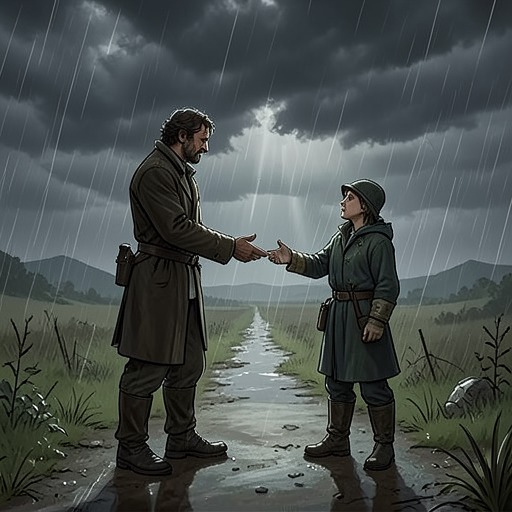
Judah remains an active force after Laura escapes captivity. When Laura reaches the Horsts’ farm in Norway, she initially resists their decision to call the police because her account of Anne Bullmer, Richard Bullmer, and Carrie seems almost impossible even to her. After speaking with Judah and hearing him promise to call Scotland Yard with her story, she begins to believe that Richard Bullmer cannot simply buy his way out of the consequences. Judah’s trust helps convert Laura’s private survival account into an official investigation, despite the story’s apparent improbability and the credibility gap created by exhaustion, medication, and trauma.
Back in England, Judah’s welcome is tender rather than interrogative. He takes Laura to his home instead of returning her to the basement flat, understands that she has had enough of lightless rooms, wraps her in a blanket on the couch, and kisses her forehead as though she might break. He tells her that he cannot believe she is home and recalls the photographs in which her boots had made him think she was dead. Laura begins to explain that Carrie took the boots so Laura could impersonate Anne Bullmer, but cannot finish; Judah responds by holding her for a long time rather than demanding a complete account at once.
His practical care continues through the aftermath. Laura’s voicemail is full because people have been calling Judah, so he writes down the names and messages for her. The list includes friends and former associates, but its most consequential entry is from Ben Howard. Judah tells Laura that Ben raised the alarm from Bergen after learning that she had not returned home, urged the British police to treat the matter as urgent, and had been protesting since Trondheim that the crew would not listen. Judah thus supplies Laura with information she could not have known while captive and helps correct her assumptions about who had failed or tried to help her.
Shared Choice and Narrative Significance
Judah’s final major contribution is relational rather than investigative. After Laura returns, she tells him that she wants them to leave together. She initially fears that he will interpret her words as a breakup or believe that she is asking him to sacrifice his own future again. Instead, she takes his hands and clarifies that she is not abandoning him but proposing a shared departure. The exchange reverses the earlier conflict over his rejected New York job: this time Laura does not assume that love requires one person to give up an opportunity for the other.
Laura explains that nearly ten years at Velocity have been shaped by fear, obligation, and gratitude for the magazine’s support during difficult years. The cruise has made her recognize that the career she once treated as a debt and a ladder is no longer what she wants. Rowan Lonsdale will return from maternity leave, and Laura sees that remaining in the same position is not the future she had imagined. Judah’s hands, which she knows by heart, become the physical point at which the decision is shared rather than merely announced. Their proposed move transforms survival into agency: Laura is no longer only trying to return to the life she had before the Aurora Borealis, but choosing what that life should become.
Judah therefore functions as the novel’s emotional counterweight to the ship’s secrecy and coercion. The Aurora Borealis is a closed system in which authorities question Laura, evidence disappears, and public narratives repeatedly define her from the outside. Judah’s role is to keep open a line of recognition: he notices when her silence is abnormal, resists explanations that stigmatize her, acts when institutions hesitate, preserves the details of the case, and receives her after captivity without reducing her to a damaged or unreliable victim. His reunion with Laura does not erase the injury, the deaths, or the guilt surrounding the voyage, but it gives the ending a credible form of recovery grounded in care, belief, and a mutually chosen future.