Laura Blacklock–Carrie relationship
The Woman in Cabin 10The Laura Blacklock–Carrie relationship is a captor–captive bond that develops into an improvised, morally compromised alliance. Carrie has helped Richard Bullmer conceal Anne Bullmer’s death, and she keeps Laura imprisoned to protect the scheme; yet as Laura learns Carrie’s story, she sees a frightened and guilty woman as well as the person who has beaten and starved her. Their connection becomes decisive when Carrie helps Laura escape, an act of rescue that does not undo the harm or settle the question of Carrie’s responsibility.
Captivity and the Initial Imbalance
Laura’s first understanding of the woman holding her is shaped by immediate danger and unanswered questions. She has been struck against a doorframe, confined in a cramped cabin, and left hungry; she knows that she has discovered the truth about Anne and fears that she and Richard cannot allow her to get free and tell it. At this point, Laura does not even know her captor’s name. She can only recognize that this unknown woman is also her best chance of leaving alive, a contradiction that turns the relationship into a problem of survival before it can become one of trust.
The danger is not abstract. Laura understands that the woman has fed her and locked her up like an animal, and that she may choose either to let Laura go or to kill her. Her fear is intensified by the possibility that no one will believe her account of kidnapping, imprisonment, and physical harm. She also knows Anne is not as ill as she had pretended, making Laura’s knowledge a direct threat to the secret that keeps her captive. Confinement therefore binds the two women together through unequal power: Carrie controls Laura’s food, movement, and immediate safety, while Laura possesses information that could expose the crime.
When the woman finally gives her name as Carrie, the small exchange does not make them friends. Laura repeats the name and greets her, but Carrie responds without warmth and withdraws across the cabin. The introduction does, however, give Laura a way to address the person on whom her survival depends. Their relationship begins to move beyond an anonymous struggle, though neither the conditions of captivity nor the risk to Laura have changed.
Laura’s Reading of Carrie
Laura starts to interpret Carrie’s behavior through the conflict between what she does and what she appears to feel. Carrie has inflicted violence and maintained Laura’s imprisonment, but Laura notices the care with which she helps her sit, waits while she eats, and watches her with sadness. After Carrie brings food, Laura imagines that the wait may have been painful for Carrie too: perhaps she pictured Laura growing weaker and feared she had returned too late. This remains Laura’s interpretation, not proof that Carrie is harmless. Its importance is that Laura begins to see a possible limit to Carrie’s willingness to keep hurting her.
That shift leads Laura to consider whether survival might depend on Carrie’s help rather than on escape alone. She remembers that only one of her possible exits is alive and decides that her choice is whether to leave with Carrie’s assistance or without it. She does not forget that Carrie has beaten, imprisoned, and starved her; instead, she weighs those acts against the signs that Carrie may not be able to cause another death by choice. The calculation is both practical and emotional: Laura needs an ally, but she must assess the risk of trusting the person who has made her vulnerable.
Laura also confronts Carrie with the danger of remaining loyal to Richard. She warns that after he has obtained Anne’s money, he will need to make himself safe, placing Carrie in danger too. Carrie rejects this possibility and insists that Richard loves her and is a good man. The exchange exposes the gulf between them: Laura reads Richard’s conduct as a threat to both women, while Carrie is still defending the relationship that has drawn her into the crime. Laura’s attempt to persuade her is not simply an appeal for sympathy; it is an effort to make Carrie recognize that loyalty to Richard may end in her own destruction.
Carrie’s Story and Laura’s Appeal
Carrie explains that she met Richard at The Magellan, where she was a waitress trying to become an actress. She describes being swept into a life she had not known, while also knowing from the beginning that Richard was married. According to her account, he told her that his marriage to Anne was effectively over: they lived separate lives, with Anne in Norway and Richard in London. He presented Anne as cold and controlling and described himself as unable to divorce a woman who was dying. Laura hears how Carrie’s attachment grew inside a story Richard supplied about his marriage, his past, and the future they would share after Anne’s death.
Carrie recounts how Richard asked her to impersonate Anne so that they could appear together in public. He gave her one of Anne’s kimonos; Carrie watched a film of Anne speaking to learn how to carry herself, covered her hair with a swimming cap and scarf, and cut her hair to make the disguise convincing. Richard arranged for an empty cabin by ensuring that another guest would not appear. The performance began as a secret game for the couple, but the disguise also made Carrie part of a plan that depended on concealing who was aboard and who was not.
The plan changed when Richard arrived as Carrie was getting dressed as Anne and said that Anne had discovered the affair. He claimed that Anne had lashed out, that he had pushed her away in self-defense, and that she had hit her head and died. He then persuaded Carrie that they should put Anne’s body overboard and continue with the impersonation, supposedly allowing Anne to disappear in Bergen without the crime being traced to them. Carrie’s account reveals both her participation and her reliance on Richard’s version of events. Laura recognizes that the proposed disappearance does not make sense, but she also sees Carrie’s readiness to believe what she wants about the man she loves.
Laura asks Carrie to help them both escape, offering to give evidence and to say that Carrie saved her. Carrie refuses at first: she says she will not betray Richard, whom she loves, and fears that helping Laura will leave her facing a murder charge. Laura answers by focusing on the prospect of another death. She argues that the guilt of Anne’s death has already driven Carrie close to breaking and pleads with her not to make Laura a second victim. The appeal acknowledges Carrie’s responsibility while trying to reach the guilt and fear beneath her defenses.
From Fear to an Uneasy Alliance
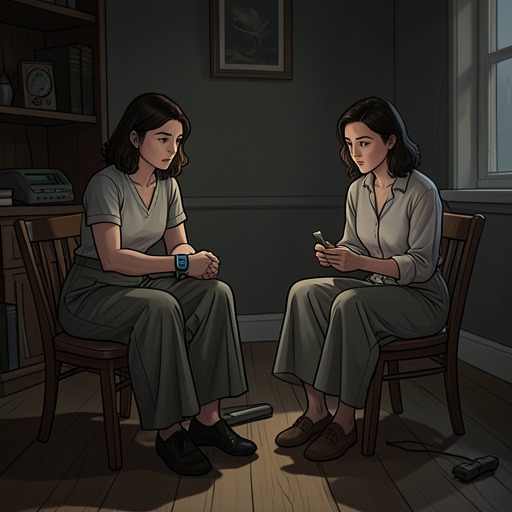
A shared response to a childhood book briefly gives the women a point of contact outside the immediate argument. Carrie recalls that her mother called her Tigger because she always bounced back after falling. She then returns to practical concerns, warning that she may not be able to bring supper because the cook is becoming suspicious, but promising to try and to bring extra food for breakfast if she cannot. Laura thanks her, then questions her own gratitude: Carrie is still keeping her captive and controlling her access to food and drugs. Laura wonders whether she is developing Stockholm syndrome. The moment holds both truths at once: a small kindness can matter intensely to someone deprived of control, without making the captivity benign.
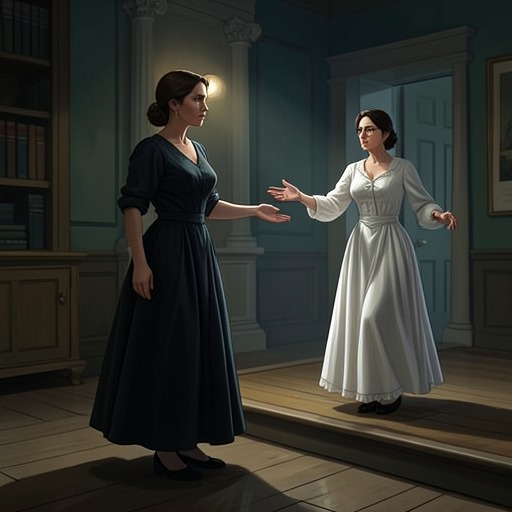
Carrie’s decision becomes concrete when she produces her own passport and tells Laura to leave the boat disguised as Anne, then travel as Carrie. She removes her headscarf to reveal her shaved head and begins changing clothes. Laura urges her to tell the truth, but Carrie says she does not know whether she can trust the people aboard and fears the consequences of accusing Richard. Instead, she gives Laura her clothes and directs her to take Anne’s. Their alliance is built not on a shared account of justice, but on Carrie’s choice to create an escape when she does not believe she can safely expose the crime herself.
Before Laura leaves, Carrie gives her practical instructions: take the suite key and a purse containing roughly five thousand kroner in several Scandinavian currencies, worth nearly five hundred pounds, along with Anne’s credit cards and identification. She tells Laura to ask for the gangway to be lowered and to say that Richard has called and that she is going to meet him. Carrie asks for twenty-four hours before Laura goes to the police, a request Laura accepts. These details make the change in their relationship tangible: Carrie transfers the means of escape to the woman she has held, while still trying to protect herself from immediate exposure.
Carrie is visibly injured, with fresh blood on her chest and more coming from a wound at her temple. Laura finds it almost unbearable to turn away from someone who appears to be bleeding heavily, but understands that staying could compromise the escape Carrie has arranged. Carrie insists that helping Laura is now the only help she can give and urges her to leave. Laura says goodbye and flees, leaving the key in the lock so that Carrie will not remain confined longer than necessary. The departure is neither reconciliation nor forgiveness. It is the sharpest expression of their changed bond: Carrie gives Laura a chance to survive, and Laura accepts it while carrying the knowledge that the person enabling her escape also helped create her captivity.
Significance of the Bond
The relationship’s reversal does not follow a simple movement from cruelty to goodness. Carrie’s tenderness, guilt, and eventual aid coexist with her earlier violence and her willingness to assist Richard in concealing Anne’s death. Laura’s growing sympathy does not erase the imbalance between captor and captive; it allows her to make a more precise judgment about where Carrie’s loyalties may break and what risks an alliance will carry. The two women’s connection is therefore negotiated under duress, through food, confession, warnings, and the exchange of clothes and documents rather than through any assurance that trust is complete.
Their alliance also exposes the difference between understanding Carrie and excusing her. Laura listens to the account of Richard’s promises and sees how Carrie’s belief in their future shaped her decisions, but she continues to name the danger of those decisions and the threat Richard poses. Carrie, in turn, acts to get Laura out without first resolving her own fear of prosecution or publicly denouncing Richard. The escape leaves both women’s moral and practical situations unsettled; what changes is that Carrie stops using her control over Laura only to preserve the secret and instead uses it to help Laura get away.