Lo escapes from the locked cabin
The Woman in Cabin 10Laura Blacklock’s escape from the locked cabin is the decisive break in her confinement aboard the Aurora Borealis, but not yet her escape from the ship. Carrie makes the break possible by giving Laura her own passport and a plan to pass as Anne Bullmer. To protect that plan, Carrie asks Laura to lock her in the cabin and leave her behind. Laura obeys, then climbs through the service corridors toward the Great Staircase, carrying both a chance at freedom and the knowledge that Carrie is still trapped and bleeding below.
The danger behind the escape
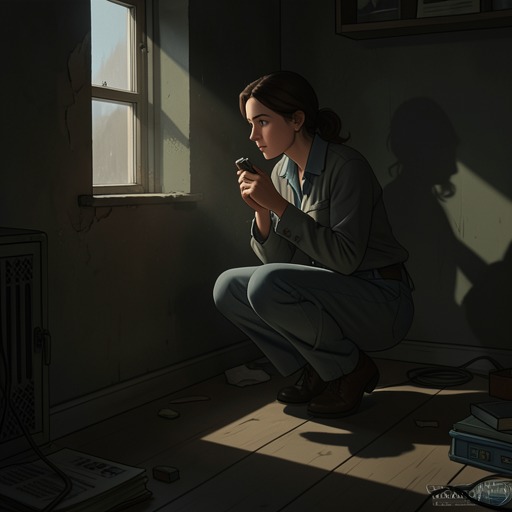
Laura’s confinement has become more perilous as she realizes how much she knows. She understands that Anne was not as ill as she had pretended and fears that Richard Bullmer and Carrie cannot let her leave to tell what happened. Kidnapping, imprisonment, and bodily harm are not merely threats she can report later: she doubts that anyone would believe her account. In the cramped cabin, even basic self-care has narrowed to trying to stay clean while waiting for Carrie’s return.
The confrontation between the women turns on Carrie’s attachment to Richard and Laura’s effort to make her see the danger ahead. Carrie insists that Richard loves her and rejects the suggestion that he will turn against her once he has Anne’s money. But her own story has already revealed the unequal terms of the relationship: she met Richard while working as a waitress at The Magellan and trying to become an actress; he was married, and their affair had to remain secret. He gave her a life she had not imagined, while asking her to impersonate his wife. Laura warns that once Richard has what he wants, he will need to protect himself. Carrie’s refusal to accept this possibility helps explain why Laura’s eventual escape depends not on trust freely given, but on a sudden change in Carrie’s choices.
Carrie’s plan and the exchange
Carrie offers Laura her passport and proposes that she leave the boat dressed as Anne, then travel onward under Carrie’s identity. The plan turns the impersonation that has helped conceal Anne’s disappearance into a route out of captivity. Carrie removes her headscarf, revealing her shaved head, and strips down to exchange clothes with Laura. The bundle of silks Carrie hands over is light, but the disguise carries a heavy price: Laura must leave Carrie behind rather than persuade her to seek help openly.
Carrie explains that she does not know whom she can trust among the people aboard. Richard is their employer at best; at worst, she implies, their connections make telling the truth still more dangerous. She therefore refuses Laura’s plea to expose what happened. Instead, she insists that Laura change clothes and take the opportunity to get away from the port as soon as possible. The plan is not a clean rescue of both women. It gives Laura a possible escape while leaving Carrie in the cabin, exposed to Richard and to the consequences of her own involvement.
Carrie also tells Laura to take the key to the suite and a purse containing about five thousand kroner, a mixture of Norwegian, Danish, and Swedish currency worth nearly five hundred pounds. The purse includes Anne’s credit cards and identification, though Carrie does not know their PIN. She advises Laura to ask someone to lower the gangway and say Richard has phoned and she is going to meet him en route. Money, documents, clothes, and a plausible explanation make the plan practical; none removes the risk of being recognized or discovered.
Locking Carrie in
The most difficult part of the arrangement comes after Carrie has made herself appear injured. She presses a piece of paper against her temple, already soaked with blood, and asks Laura to lock her in when she leaves. Laura questions whether Carrie is sure, but Carrie says the locked door has to make the scene convincing. Her request makes the escape depend on a grim reversal: the woman who has kept Laura captive now needs Laura to reproduce the appearance of confinement and assault.
Laura knows that leaving Carrie feels like turning her back on someone who looks as though she may be bleeding to death. She nevertheless understands that the chance has to be taken for both of them. After saying goodbye, she snaps the heavy clasp across the cabin door and leaves the padlock key in its lock. Her hesitation is specific: taking the key might shorten Carrie’s confinement, but Laura does not want her to spend even a moment longer locked inside than necessary. The gesture preserves a possible way out for Carrie while maintaining the scene the plan requires.
The route to the Great Staircase
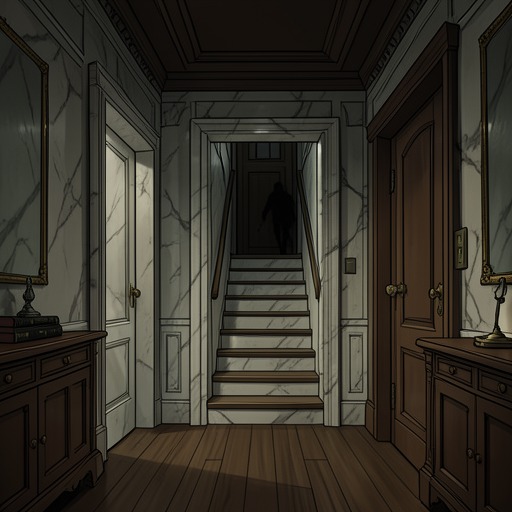
Beyond the cabin lies a narrow, hot corridor. One end is blocked by a door marked for authorized crew only; beyond it, a flight of stairs leads upward. Laura looks back once toward the locked cabin, then runs for the stairs. The climb is difficult after disuse. Her legs shake, sweat makes her hand slip on the plastic banister, and the service stairs are drab, carpeted, and edged with metal. The route is a far cry from the ship’s polished public spaces, and that contrast sharpens when she imagines the Great Staircase’s crystal and mahogany rail.
She continues past doors marked for maintenance and staff until she reaches a huge steel door with a bar on the inside. Before opening it, she thinks of Carrie below and wonders whether getting out will mean calling the police despite Carrie’s request. The pause also brings back the night of the burglary at her flat: she remembers cowering in her bedroom, too afraid to open the door and confront whoever was outside. That earlier hesitation now shadows the choice before her. The service door, unlike the door in her memory, is not locked. Laura pushes the release and opens it onto the Great Staircase, where the chandelier’s Swarovski crystals blaze above the ship’s extravagant public interior. The episode ends at this threshold: she has escaped the cabin, but still must make her way off the Aurora Borealis.