Richard Bullmer–Carrie relationship
The Woman in Cabin 10The Richard Bullmer–Carrie relationship is a clandestine affair that turns into a mechanism for impersonation, concealment, and survival aboard the Aurora Borealis. Carrie initially understands Richard as a wealthy, devoted lover trapped in a loveless marriage; her account later reveals how he drew her into impersonating Anne Bullmer and persuaded her to help cover up Anne’s death. Laura Blacklock’s deductions, however, undermine the story Carrie was given, leaving the affair suspended between Carrie’s attachment to Richard and the evidence that he had used it to make her complicit in a crime.
The Affair and Its Private Story
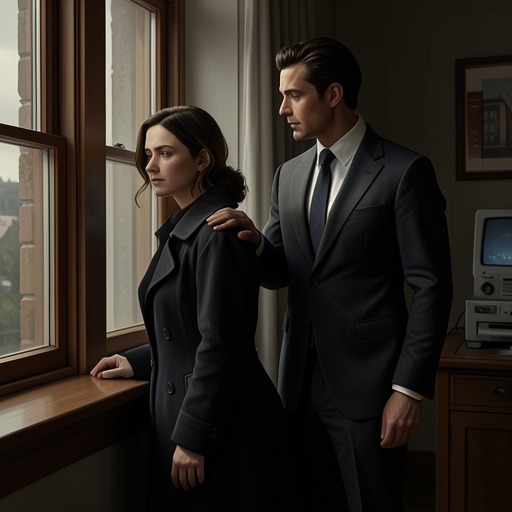
Carrie says that she met Richard at The Magellan, where she was a waitress trying to become an actress. He swept her into a life she had not known, and the secrecy of the relationship became part of its structure: Richard was married, so they could not appear together publicly, and Carrie could not tell anyone about him. In her account, Richard was candid about being married but presented the marriage as already emptied of intimacy. He described Anne as cold and controlling, said they lived separate lives, with Anne in Norway and himself in London, and portrayed divorce as an unnecessary cruelty to a woman believed to have only months to live.
Carrie also recounts Richard’s personal history as part of the story that made him seem vulnerable and deserving of sympathy: his mother had left when he was a baby, and his father had died when Richard was barely out of school. Carrie saw Anne as the person who ought to have loved Richard but could not bear to be with him. Richard’s promises of a future together, after Anne’s expected death, allowed Carrie to imagine the affair not as a temporary betrayal but as a delayed partnership. The account is Carrie’s recollection of what Richard told her, not independent confirmation of his description of his marriage.
Impersonation as Courtship and Preparation
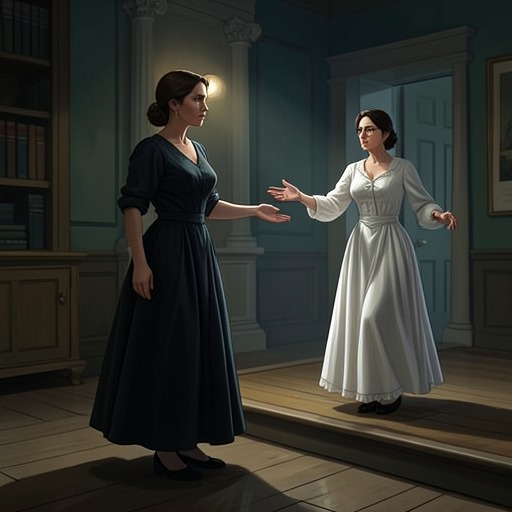
Before the cruise, Richard and Carrie had already rehearsed a public version of their relationship by making Carrie appear as Anne. He gave her one of Anne’s kimonos and a film of Anne speaking so Carrie could study her bearing and behavior. Carrie hid her hair beneath a swimming cap and one of Anne’s scarves. On one occasion, the disguise let them sit together in a theater box and drink champagne; Carrie remembers the experience as a thrilling game of deceiving everyone. They repeated it once or twice when Anne was passing through London, keeping their appearances rare enough to avoid suspicion.
Richard then proposed extending the performance to a press trip aboard the Aurora Borealis. In Carrie’s telling, Anne was expected to be aboard for the first night and then leave for Norway, while Carrie would stay in her place for the rest of the voyage. Richard promised that no one aboard had met Anne and that he would prevent photographs that might expose the substitution later. He arranged for another guest not to arrive, leaving an empty cabin, and told Carrie that she would need to cut her hair to make the disguise convincing. What had begun as a private theatrical game was thus adapted into a plan that depended on controlling access, appearances, and photographic evidence.
Laura’s first impressions show how effectively the performance worked. The woman introduced as Anne appeared gaunt and pale, with a silk scarf wound around her scalp, no eyebrows, and the visible signs of serious illness. Richard’s no-photography instruction seemed at first to protect his wife’s privacy; Laura later understood it as a way to prevent friends and family from comparing images of the real Anne with the woman who had taken her place. The impostor’s dark hair and carefully drawn eyebrows transformed her appearance, although her eyes and prominent cheekbones remained recognizable. Illness, hair, clothing, and controlled visibility together made the substitution plausible to strangers who had barely seen Anne.
Anne’s Death and Carrie’s Complicity
Carrie says that on the first night aboard, while she was changing into Anne’s clothes, Richard arrived distressed. He told her that Anne had discovered the affair, attacked him, and died after he pushed her away and she struck her head on a coffee table. Carrie says he argued that an investigation would reveal her presence aboard, expose her impersonation, and leave both of them vulnerable to prosecution. He also invoked a photograph Cole Lederer supposedly had of Carrie dressed as Anne. According to Carrie, Richard persuaded her that they had to put Anne’s body overboard and continue the impersonation, allowing others to assume Anne had stayed in Bergen.
That explanation does not withstand Laura’s scrutiny. Anne could not simply have left the ship on the first night when it was not due to reach Norway until the following day; she also lacked her passport, and an unobserved departure would have been difficult to explain. Laura concludes that Richard had not intended for Anne to walk off the ship alive and suspects Carrie could see the contradiction too. The difference matters: Carrie’s confession presents the killing as an unforeseen crisis that Richard managed, while Laura reads the timing and logistics as evidence that Anne’s disappearance was planned. Carrie’s account establishes her involvement in disposing of the body and continuing the impersonation, but does not settle every question about Richard’s original intentions.
Attachment, Coercion, and the Break
When Laura confronts Carrie with the possibility that Richard will eliminate her after obtaining Anne’s money, Carrie rejects the warning and insists that she loves him. Her loyalty is tied to the future he promised and to the account in which he is a good man wronged by a controlling wife. Yet fear and guilt surface alongside that devotion. Carrie admits that Anne was supposed to die at home, not aboard the ship, and worries that helping Laura would make her face a murder charge. She initially says she will never betray Richard, even as Laura argues that he may kill them both.
The relationship’s power imbalance becomes unmistakable in the conditions surrounding Laura’s imprisonment. Carrie controls access to food and drugs, while Laura is confined in a cramped hidden cabin and fears that Richard will kill her because she knows what happened to Anne. Carrie’s own fear of Richard’s next move is not yet enough to make her leave him, but it complicates her earlier idealization: her loyalty coexists with the possibility that he is dangerous to her too. Laura’s appeal that Carrie need not add another death to her conscience forces the consequences of the affair’s shared crime into the present.
Carrie ultimately helps Laura escape by exchanging identities and clothes. She gives Laura her passport and tells her to leave the boat disguised as Anne, while Carrie will remain behind in Laura’s clothes. Carrie removes her headscarf, revealing her shaved scalp and beginning to change out of her disguise. She explains that Laura cannot travel as herself because Richard has Laura’s passport and has influential contacts in Norway; Laura must get away from the coast, cross into Sweden, and avoid flying directly to London. The plan reverses the earlier impersonation: a disguise once designed to let Carrie be with Richard in public becomes the means of separating Laura from his reach. Carrie’s choice does not undo her complicity or prove that she has stopped loving Richard, but it marks a decisive break from the role he had designed for her.