Rowan Lonsdale
The Woman in Cabin 10Rowan Lonsdale is Laura Blacklock’s editor at Velocity and the professional figure whose illness unexpectedly redirects the Aurora Borealis assignment to Laura. Although she remains largely offstage, Rowan’s decisions establish the career stakes of the voyage: an ordinary employee who usually cuts and pastes press releases and sources images is suddenly entrusted with a prestigious press pass, a responsibility that may determine access to Rowan’s maternity cover and a long-promised promotion.
Identity and Professional Position
Rowan is an established magazine editor whose reputation carries weight at Velocity. Tina West had worked there since the late 1980s and had briefly crossed paths with Rowan, continuing to speak of her legendary ferocity. That detail gives Rowan a professional presence beyond Laura’s immediate account: she is experienced, demanding, and formidable enough to shape the ambitions of the people beneath her.
Laura’s normal work is comparatively low-profile. She handles press releases and images for articles sent back from luxury destinations by her boss, Rowan, rather than regularly undertaking such assignments herself. The Aurora Borealis opportunity therefore represents a sharp departure from Laura’s routine and a visible test of whether Rowan’s confidence in her is justified.
The Aurora Borealis Assignment
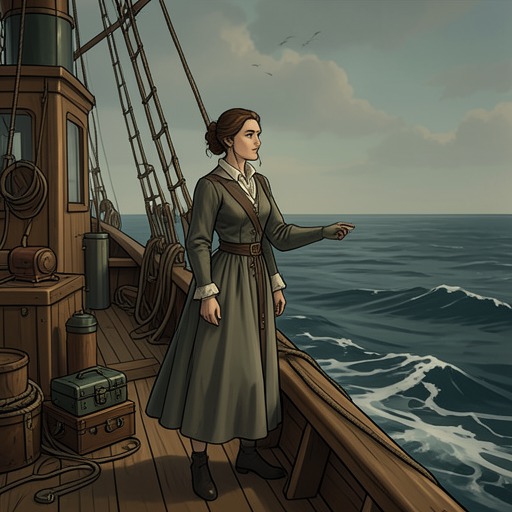
Rowan was originally supposed to report on the Aurora Borealis, a boutique super-luxury cruise liner travelling around the Norwegian fjords on its maiden voyage. After accepting the assignment, she discovered that pregnancy had caused severe hyperemesis, leaving her unable to go. The opportunity consequently “landed” with Laura, who understands the substitution as both a gift and a burden.
The assignment is valuable not only because of its travel and prestige. Laura recognizes it as a vote of confidence from Rowan at a moment when more senior colleagues might have been chosen, and she sees the trip as a possible route to Rowan’s maternity cover and, eventually, promotion. Her determination to accept is sharpened by the timing: the cruise is only two days away, and she refuses to let the chance disappear even after the burglary at her flat and the anxiety that follows it.
Rowan’s commercial aims also shape the work Laura is expected to produce. The magazine hopes to persuade the Aurora Borealis’s owners to become advertisers, so Rowan wants a polished promotional feature on the ship. At the same time, she believes the other guests may provide material for profiles. The assignment thus combines journalism, publicity, networking, and career competition, making Laura’s presence on board part of a business strategy rather than a purely editorial venture.
Expectations and Pressure
When Laura’s colleague Jenn reports the situation to her, she offers to find someone else to cover the northern-lights assignment. Laura refuses firmly, insisting that she is capable of going and that she genuinely wants to do it. Her decision reflects both ambition and pressure: she believes this may be her last opportunity to prove herself to Rowan and secure advancement.
Rowan’s expectations become more urgent once Laura is on the ship. Rowan sends an email asking for an update, and Jenn tells Laura that she has filed nothing. Rowan then requests a response and hopes for copy by the following day, accepting even a sidebar piece as a minimum. The request is practical and professionally reasonable, but within the plot it becomes another measure of Laura’s isolation: while Laura is trapped in a crisis she cannot safely explain, the editor sees only silence and a missing assignment.
This contrast links Rowan to the novel’s wider treatment of institutional credibility. Laura’s experience aboard the Aurora Borealis is extraordinary, but her professional obligations continue to arrive in ordinary forms—press packs, deadlines, promotional requirements, and requests for copy. The machinery of work does not pause to accommodate the danger surrounding her, and Laura’s failure to answer risks making her appear negligent before anyone understands that she has become a missing person.
Relationship with Laura
Rowan’s relationship with Laura is defined by trust, hierarchy, and aspiration rather than intimacy. Laura wants to prove that Rowan was right to choose her, and she interprets the assignment as evidence that her editor sees potential in her. At the same time, Laura’s private thoughts show that she knows the decision was partly forced by Rowan’s illness. The professional confidence she feels is therefore mixed with guilt, insecurity, and the fear that she has been given an opportunity she cannot afford to mishandle.
Rowan’s illness also makes the assignment ethically complicated for Laura. Laura understands that Rowan is unavailable because pregnancy has made her seriously ill, yet she does not treat the replacement as charity. She insists that she is up to the task and refuses to withdraw. Her ambition is not presented as simple vanity; it is bound to years of waiting for advancement and to the possibility that this trip may finally alter her position at the magazine.
Narrative Function and Consequences
Rowan functions as a distant mentor and herald. Without appearing in the central cruise drama, she calls Laura out of her ordinary professional world and sends her across the threshold into the Aurora Borealis’s closed social environment. The assignment brings Laura into contact with Richard Bullmer, Anne Bullmer, Cole Lederer, Chloe Jenssen, Lars Jenssen, and the other guests, initiating the chain of observation that eventually places her in danger.
Her absence is also structurally important. Because Rowan cannot attend, Laura is present on the ship; because Laura is present, she witnesses details surrounding Anne Bullmer, the hidden passenger, and the later conspiracy. Rowan’s illness therefore has consequences far beyond office scheduling. It creates the plot’s initial opportunity while leaving Laura to carry an assignment whose commercial expectations continue even as the voyage turns into the cabin 10 mystery.
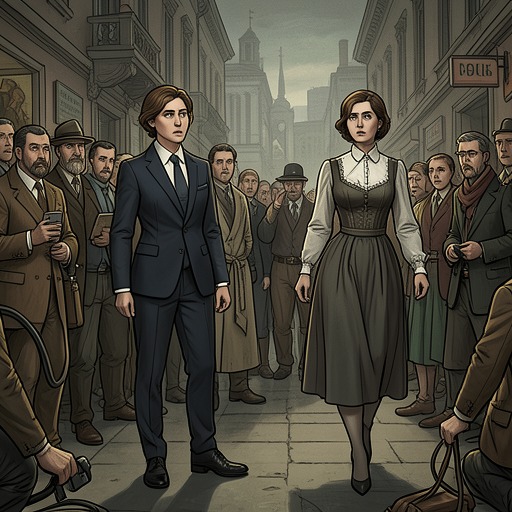
After Laura disappears, Rowan’s professional concerns are displaced by the larger public crisis. Online discussion about Laura’s disappearance includes speculation about her medication, her mental health, and whether she may have taken her own life. These claims show how quickly a missing employee can be converted into a story about an allegedly unreliable or unstable woman. Rowan’s earlier request for copy belongs to a world of deadlines and accountability; the later public discourse turns Laura’s silence into evidence against her.
Rowan is therefore less a fully developed participant in the action than a decisive force at its origin and a measure of the pressures Laura carries into it. Through her, the novel connects luxury travel to magazine commerce, career advancement to vulnerability, and professional opportunity to the dangerous demand that Laura keep performing competence even when the surrounding system has ceased to protect her.