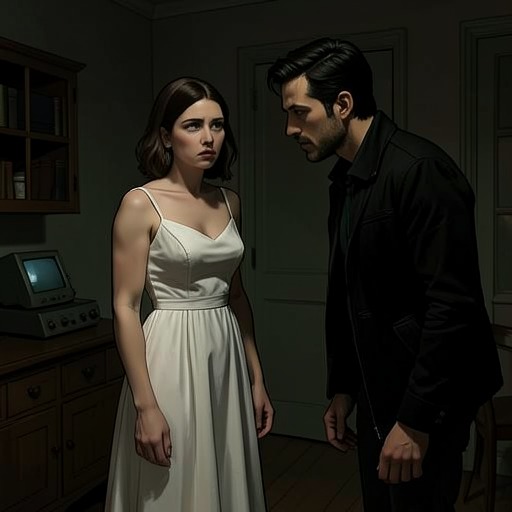
“It isn’t paranoia if it’s really happening”
The Woman in the Window“It isn’t paranoia if it’s really happening” is Anna Fox’s pointed answer when her interlocutor asks whether she thinks she is being paranoid. The line gives her fear the form of an argument: if the danger is real, then suspicion is not delusion. Its force comes from the certainty of the reply, while the exchange itself offers no independent confirmation of what Anna believes is happening.
The Exchange
Anna first insists that she is sure and not delusional. Before the other speaker finishes asking whether she thinks she is paranoid, she answers with the expression. The speed of her response makes it sound less like an invitation to discuss her perception than a defense against having it dismissed.
The answer is followed by silence, and the interlocutor does not pursue the question. Anna then says that being questioned is frustrating and describes feeling stuck in the house and in a loop. That continuation connects the retort to her confinement: the dispute is not only about whether her fears are justified, but also about the strain of being challenged while she feels unable to escape her circumstances.
Meaning and Narrative Function
The sentence draws a sharp distinction between paranoia as an unfounded belief and fear grounded in events that are actually occurring. Anna presents that distinction as decisive, but her assertion alone cannot settle the question for the other person—or for the reader. The line therefore holds both confidence and uncertainty in tension: it is a clear statement of Anna’s position, not proof offered from outside her perspective.
Its compact, conditional structure also makes the phrase sound like a rebuttal ready at the moment it is needed. In the scene, that verbal certainty briefly interrupts questioning; the silence afterward marks a pause in the challenge, without resolving the broader problem of credibility.