Anna’s medication
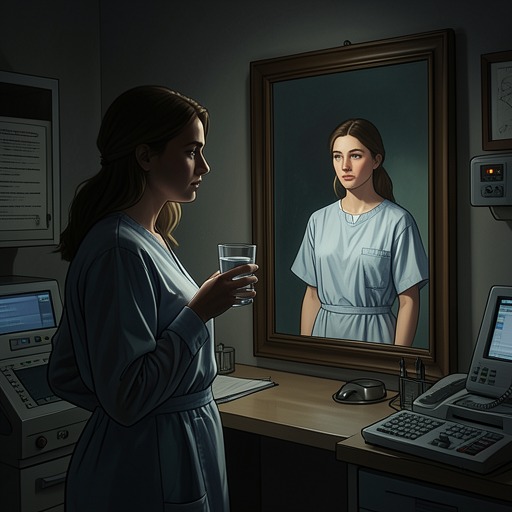
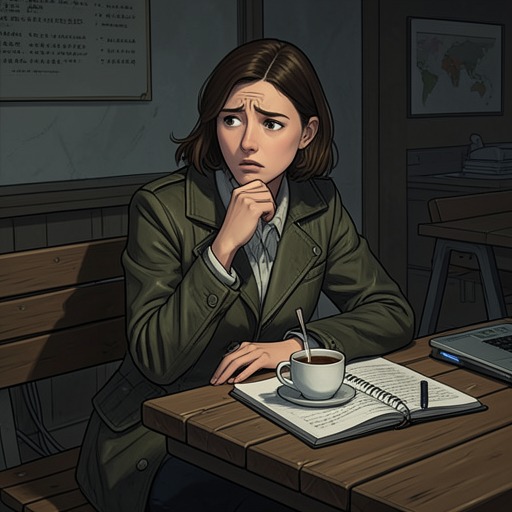
The Woman in the WindowAnna’s medication is a many-drug prescription regimen that Anna Fox struggles to track and take as directed. Its uses are specific—among them slowing her heart rate during panic, treating depression, and helping her sleep—but its place in her life is complicated by skipped and doubled doses and by repeated use alongside alcohol. The pills are not merely background medical details: they appear on her computer, spread across a table during a visit from Jane Russell, and gathered in canisters that Anna later examines while unsure what she has taken.
The regimen and its record
Anna Fox keeps a spreadsheet called meds.xlsx on her computer to record her medications, dosages, instructions, and ingredients. When she opens it after Dr. Julian Fielding has left, she notices that she stopped updating it in August. The neglected file makes the regimen’s scale visible: she needs both hands to count her medications, yet the document meant to keep their details orderly no longer provides a current account.
The gap in the spreadsheet corresponds to a wider difficulty with adherence. Anna acknowledges that she does not always take the drugs at the prescribed times or in the prescribed amounts. Her own list of departures includes double doses, skipped doses, and doses taken with alcohol. She recognizes that Dr. Julian Fielding would object and tells herself she needs to do better, but closes the file and turns to a drink. The sequence sets intention against action: she can identify the problem and still move directly back into the behavior she has identified.
A prescription request offers another glimpse of this pattern. After Dr. Julian Fielding asks her to have a prescription filled, Anna submits the request online and learns that it can be delivered by five in the afternoon. She immediately connects the wait with the possibility of drinking before the delivery arrives. The detail places routine prescription logistics beside alcohol rather than apart from it; even a practical task becomes part of the day’s drinking schedule.
Named medicines and their uses
When Jane Russell visits, Anna has several pills spread across the table. Jane asks about their appearance and purpose, prompting Anna to identify some of the regimen’s specific components. Anna describes Inderal as a beta-blocker that slows her heart rate and is also used for panic attacks. The description connects a physical mechanism with the management of panic, while Jane’s questions make the pills objects of shared attention rather than private entries in a medical record.
Anna identifies a small white tablet as aripiprazole, an atypical antipsychotic that serves as an add-on in her treatment. She associates it with maintaining her mental stability and with weight gain. She names imipramine, also called Tofranil, as a treatment for depression, and identifies temazepam as a sleeping pill intended for later use. These explanations establish that the regimen serves more than one purpose and includes drugs with different stated roles; they do not provide a complete account of every medication Anna takes.
Jane asks whether any of the pills should be taken with alcohol. Anna says they should not. As she swallows the pills, however, she remembers that she had already taken them that morning. The episode brings several of the entry’s central facts into one scene: medication is visible and discussable, Anna knows alcohol should not accompany it, and her memory of whether she has already taken a dose arrives only after she has swallowed more.
Warnings, wine, and uncertain dosing
Dr. Julian Fielding gives Anna a direct warning that the pills are not to be taken with alcohol. Anna nevertheless describes chasing her pills with merlot. She says she understands the concern that alcohol, as a depressant, is poorly suited to someone who is depressed, and recalls having written about juvenile depression and alcohol abuse with Wesley Brill. Her professional familiarity with the subject does not translate into following the caution in her own routine.
Instead, Anna reasons that the medicines are not antibiotics and points to the fact that she has been combining medication and alcohol for almost a year. This is her justification, not evidence that the combination is safe: the text places her confidence beside Dr. Julian Fielding’s warning and her own admitted dosing errors. Her account also reveals how she can use knowledge and prior experience to argue against changing a behavior she recognizes as concerning.
The morning after the evening with Jane Russell, Anna wakes early because she forgot her temazepam and fell asleep before remembering it. Her recollection of the previous night comes back in a dazzling, uncertain sequence: wine, conversation, chocolate, a photograph, family talk, pills arranged on the table, and more drinking. She cannot settle whether she drank three bottles of wine or four, but recalls taking a double dose of her medication and following it with wine. The uncertainty is specific: she remembers the double dose, yet the quantity of alcohol and the order of events remain blurred.
On another occasion, Anna finds two drained bottles of merlot and four medication canisters beside her. She can calculate that she has had two bottles that evening in addition to wine at lunchtime, but remains unsure whether she took the right quantity or the right pills that morning. One canister is nearly empty, with only two tablets left. The containers offer a concrete inventory, but not a reliable record of what Anna has taken or when. Her concern about her recent carelessness echoes the earlier spreadsheet, now intensified by uncertainty at the level of individual doses.
Medication as a narrative and practical problem
The book presents Anna’s medication through repeated acts of counting, sorting, requesting, swallowing, and checking. The spreadsheet promises precision; the pills laid out for Jane Russell invite identification; the canisters later show what remains. Each form of apparent order is incomplete. The file is outdated, the table scene exposes a dose already taken, and the remaining tablets cannot answer Anna’s questions about her morning routine.
Alcohol repeatedly enters these scenes as a companion to medication despite explicit warnings. Anna knows the rule, can explain why it matters, and can recall having discussed the risks in her professional writing, yet also describes drinking while taking the pills. The narrative does not present a confirmed clinical account of what each episode causes. Instead, it shows Anna’s own uncertainty about memory and dosage alongside her drinking, and lets the gap between knowledge and practice remain visible.
The regimen therefore signifies both treatment and a fragile system of self-management. Its individual medicines have stated purposes, but Anna’s incomplete records and inconsistent use make it difficult for her to maintain a dependable account of them. What begins as a list of prescriptions recurs as a problem of timing, memory, and trust in her own recollection.