Anna’s wine
The Woman in the WindowAnna’s wine is a regular feature of Anna Fox’s life at home, where it accompanies afternoon drinking, evenings alone, and visits from Jane Russell. Usually merlot ordered in bulk, it also appears as Riesling during Jane’s visit. The wine’s significance changes as it recurs: what first seems like a familiar preference becomes entangled with isolation, strained relationships, memory gaps, and the danger of taking medication with alcohol.
A familiar household habit
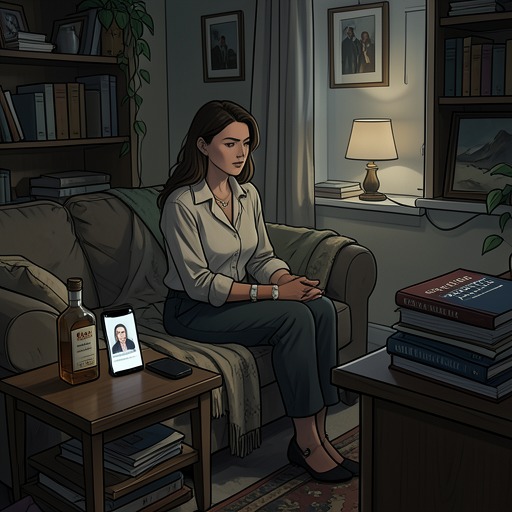
Anna acknowledges that she likes a drink in the afternoon, noticing the habit in a neighbor and wondering whether the neighbor also drinks in the morning. The observation makes drinking part of Anna’s everyday way of measuring likeness and difference between herself and people she watches from home. It is not merely an occasional detail: wine belongs to the rhythm of her private days.
At one evening with Ed, Anna sips while the conversation turns to the new neighbors. When Ed asks why she does not invite them over, she drains her glass and ends the discussion for the night. The moment links wine to a domestic exchange that Anna does not want to continue. Her response does not resolve the tension between them; instead, drinking accompanies her withdrawal from the conversation.
Wine also accompanies Anna’s contact with people beyond the household. While using a classic-film chat site, she sips as a message arrives from Andrew, whom she met through a community for classic-film enthusiasts. The exchange recalls how old movies brought Anna and Ed together, setting an image of former connection beside her solitary present. In this scene, the wine is part of the routine through which Anna spends an evening online, rather than evidence of a social occasion shared in person.
Wine in company
When Jane visits, wine helps shape the evening into a more intimate encounter. Within ten minutes, the two women are drinking; Jane smokes Virginia Slims, and the smoke affects the taste of Anna’s Riesling. Anna says she does not mind, associating it with memories of graduate school and nights outside taverns in New Haven. The drink therefore joins the present visit to a past period of Anna’s life, while the shared drinking marks the ease with which the visit develops.
Jane notices the merlot on Anna’s kitchen counter. Anna explains that she orders it in bulk because she likes it, and Jane asks how often she restocks. The exchange gives the supply a visible, domestic scale: wine is not an isolated bottle brought out for a guest but something Anna keeps readily available. As the evening continues, the women drink, talk, and spend time together, making wine part of their growing familiarity.
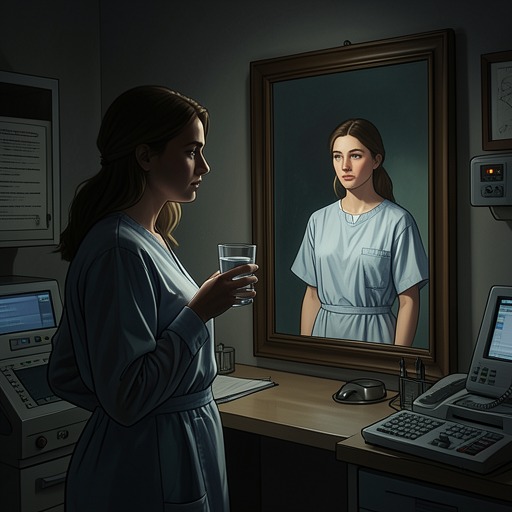
The visit also exposes a more serious boundary. Jane asks whether Anna is meant to take any of her medication with alcohol, and Anna acknowledges that she is not. Only after swallowing pills does Anna remember that she had already taken them that morning. The wine-filled evening thus coincides with a double dose, turning an otherwise friendly gathering into a moment when Anna’s medication routine proves unreliable. The scene does not present the drink as the sole cause of her mistake; it shows alcohol and medication overlapping in circumstances Anna herself recognizes as unsafe.
Medication and self-management
Anna has kept a spreadsheet, meds.xlsx, listing her drugs, doses, and directions, but she stopped updating it in August. She reflects that she takes many medications and does not always take them as directed: sometimes she doubles a dose, skips one, or takes one after drinking. Her acknowledgment that Dr. Julian Fielding would be angry, and that she needs to do better, places the wine within a broader pattern of difficulty managing treatment. The spreadsheet offers a record of intended order; her account describes a practice that no longer reliably follows it.
The danger is not unknown to Anna. At another point, she describes taking pills with merlot while recognizing that alcohol is a depressant and unsuitable for someone experiencing depression. She recalls having written about juvenile depression and alcohol abuse with Wesley Brill, her coauthor, and insists to herself that she understands Dr. Julian Fielding’s concern. Yet knowledge does not stop the behavior: she reasons that she has been mixing medicines and alcohol for almost a year and treats her continued survival as reassurance. The contrast is between professional understanding and private conduct, not ignorance of the risk.
Anna’s online advice sharpens that contrast. While participating in Agora, she warns new members in a drug discussion that medications should not be taken with alcohol. In her own kitchen, however, she continues to drink while taking pills. The separation between the rule she can state to others and the conduct she permits herself makes the wine a recurring measure of impaired self-regulation: she can articulate a boundary without consistently observing it.
Increasing quantities and uncertain memory
After the evening with Jane, Anna tries to reconstruct what happened. She remembers opening wine, talking, eating chocolate, taking a photograph, discussing their families, arranging her pills on the table, and drinking again, but cannot place these actions in a certain order. She estimates that they drank three bottles, then questions whether it was four. She also recalls taking a double dose and chasing the pills with wine. The sequence is important because the memory is not presented as a clean account: Anna must piece together the night while recognizing that both the amount of wine and the timing of her medication are uncertain.
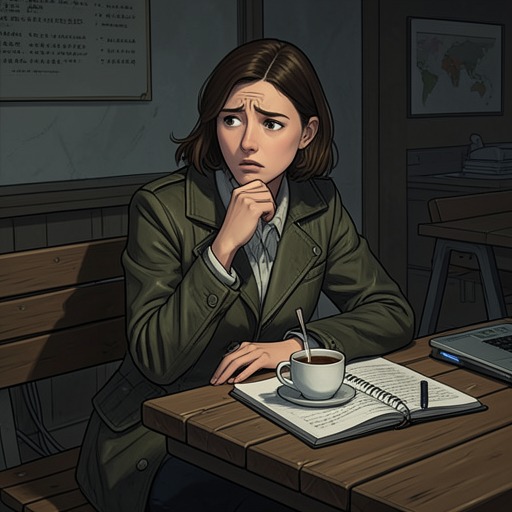
Wine also accompanies her online conversation with GrannyLizzie. Anna drinks while responding to GrannyLizzie’s account of a difficult day and the support of neighbors who bring groceries. She notices that her own message contains two typos and that she has had more than two glasses, then judges the combination as a tolerable performance. When GrannyLizzie shares the hope of going outside with her sons, the conversation touches on family and separation. Asked whether she has a family, Anna pours more wine before replying that she does, but does not live with them. The pause and the additional drink precede a truthful but spare answer about her distance from Ed and Olivia.
A later episode makes the amount more explicit. The remains of Anna’s dinner include two empty merlot bottles and four pill canisters. She calculates that the wine amounts to two bottles, in addition to what she drank at lunchtime, and admits that it is a great deal. She is unsure whether she took the right quantity of the right pills, notes that one canister is nearly empty, and recognizes that she is very drunk. The setting turns a familiar drink into part of a more consequential scene of confusion: the bottles, canisters, uncertain dosing, and lost phone gather around Anna as evidence of how far her routines have slipped.
Narrative significance
The wine’s recurrence gives a concrete form to the gap between Anna’s intentions and her actions. She knows she should not combine alcohol with medication, keeps records of her prescriptions, and advises people on Agora about the same danger. At the same time, she drinks while taking pills, forgets earlier doses, and continues drinking through online conversations and lonely evenings. These repeated contrasts make the wine more than a background prop: it tracks the persistence of a habit even when Anna can identify its risks.
Its social role is similarly double. Wine accompanies a visit that brings Jane into Anna’s home and supports an evening of conversation, but it also sits beside Anna’s withdrawal from Ed and her guarded account of family separation to GrannyLizzie. In the aftermath of Jane’s visit, it is entangled with a broken sequence of recollection; in the later episode with the empty bottles, it appears alongside pronounced intoxication and uncertainty about medication. Across these different settings, the same household drink shifts from an ordinary preference to a measure of isolation and danger.