Aversion therapy
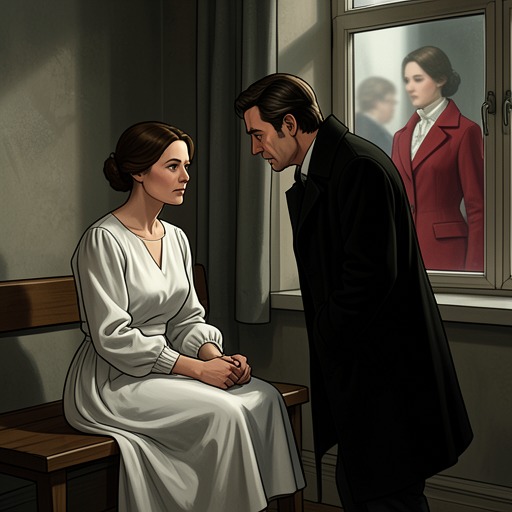
The Woman in the WindowAversion therapy is the treatment Anna Fox says she has been undertaking with Dr. Julian Fielding during her ten months indoors. The novel gives its practical stakes through the umbrella technique: a repeated attempt to cross the threshold, in which breathing, counting, and managing what she can see become part of the effort to go outside.
Treatment and Context
When Anna explains her condition to a doctor, she includes her agoraphobia, depression, panic disorder, medication regimen, and months inside, identifying Dr. Julian Fielding and his aversion therapy as part of that history. The account places the therapy amid substantial psychological and medical difficulties, but does not set out a clinical definition or full treatment protocol. Its clearest evidence lies instead in Anna’s description of trying to leave the house.
The Umbrella Technique
Anna recalls that she and Dr. Julian Fielding have been experimenting with an umbrella technique for months. At the threshold, she retrieves the umbrella, opens it, and uses its canopy as she works to keep breathing. She counts her steps down from the house, reaches the gate, and crosses onto the sidewalk. These actions make the attempt a sequence of manageable tasks rather than an uncomplicated departure.
A Change in Approach
During one attempt, Anna recognizes that she can close her eyes. Until then, neither she nor, as she assumes, Dr. Julian Fielding had considered that adjustment. With her eyes shut, she concentrates on breathing and on familiar things inside her home; once outside, she begins orienting herself and slowly opens one eye. The change does not erase the difficulty of going out, but it gives her a way to proceed that the earlier umbrella experiments had not revealed. Aversion therapy is thus associated not only with repeated practice, but with Anna’s discovery of a different way to approach the boundary between home and outdoors.