Denial and grief
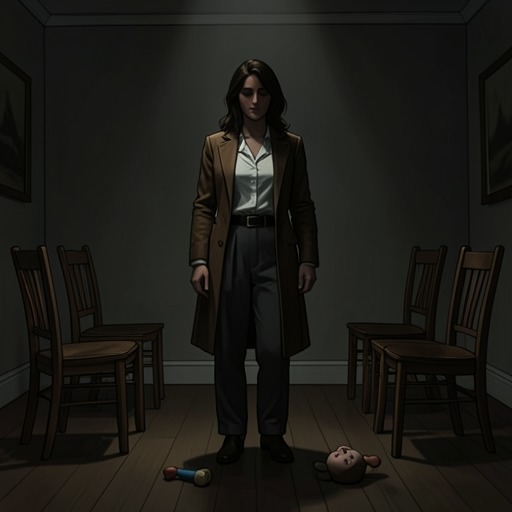
The Woman in the WindowDenial and grief describe the unsettled way Anna Fox lives with the deaths of her husband, Ed, and daughter, Olivia. For months, other people soften or avoid the fact of their deaths, while Anna experiences their voices as present in her daily life. Her eventual ability to say that they are dead marks a change in how she acknowledges the loss, but not an end to her attachment to them: she continues to hear and answer them. The novel holds recognition and continuing connection together rather than treating grief as a simple passage from denial to forgetting.
What Denial Conceals
The words used around Anna’s loss reveal how difficult it is for those around her to name it. An emergency-room doctor tells her that her husband did not make it while medical staff treat her bruised back and damaged windpipe. Later, the head nurse begins to offer condolences but does not finish her sentence. Friends, most of them Ed’s, variously say that the family is gone, no longer with them, or dead. Their euphemisms and unfinished condolences make death present without speaking it plainly; Anna also learns, painfully, that she and Olivia had few friends of their own.
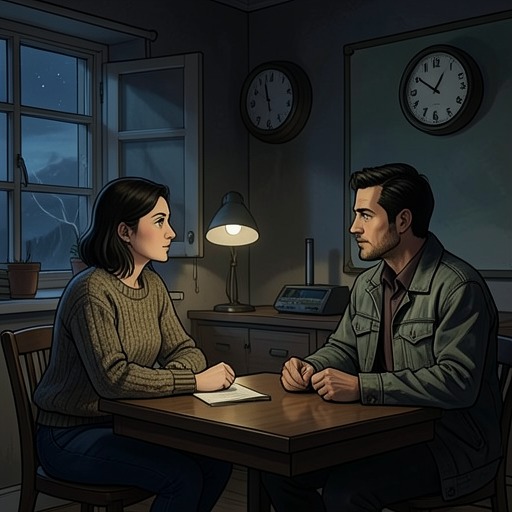
Val Norelli breaks through that pattern by telling Anna directly that her husband and daughter are dead. Anna recognizes the force of the words because no one has put it that way before. She does not deny the fact: she can concede that they died and are dead. Yet Dr. Julian Fielding identifies her condition as denial, and Anna judges that description strictly true. The tension is not simply between knowing and not knowing. She can acknowledge the fact intellectually while remaining unable, or not yet ready, to live as though the people she loves are absent.
The Voices That Remain
Anna describes hearing Ed and Olivia at moments of acute loneliness and at moments when she needs someone to talk to. Their voices also return unexpectedly. They use the recurring greeting “Guess who,” and Anna says that she beams, her heart singing, before responding. The exchange gives her a form of companionship, but its recurrence also shows how grief keeps the dead active in her present experience.
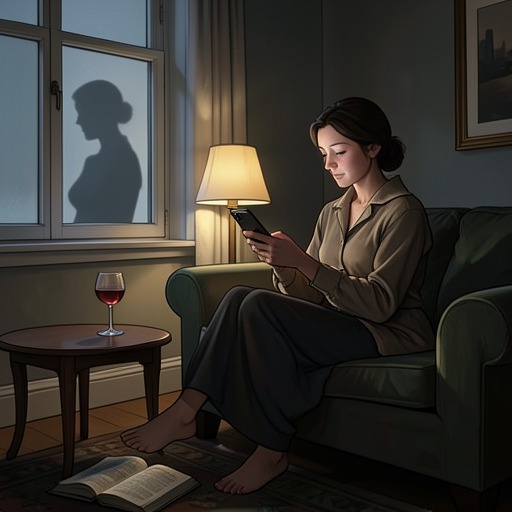
The voices are woven into ordinary domestic time. In the quiet of the house, Anna listens to the grandfather clock toll nine and to the floors settling; Ed and Olivia’s chorus of “Happy birthday” follows in her experience. On another night, after looking across the park toward the darkened Russell house, with only Ethan’s computer monitor glowing, she hears Olivia ask, “What are you going to do, Mommy?” Anna turns away, buries her face in the pillow, and tries to focus on something else. The voice is both a source of intimacy and a reminder of the absence she is trying not to face.
Naming the Loss
Later, Anna speaks the loss aloud: she says she lost her child and husband, that they died, and that they are dead. She follows the admission with the counted breathing “One, two, three, four.” Naming the deaths is therefore joined to an effort to steady herself; the words do not arrive as detached information but as something she must breathe through.
In the same conversation, Anna acknowledges that she started drinking more than usual and self-medicated, calling that behavior dangerous and wrong. The earlier question about whether she had been drinking, during the crisis in which she insists that a bleeding woman needs help, places alcohol amid another moment of panic and impaired speech. These details do not make drinking a substitute explanation for her grief. They show a harmful response accompanying it, which Anna later recognizes as part of what has happened to her.
A Continuing Bond, Not a Cure
Anna also resists interpreting the voices as supernatural communication. Her account distinguishes hearing Ed and Olivia and answering them from believing that they are literally communicating with her from beyond. That distinction leaves the experience emotionally real without making the novel confirm an external source for the voices. Her own explanation remains complicated: she can call her condition denial, admit the deaths, and still feel the dead as companions.
The movement toward acknowledgment is consequently not a clean resolution. Anna’s response to the remembered birthday chorus is to roll away; when Olivia’s question comes to her beside the window, she shuts her eyes and redirects her attention. Elsewhere, she can say the words she had not been able to say, yet she continues to answer Ed and Olivia when they return in her experience. The novel presents grief as a changing relation to an acknowledged absence: naming the deaths breaks the silence around them, but does not require Anna to erase her love or the inner conversations through which she still feels connected.